Quick answer
Whisk 1½ cups ketchup, ⅓ cup brown sugar, ¼ cup cider vinegar, 2 tablespoons molasses, Worcestershire, mustard, smoked paprika and a few dry spices in a saucepan. Simmer it gently for 15 to 20 minutes, stirring often, until it thickens enough to coat a spoon. It makes about 2 cups.
A good barbecue sauce recipe balances three things: sweetness, tang and a little smoke. Bottled sauces often lean heavily on sugar, while a homemade batch lets you set that balance yourself in about 20 minutes, using pantry staples.
This version is a thick, sweet and tangy sauce in the Kansas City style, the kind most people picture on ribs and pulled pork. Below the recipe, you will also find the main regional styles, easy swaps, and when to brush the sauce on so it glazes instead of burning.
What Makes a Barbecue Sauce Work
Each ingredient in the pot has a job. Ketchup gives the tomato body, brown sugar and molasses add sweetness and color, and cider vinegar cuts through the richness. Meanwhile, Worcestershire and mustard add savory depth, and smoked paprika brings a gentle smokiness without liquid smoke.
The simmer matters too. It cooks off the raw edge of the vinegar, melts the sugar and thickens the sauce so it clings to meat instead of running off.
Ingredient choices also change the character noticeably. Dark brown sugar and robust molasses produce a deeper, almost caramelized sauce, while light brown sugar keeps it brighter. Similarly, apple cider vinegar contributes a fruity acidity, whereas distilled white vinegar tastes sharper and more assertive. Experiment with one substitution at a time, so you can identify which adjustment created the difference.
Sweet and Tangy Barbecue Sauce
Equipment
- Medium saucepan
- Whisk
- Glass jar for storage
Ingredients
- 1 1/2 cups ketchup
- 1/3 cup packed brown sugar
- 1/4 cup apple cider vinegar
- 1/4 cup water
- 2 tbsp molasses
- 1 tbsp Worcestershire sauce
- 1 tbsp yellow mustard
- 1 tsp smoked paprika
- 1 tsp onion powder
- 1/2 tsp garlic powder
- 1/2 tsp black pepper
- 1/4 tsp cayenne pepper optional
Instructions
- Whisk all the ingredients together in a medium saucepan until smooth.
- Bring the sauce to a gentle simmer over medium heat, stirring.
- Lower the heat and simmer, uncovered, for 15 to 20 minutes, stirring often so it does not scorch, until it thickens enough to coat the back of a spoon.
- Taste and adjust: add more brown sugar for sweetness, vinegar for tang or cayenne for heat.
- Cool the sauce, then pour it into a clean jar and refrigerate.
Notes
Nutrition
Per 2 tbsp, estimated
- Calories
- 50 kcal
- Total fat
- 0 g
- Saturated fat
- 0 g
- Cholesterol
- 0 mg
- Sodium
- 230 mg
- Carbohydrates
- 13 g
- Fiber
- 0 g
- Sugars
- 11 g
- Protein
- 0 g
Regional Barbecue Sauce Styles
American barbecue sauces vary widely by region. This recipe sits in the thick, sweet Kansas City camp, yet the others are worth knowing.
| Style | Base | Flavor | Classic with |
|---|---|---|---|
| Kansas City (this recipe) | Ketchup or tomato, molasses | Thick, sweet, tangy | Ribs, burnt ends, chicken |
| Memphis | Tomato and vinegar | Thinner, tangier, less sweet | Pork ribs, pulled pork |
| Texas | Tomato, meat drippings, chili | Thin, savory, peppery | Brisket |
| Eastern North Carolina | Vinegar and pepper flakes | Sharp and thin, no tomato | Whole hog, pulled pork |
| South Carolina | Yellow mustard | Tangy and golden | Pulled pork |
| Alabama white | Mayonnaise and vinegar | Creamy and peppery | Smoked chicken |
Make It Your Way
| Version | What to change |
|---|---|
| No ketchup | Use one 6-ounce can of tomato paste, ¾ cup water and 2 extra tablespoons of brown sugar; see this ketchup substitute guide |
| No Worcestershire | Use 2 teaspoons of soy sauce plus a squeeze of lemon |
| No vinegar | Use the same amount of lemon juice |
| Spicy or chipotle | Add 1 to 2 minced chipotles in adobo, or more cayenne |
| Honey barbecue | Replace the molasses with ¼ cup honey |
| Less sugar | Cut the brown sugar to 2 tablespoons and add an extra splash of vinegar |
Best Ways to Use It
This sauce suits almost anything that comes off a grill or out of a smoker, and it works indoors too.
- Ribs: bake or smoke them until tender, then glaze them at the end; for slow cooker ribs, cook them in about 1 cup of sauce and broil briefly to caramelize.
- Chicken: brush it on thighs, drumsticks or wings near the end of grilling.
- Pork chops and pulled pork: glaze chops on the grill, or toss shredded pork with warm sauce.
- Meatballs and meatloaf: use it as a glaze in place of plain ketchup.
- Burgers and pizza: spread it on buns, or use it instead of tomato sauce on a chicken pizza.
Fixing the Balance
Every grill cook likes a slightly different sauce, so taste it near the end of the simmer and adjust.
| If it tastes… | Try this |
|---|---|
| Too sweet | Add vinegar or mustard, a teaspoon at a time |
| Too sharp or sour | Add a spoonful of brown sugar or honey and simmer 2 more minutes |
| Too thin | Simmer it uncovered a little longer |
| Too thick | Stir in water or apple juice, a tablespoon at a time |
| Flat | Add a pinch of salt or a dash more Worcestershire |
When to Brush It On
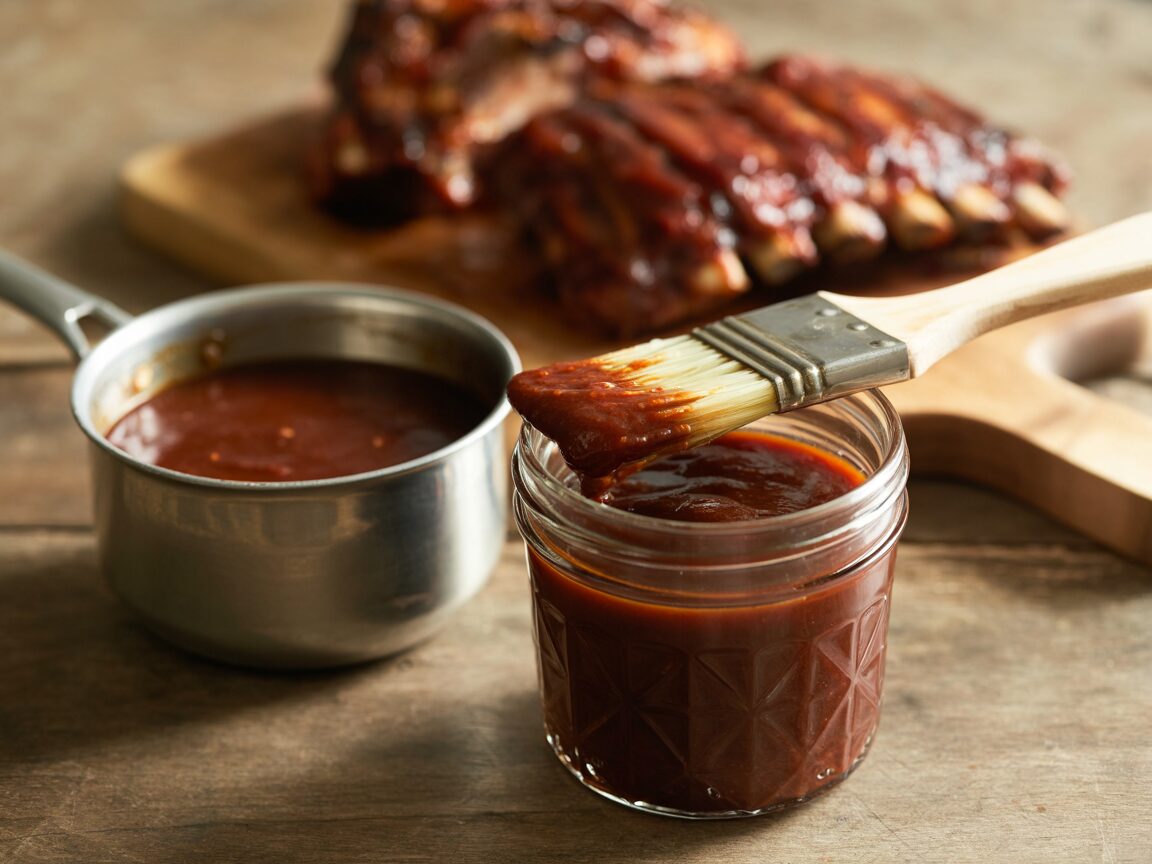
Because this sauce contains plenty of sugar, it burns quickly over direct heat. For that reason, grill or bake the meat first, then brush on the sauce during the last 10 to 15 minutes. Turn the meat once or twice so the sauce sets into a sticky glaze. Serve extra sauce at the table.
Keep the sauce for cooked food separate from anything that touches raw meat. The Minnesota Department of Health advises reserving a portion before raw meat goes in, or boiling a used marinade before it goes on cooked food. Then check doneness with a thermometer against the safe minimum temperatures: 165°F for chicken and 145°F for pork chops and ribs, with a 3-minute rest.
Storing Homemade Barbecue Sauce
Let the sauce cool, then store it in a clean jar in the refrigerator. Use it within about 2 weeks, which is a cautious window, since no agency publishes a figure for homemade sauce. For longer storage, freeze it in small containers and thaw it overnight in the refrigerator.
Do not can this recipe for the pantry. For shelf-stable jars, follow a tested recipe from the National Center for Home Food Preparation, whose guidance is research-based.
Common Questions
How do you thicken barbecue sauce?
Simmer it uncovered a few minutes longer, stirring so it does not scorch. It also thickens as it cools, so stop when it coats the back of a spoon.
Can you make barbecue sauce in a slow cooker?
Yes. Cook it on low with the lid ajar for about 2 hours, so steam can escape and the sauce can thicken. It also makes a good braising sauce for slow cooker ribs or pulled pork.
Is barbecue sauce gluten-free?
It can be, but check the labels on the ketchup and Worcestershire sauce, since some brands include gluten. Choose products labeled gluten-free if that matters for your household.
Bringing It Together
Homemade barbecue sauce comes down to balance: ketchup for body, brown sugar and molasses for sweetness, vinegar for tang and smoked paprika for smoke. Simmer it until it coats a spoon, brush it on near the end of cooking, and adjust the sweetness or heat to suit your grill.
Key takeaways
- Simmer the sauce 15 to 20 minutes so it thickens and loses the raw vinegar taste.
- Brush it on during the last 10 to 15 minutes, because the sugar burns quickly.
- Reserve sauce for the table before any of it touches raw meat.
- Refrigerate it for about 2 weeks, or freeze it for longer storage.
About this recipe: the food safety guidance follows the Minnesota Department of Health and FoodSafety.gov, and nutrition comes from FoodData Central.