Quick answer
For a moist carrot cake recipe, whisk 4 eggs with 1 cup of oil and 2 cups of sugar. Then stir in 2 cups of flour, leavening, cinnamon, 3 cups of freshly grated carrots and chopped walnuts. Bake in a 9-by-13-inch pan at 350°F until a toothpick comes out clean, cool completely, and spread with cream cheese frosting.
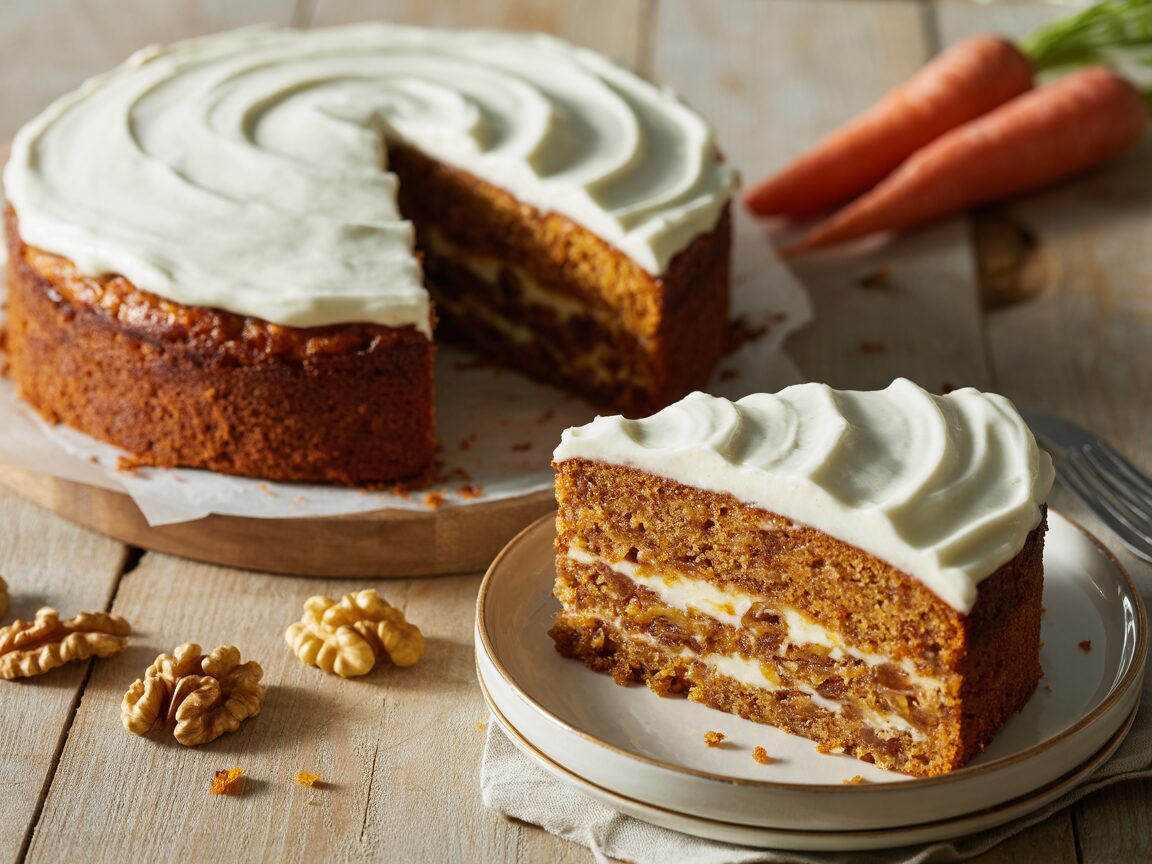
This carrot cake recipe makes a tender, deeply spiced 9-by-13-inch cake topped with a thick layer of tangy cream cheese frosting. Oil keeps the crumb moist for days, brown sugar adds caramel depth, and freshly grated carrots melt into the cake as it bakes.
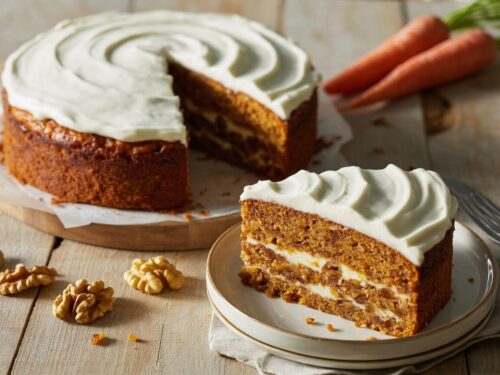
Classic Carrot Cake With Cream Cheese Frosting
Equipment
- 9-by-13-inch baking pan
- Box grater
- Large and medium mixing bowls
- Whisk
- Electric mixer
Ingredients
Cake
- 2 cups all-purpose flour spooned and leveled
- 2 tsp baking powder
- 1 tsp baking soda
- 2 tsp ground cinnamon
- 1/2 tsp ground nutmeg
- 1/2 tsp ground ginger
- 1/2 tsp table salt
- 4 large eggs room temperature
- 1 cup granulated sugar
- 1 cup brown sugar packed
- 1 cup vegetable or canola oil
- 2 tsp vanilla extract
- 3 cups carrots finely grated, about 5 or 6 medium
- 1 cup walnuts chopped, toasted if you like
Cream cheese frosting
- 8 oz cream cheese softened
- 1/2 cup unsalted butter softened
- 3 cups powdered sugar
- 1 tsp vanilla extract
Instructions
- Heat the oven to 350°F and grease a 9-by-13-inch pan. Whisk the flour, baking powder, baking soda, cinnamon, nutmeg, ginger and salt in a bowl.
- In a large bowl, whisk the eggs, granulated sugar and brown sugar until smooth, then whisk in the oil and vanilla.
- Stir the dry ingredients into the wet ingredients just until no streaks remain. Fold in the carrots and walnuts.
- Spread the batter in the pan and bake for 35 to 40 minutes, until a toothpick in the center comes out clean. Cool completely in the pan.
- Beat the cream cheese and butter until smooth. Beat in the powdered sugar and vanilla until fluffy, then spread over the cooled cake. Refrigerate until serving.
Notes
Nutrition
Per slice, estimated
- Calories
- 540 kcal
- Total fat
- 30 g
- Saturated fat
- 8 g
- Cholesterol
- 75 mg
- Sodium
- 300 mg
- Carbohydrates
- 65 g
- Fiber
- 2 g
- Sugars
- 50 g
- Protein
- 6 g
Tips for the Moistest Carrot Cake
- Grate carrots fresh: use the small or medium holes of a box grater. Pre-shredded bagged carrots are thick and dry, so they stay chewy instead of melting into the crumb.
- Use oil, not butter: because oil stays liquid at room temperature, the cake remains soft and tender even straight from the refrigerator.
- Measure flour carefully: spoon it into the cup and level it off, since packing it in adds extra flour and makes the finished cake noticeably drier.
- Don’t overmix: stir the dry ingredients in just until no streaks remain, which keeps the gluten relaxed and the cake tender.
- Toast the nuts: toasted walnuts or pecans develop a richer, deeper flavor and stay pleasantly crisp in the moist cake.
Add-Ins and Variations
Carrot cake welcomes extras, as long as you keep the total amount reasonable. For a tropical twist, fold in ½ cup of well-drained crushed pineapple, which adds moisture and sweetness. Alternatively, add ½ cup of raisins or golden raisins, or ½ cup of shredded coconut for chew. Pecans can replace the walnuts, or leave the nuts out entirely for a nut-free cake.
The batter also adapts to other pans. For a two-layer cake, divide it between two greased 9-inch round pans and start checking a little earlier, since thinner layers bake faster. For cupcakes, fill lined muffin cups about two-thirds full and bake until a toothpick comes out clean.
How Much the Frosting Adds
Cream cheese frosting is half the appeal, but it also carries a large share of the calories. Based on USDA FoodData Central values, the frosting supplies about 35% of the calories in the whole cake. Here is how a slice compares, cut 16 ways:
| Slice of carrot cake | Calories, about | Sugar, about |
|---|---|---|
| With the full layer of frosting | 540 | 50 g |
| With half the frosting, spread thin | 450 | 38 g |
| Unfrosted, with a dusting of powdered sugar | 360 | 27 g |
For a lighter cake, make half the frosting and spread it thinly over the top, since the cake itself is moist and flavorful enough to stand on its own.
Baking at High Altitude
Above about 3,500 feet, cakes tend to rise too fast and then sink. Colorado State University Extension suggests these adjustments for 3,500 to 6,500 feet:
- Leavening: reduce baking powder by ⅛ teaspoon for each teaspoon in the recipe.
- Sugar: reduce by up to 1 tablespoon for each cup.
- Liquid: add 1 to 2 tablespoons for each cup of liquid.
- Oven: raise the temperature by 15 to 25°F to help the batter set.
Try the smaller adjustments first, then fine-tune on your next bake, and note that the same guide recommends larger changes at higher elevations.
Food Safety Notes
Licking the spoon is tempting, but the FDA advises against eating raw batter. Most flour is a raw food that hasn’t been treated to kill germs, so bake the batter before tasting.
Once frosted, treat the cake as a perishable food, because cream cheese frosting contains dairy. Keep it in the refrigerator, covered, and don’t leave it out for more than 2 hours, the limit the USDA sets for perishable foods. Bring slices to room temperature just before serving for the softest texture.
Getting the Frosting Right
Smooth, fluffy cream cheese frosting depends mostly on temperature. Both the cream cheese and the butter should be soft enough to press easily with a finger, but not greasy or melted. Cold cream cheese leaves small lumps, while overly warm ingredients produce a runny frosting that slides off the cake.
Beat the cream cheese and butter together first, until completely smooth, before adding any powdered sugar. Then add the sugar gradually, beating on low speed so it doesn’t cloud the kitchen. If the frosting seems too soft, chill it briefly and beat it again. Finally, always frost a completely cooled cake, because even slight warmth melts the frosting.
Making It Ahead and Freezing
Carrot cake is an excellent make-ahead dessert. Bake the cake a day ahead, cool it completely, and wrap it tightly; the flavor actually improves overnight. Then frost it on the day you serve it. To freeze, wrap the unfrosted cake well in plastic wrap and foil, then thaw it in the refrigerator before frosting.
Frequently Asked Questions
Why is carrot cake sometimes dense?
Usually from overmixing or from too much flour packed into the measuring cup. Stir the dry ingredients in gently, spoon the flour into the cup, and check that your baking powder and baking soda are still fresh.
Can you use butter instead of oil in carrot cake?
Yes, melted butter works, but the cake will be slightly drier and firmer once chilled.
Does carrot cake need to be refrigerated?
Yes, once it has cream cheese frosting, while an unfrosted cake can stay tightly covered at room temperature.
Should you peel carrots for carrot cake?
Peeling gives the most even color and texture, but well-scrubbed unpeeled carrots work perfectly well too.
Key takeaways
- Grate the carrots fresh for the moistest crumb.
- Oil keeps carrot cake soft, even from the refrigerator.
- Cool the cake completely before frosting.
- Refrigerate the frosted cake and limit time out to 2 hours.
For another make-ahead bake, try the classic banana bread, and learn what leavening does in quick breads in forgetting baking soda.
About this recipe: nutrition is estimated from USDA FoodData Central values, high-altitude adjustments follow Colorado State University Extension, and food safety guidance follows the FDA and USDA.