Quick answer
The most reliable egg substitute for baking is a flax egg: stir 1 tablespoon of ground flaxseed into 3 tablespoons of water and let it thicken for 5 minutes. It replaces one large egg in cookies, muffins, brownies and quick breads. For other dishes, pick the swap that does the job the egg was doing.
Finding the right egg substitute starts with one measurement. A large egg weighs about 50 grams, and three quarters of that weight is water, according to USDA FoodData Central. That works out to roughly 3 tablespoons of liquid, which explains why nearly every swap below calls for about 3 tablespoons of something wet.
Volume is only half the consideration, though. An egg binds, lifts, moistens and enriches all at once, and no single replacement does all four well. Applesauce keeps a muffin moist but adds no lift, while baking soda and vinegar add lift but hold nothing together.
This guide gives you a chart of per-egg amounts, a way to choose by the job the egg does, and the limit on how many eggs you can replace. It also covers breading chicken, binding meatballs, the mayonnaise question, and what changes when the reason is an egg allergy.
What an Egg Does in a Recipe
An egg is effectively two ingredients in one shell. The white is mostly water and protein, while the yolk carries the fat and the emulsifiers, and each part does a different job when it heats.
| Part of a large egg | Weight | Main job |
|---|---|---|
| Whole egg | 50 g, about 3 tablespoons | Binds, lifts and moistens |
| White | 33 g, about 2 tablespoons | Sets firm, traps air when whipped |
| Yolk | 17 g, about 1 tablespoon | Adds richness, color and smooth texture |
When a batter bakes, the egg proteins set and hold everything in place, which is binding. Whipped or beaten egg traps air that expands in the oven, which is leavening. The water turns to steam and keeps the crumb moist, and the yolk holds fat and water together in an even mix, which is emulsifying.
Most recipes depend on one of those functions more than the others. A brownie needs binding and moisture but very little lift, so it forgives almost any swap. A sponge cake depends on lift from whipped eggs, so it forgives almost none.
Egg Substitute Chart
Each amount below replaces one large egg. Mix wet swaps like flax and chia ahead of time so they can thicken, and stir purées until smooth before you measure them.
| Substitute | Per egg | Best for | Weak at |
|---|---|---|---|
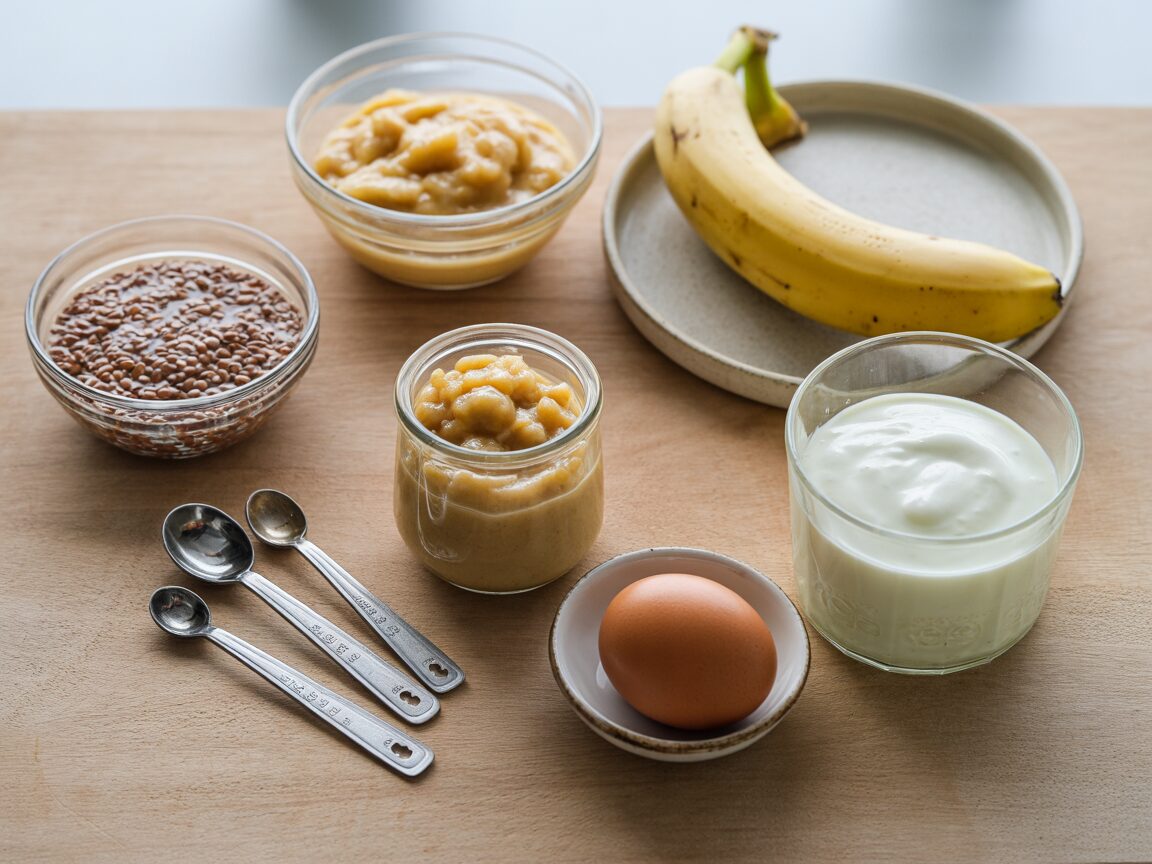
| Flax egg | 1 tbsp ground flaxseed + 3 tbsp water, rested 5 minutes | Cookies, muffins, brownies, pancakes | Lift; adds a nutty taste |
| Chia egg | 1 tbsp ground chia + 3 tbsp water, rested 5 minutes | Muffins, quick breads, meatballs | Lift; can look speckled |
| Applesauce, unsweetened | ¼ cup | Muffins, brownies, spice cakes | Binding; makes cookies cakey |
| Mashed ripe banana | ¼ cup | Pancakes, banana bread, muffins | Neutral flavor; browns faster |
| Plain yogurt or buttermilk | ¼ cup | Cakes, muffins, pancakes | Lift on its own |
| Silken tofu, blended | ¼ cup | Dense cakes, cheesecake, quiche-style bakes | Light, airy bakes |
| Aquafaba (chickpea liquid) | 3 tbsp, or 2 tbsp per white | Meringue, macarons, egg wash, cookies | Rich, yolk-heavy dishes |
| Baking soda + vinegar | 1 tsp soda + 1 tbsp vinegar | Light cakes and cupcakes | Binding and moisture |
| Commercial egg replacer | As the package directs | Cookies, cakes, general baking | Breading and savory binding |
| Chickpea flour | 3 tbsp chickpea flour + 3 tbsp water | Savory bakes, fritters, veggie burgers | Sweet bakes; tastes beany raw |
| Arrowroot or cornstarch slurry | 2 tbsp starch + 3 tbsp water | Breading, pie fillings, custard-style fillings | Lift; turns gummy if overused |
When a swap adds moisture but no lift, such as applesauce or banana, add ¼ teaspoon of baking powder per egg replaced. That small boost keeps muffins and cakes from baking up dense.
For flax and chia, use ground seeds or grind whole ones in a spice grinder first, because whole seeds cannot absorb the water or form a gel. Ground flaxseed contains oil that turns rancid at room temperature, so store an opened bag in the refrigerator or freezer. Fresh flax smells mildly nutty, while a stale supply smells bitter or like paint, and that flavor carries straight into the finished bake.
Match the Swap to the Job
The fastest way to choose is to ask what the egg is doing in that particular recipe, then pick the substitute that does the same job.
| If the egg mainly… | Use | Example |
|---|---|---|
| Holds things together | Flax egg, chia egg, starch slurry | Cookies, meatballs, veggie burgers |
| Makes it rise | Baking soda + vinegar, aquafaba | Cupcakes, light cakes |
| Keeps it moist | Applesauce, banana, yogurt | Muffins, brownies, quick breads |
| Is whipped as whites | Aquafaba, whipped to stiff peaks | Meringue, macarons, mousse |
| Coats the outside | Mustard, buttermilk, starch slurry | Breaded chicken, fried fish |
When a recipe needs two jobs, you can combine swaps. For example, a flax egg plus ¼ teaspoon of baking powder covers both binding and lift in a muffin.
How Many Eggs Can You Replace?
Substitutes work best when a recipe calls for one or two eggs. At that level the egg is a supporting ingredient, so a swap changes the texture slightly without collapsing the result. Three eggs is the practical limit, and even then the bake usually turns denser or more fragile.
Beyond that, the egg stops being an ingredient and becomes the structure. Custards, quiches, frittatas, soufflés, angel food cake and chiffon cake all depend on eggs to set or rise, so a swap cannot rebuild them. For those dishes, look for a recipe developed as egg-free from the start, because its proportions already account for the ingredients it actually uses.
Egg Substitutes for Baking
Baked goods differ in how much they rely on eggs, so the best swap changes from one bake to the next. Use this table as a starting point for the most common ones.
| Baked good | Best swap | What to expect |
|---|---|---|
| Cookies | Flax egg or commercial replacer | Slightly flatter and chewier |
| Brownies | Flax egg or ¼ cup yogurt | Fudgy, close to the original |
| Muffins and quick breads | Applesauce or banana + ¼ tsp baking powder | Moist, a little denser |
| Layer cakes and cupcakes | Baking soda + vinegar, or yogurt | Tender, with a finer crumb |
| Pancakes and waffles | Mashed banana or yogurt + ½ tsp baking powder | Soft and slightly less crisp |
| Yeast bread | Leave the egg out, add 3 tbsp water or milk | Less rich, but rises well |
Powdered egg replacers are usually a blend of starches and leavening agents. Formulas differ between brands, so measure them exactly as the package directs instead of using the chart ratios. Check the ingredient list too if allergies matter in your kitchen.
Whichever swap you use, bake to the visual cues in the recipe rather than the clock. Fruit purées brown faster, so check a few minutes early, and tent the pan with foil if the top darkens before the center sets.
Egg Substitute for Breading Chicken
In a standard breading station, the egg works as glue between the flour and the crumbs. Any thick, wet coating that clings to flour will do the same job, so you have several good options.
| Egg-free dip | How to use it | Result |
|---|---|---|
| Dijon or yellow mustard | Brush a thin layer on floured chicken | Strong hold, mild tang |
| Buttermilk or thinned yogurt | Dip, let the excess drip off, then coat | Tender, classic fried-chicken crust |
| Starch slurry | 2 tbsp cornstarch or arrowroot + 3 tbsp water | Thin, very crisp crust |
| Olive oil or melted butter | Toss, then press into crumbs | Best for oven-baked cutlets |
| Mayonnaise | Spread a thin layer, then coat | Rich, golden crust; contains egg |
For chicken cutlets or chicken parm, pound the meat to an even thickness and press the crumbs on firmly. Then rest the coated pieces on a rack for 10 minutes before frying, which helps the crust stay on in the pan. For brushing pastry instead of breading, milk, cream or aquafaba gives a similar golden shine to an egg wash.
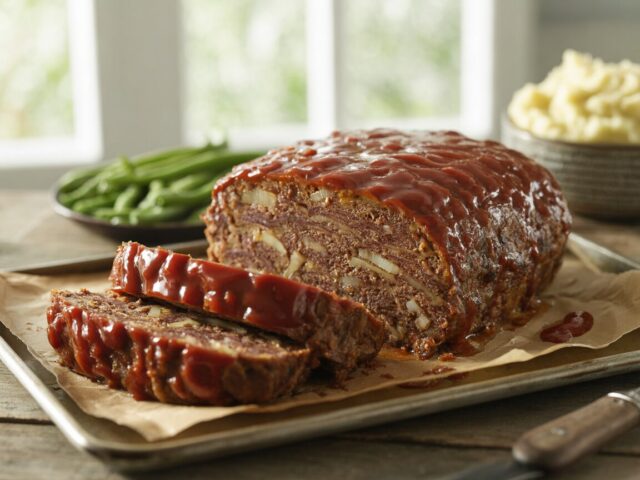
Egg Substitute in Meatballs and Meatloaf
In ground meat, the egg mostly helps hold the mixture together, so moisture and starch can cover for it. The best replacement is a panade, which is bread or breadcrumbs soaked in milk until soft.
For each egg you leave out, add 2 extra tablespoons of milk to the crumbs, or stir in 2 tablespoons of ricotta or plain yogurt. A flax egg also works well, and seasoning hides its mild nutty flavor completely. Chill the shaped meatballs for 20 minutes before cooking, because cold mixture holds its shape better in the pan. The same swaps apply to a meatloaf recipe, where resting the cooked loaf for 10 minutes keeps the slices from crumbling.
Egg Substitutes for Savory Cooking
Savory dishes use eggs differently from baking, because the egg is often the main ingredient rather than a helper. In those cases, the goal is to copy its texture and flavor instead of simply replacing its volume.
| Dish | Egg-free approach | Tip |
|---|---|---|
| Scrambled eggs | Crumbled firm tofu, cooked in oil with a pinch of turmeric | Kala namak (black salt) adds an eggy, sulfur flavor |
| Fried rice | Crumbled firm tofu, browned before the rice goes in | Season it with soy sauce so it absorbs flavor |
| Fritters and veggie burgers | Chickpea flour paste or a flax egg | Chill the mixture 15 minutes so it holds together |
| Quiche or frittata | Blended silken tofu with chickpea flour | Choose a recipe written this way, since amounts differ |
| Pasta dough | Semolina flour and warm water | Most dried pasta from the store is already egg-free |
Chickpea flour deserves a special mention for savory work. When it cooks, it sets firm in much the same way egg does, and its mild, earthy flavor suits fritters, savory pancakes and veggie burgers. Always cook it through, though, because raw chickpea flour tastes bitter.
Can You Use Mayo Instead of Eggs?
Yes, for cakes and quick breads, use about 3 tablespoons of mayonnaise per egg. Mayonnaise is oil, egg and acid already emulsified, so it adds moisture and tenderness, and the classic chocolate mayonnaise cake relies on exactly that.
However, mayonnaise is not egg-free. Under the federal mayonnaise standard, any product sold as mayonnaise must contain egg yolk and at least 65% vegetable oil by weight. If you are cooking for someone with an egg allergy, or for a vegan, use a product labeled egg-free and check its ingredient list.
Avoiding Eggs for an Allergy
Eggs are one of nine major food allergens listed by the FDA food allergy page, so packaged foods in the United States must declare them on the label. That label is your best tool, because several products that sound egg-free are not.
The biggest trap is the carton labeled “egg substitute.” FSIS egg products guidance describes these products as egg whites combined with color and other additives. In other words, they still contain egg protein. For an allergy, choose a plant-based egg or a powdered replacer that states it is egg-free.
Leaving the eggs out also does not make raw dough safe to eat. The FDA flour guidance warns that raw flour can carry Salmonella and E. coli, so bake egg-free cookie dough and batter before tasting it.
Frequently Asked Questions
Can you just leave the egg out?
Sometimes, if the recipe uses only one egg and it is not the main binder. Add 3 tablespoons of water or milk to replace the lost liquid, and expect a slightly drier, more crumbly texture.
What is the best egg substitute for cookies?
A flax egg or a commercial egg replacer gives the closest result. Applesauce and banana make cookies soft and cakey, so save those for muffins and brownies.
Can oil work as an egg substitute?
Oil adds moisture and richness but no binding or lift. Use 3 tablespoons per egg only in forgiving bakes like brownies, and add ½ teaspoon of baking powder.
How do you replace egg whites or yolks separately?
Use 2 tablespoons of aquafaba for each white, because it whips the same way. For a yolk, use 1 tablespoon of oil, or mayonnaise when egg is not a concern, since the yolk mainly contributes fat.
Bringing It Together
A good egg substitute starts with two questions: how much egg is missing, and what was it doing. One large egg is about 3 tablespoons of mostly water, so most swaps match that volume. The job decides the rest, since flax and chia bind, baking soda and vinegar lift, and fruit purées and yogurt keep things moist.
For everyday baking, the flax egg is the safest default because it binds well and stays neutral in cookies, brownies and muffins. For breading chicken, a thin layer of mustard or buttermilk holds the crumbs just as well as egg. In meatballs and meatloaf, a milk-soaked panade does most of the work on its own.
Two limits keep you out of trouble. First, substitutes handle one or two eggs well, but dishes built on eggs, like custard or quiche, need a recipe designed without them. Second, an allergy changes the rules, because mayonnaise and carton egg substitutes both contain egg, so read every label before you cook.
When a swap falls a little short, the fix is usually small. Add ¼ teaspoon of baking powder for lift, a spoonful of milk for moisture, or 15 minutes of chilling for a loose mixture. The next batch will then come out much closer to the original.
Key takeaways
- Replace one large egg with about 3 tablespoons of a wet binder, such as a flax egg.
- Choose the swap by the egg’s job: binding, lift, moisture or coating.
- Substitute only one or two eggs; egg-based dishes need an egg-free recipe instead.
- Mayonnaise and carton egg substitutes contain egg, so they are not safe for an allergy.
How this guide was built: substitute amounts follow widely published baking practice and agree across established cooking references. Egg weights come from USDA FoodData Central, and the allergy, labeling and raw-flour guidance comes from the FDA and USDA.