Quick answer
Soak breadcrumbs in milk, then mix in eggs, softened onion and 2 pounds of 85% lean ground beef. Shape the loaf on a lined baking sheet and bake it at 350°F until the center reads 160°F, about 65 to 75 minutes. Rest it for 10 minutes before slicing.
A reliable meatloaf recipe comes down to one number and one habit. The number is 160°F in the center, the safe temperature for ground beef in USDA guidance. The habit is soaking the breadcrumbs in milk before the meat goes in, because that paste is what keeps each slice tender instead of dry.
Most meatloaf trouble starts with guesswork, since a loaf can look brown and still be underdone, or look pink and be perfectly safe. Crumbling and dense texture have specific, preventable causes too.
Below are the recipe card, a per-pound formula for scaling any meatloaf, and the case for a baking sheet over a loaf pan, followed by doneness, substitutions, troubleshooting and storage.
What Keeps Meatloaf Tender
Three choices decide the texture of a meatloaf: the panade, the fat in the meat, and how hard you mix it.
The panade
A panade is bread or breadcrumbs soaked in a liquid, usually milk. Its hydrated starch holds water through the bake and sits between the meat proteins, preventing them from squeezing into a tight, rubbery block. Give the crumbs five minutes in the milk first, because dry crumbs pull moisture out of the meat instead.
The fat percentage
Ground beef labels list the lean-to-fat proportion by weight. Fat carries flavor and moisture, but too much of it pools around the loaf and makes the slices greasy.
| Ground beef | Result in a meatloaf |
|---|---|
| 80/20 | Very juicy but greasy; bake it on a sheet so the fat can run off |
| 85/15 | Juicy without pooling; the best all-round choice, and the one used here |
| 90/10 | Firmer and a little drier; add 2 extra tablespoons of milk |
| 93/7 | Prone to dryness; mix it half and half with ground pork |
The mixing
Mixing builds the sticky protein network that holds a loaf together. However, overmixing makes the texture springy like sausage, so stop as soon as no streaks of crumb or egg remain.
The Per-Pound Formula
Published recipes call for anywhere from a third of a cup to a full cup of breadcrumbs per pound of meat, so some loaves slice cleanly and others turn bready. This formula sits in the middle of that range and scales to any amount of meat.
| Per pound of meat | Amount | Too little | Too much |
|---|---|---|---|
| Dry breadcrumbs | ⅓ to ½ cup | Dry, tight slices | Soft, bready texture |
| Milk | ¼ cup | Dense loaf | Mushy center |
| Large egg | 1 | Crumbles when sliced | Rubbery, quiche-like |
| Onion, finely chopped | ½ cup | Flat flavor | Splits along the pieces |
| Table salt | ½ teaspoon | Bland | Firm and ham-like |
For example, a 3-pound loaf takes about 1¼ cups of crumbs, ¾ cup of milk and 3 eggs, while the oven stays at 350°F.
Loaf Pan or Baking Sheet
A loaf pan gives a tall, tidy loaf, but a baking sheet gives a better one, which is why this recipe uses the sheet.
| Baking sheet | Loaf pan | |
|---|---|---|
| Crust and glaze | Top and all sides | Top only |
| Fat | Runs off onto the sheet | Pools around the loaf |
| Bake time | Shorter | Often 10 to 15 minutes longer |
If you prefer a pan, pour off the fat before the second coat of glaze, and lift the rested loaf out with two spatulas.
Classic Meatloaf
Equipment
- Rimmed baking sheet
- Parchment paper or foil
- Large mixing bowl
- Instant-read thermometer
Ingredients
For the meatloaf
- 1 tbsp olive oil
- 1 medium yellow onion finely chopped, about 1 cup
- 2 cloves garlic minced
- 3/4 cup plain dry breadcrumbs 81 g
- 1/2 cup whole milk 120 ml
- 2 large eggs
- 2 tbsp ketchup
- 1 tbsp Worcestershire sauce
- 1 tsp dried thyme
- 1 tsp table salt or 1 1/2 tsp Diamond Crystal kosher salt
- 1/2 tsp black pepper
- 2 lb ground beef, 85% lean 907 g
For the glaze
- 1/2 cup ketchup
- 2 tbsp light brown sugar packed
- 1 tbsp apple cider vinegar
Instructions
- Heat the oven to 350°F and line a rimmed baking sheet with parchment paper or foil.
- Warm the oil in a skillet over medium heat and cook the onion for 6 to 8 minutes, until soft, then stir in the garlic for 30 seconds. Let it cool for 10 minutes so it does not start cooking the eggs.
- Stir the breadcrumbs into the milk in a large bowl and let them soak for 5 minutes.
- Whisk the eggs, ketchup, Worcestershire sauce, thyme, salt and pepper into the soaked crumbs, then stir in the cooled onion.
- Add the beef and mix it in with your hands only until no streaks remain, about 1 minute.
- Shape the mixture into a loaf about 9 by 5 inches and 2 inches tall on the lined sheet.
- Stir together the glaze ingredients, then brush half of the glaze over the top and sides of the loaf.
- Bake for 45 minutes, brush on the remaining glaze, then bake 20 to 30 minutes more, until the center reads 160°F.
- Rest the meatloaf for 10 minutes, then slice it with a serrated knife.
Notes
Nutrition
Per slice, estimated
- Calories
- 370 kcal
- Total fat
- 21 g
- Saturated fat
- 8 g
- Cholesterol
- 125 mg
- Sodium
- 660 mg
- Carbohydrates
- 19 g
- Fiber
- 1 g
- Sugars
- 10 g
- Protein
- 25 g
How to Tell When Meatloaf Is Done
Meatloaf is done when an instant-read thermometer reads 160°F in the center, the figure in the FoodSafety.gov chart for ground beef and pork. A loaf made with ground turkey or chicken needs to reach 165°F instead.
Color is not a reliable indicator of doneness, because some ground beef in USDA research browned before it was safe to eat. The FSIS doneness guidance also notes that meat cooked to 160°F may still look pink. So a brown center proves nothing, and a pink one is not automatically a problem.
Push the probe into the thickest part from the side, with the tip in the center and away from the pan.
| Size at 350°F | Typical bake time |
|---|---|
| Mini loaves, about 9 ounces each | 40 to 45 minutes |
| 1½ pounds on a sheet | 50 to 60 minutes |
| 2 pounds on a sheet | 65 to 75 minutes |
| 2 pounds in a loaf pan | 75 to 90 minutes |
Swaps That Work
Meatloaf tolerates substitutions when moisture and binder stay balanced.
| Instead of | Use | What changes |
|---|---|---|
| Dry breadcrumbs | Quick oats, same amount | A slightly softer slice |
| Milk | Beef broth | Deeper, more savory flavor |
| 2 lb ground beef | 1 lb beef plus 1 lb ground pork | Richer and more tender |
| Ground beef | Ground turkey | Leaner and firmer; it must reach 165°F |
| 2 eggs | ¼ cup plain yogurt per egg | Binds less firmly, so rest it the full 10 minutes |
Why Meatloaf Cracks, Crumbles or Dries Out
Each common failure traces back to a specific step, so identify the symptom and adjust that step.
| Problem | Likely cause | Fix |
|---|---|---|
| Falls apart when sliced | Sliced hot, or too little egg | Rest 10 minutes; use 1 egg per pound |
| Dry and tight | Overcooked, or the meat was too lean | Take it out at 160°F; use 85/15 beef |
| Dense and springy | Overmixed | Mix by hand only until combined |
| Cracks across the top | Shaped too tall, or the oven ran hot | Shape it 2 inches high; check the oven |
Make Ahead, Store, Freeze and Reheat
You can shape and refrigerate the covered loaf before baking. Raw ground beef keeps only a day or two refrigerated, so 24 hours is the cautious limit, and the chilled loaf needs 5 to 10 extra minutes.
After baking, refrigerate leftovers within 2 hours, or within 1 hour on a day above 90°F. According to FSIS leftovers guidance, they keep 3 to 4 days in the refrigerator and 3 to 4 months in the freezer for best quality.
Freeze individual slices, because they thaw faster than a whole loaf. Thaw them overnight in the refrigerator, then reheat them covered until the center reaches 165°F.
Frequently Asked Questions
Should meatloaf be covered while it bakes?
No, because baking it uncovered browns the outside and thickens the glaze. Lay foil over it only if the glaze darkens before the center reaches 160°F.
Is 350°F or 375°F better for meatloaf?
For a 2-pound loaf, 350°F is the better choice. At 375°F the outside firms and can crack before the center is done, although small loaves handle the higher heat well.
Why can meatloaf look pink inside at 160°F?
Ground beef can stay pink even after it reaches a safe temperature, so the color tells you nothing on its own. If the thermometer reads 160°F in the center, the loaf is ready to rest.
Can meatloaf be made without breadcrumbs?
Yes, because quick oats or crushed crackers do the same job in the same amount. Cut the salt by a quarter if the crackers are salted.
Bringing It Together
A tender, sliceable meatloaf rests on a few decisions made before the oven is even on. Soak the crumbs, choose 85/15 beef, soften the onion and mix only until combined. Then shape the loaf on a baking sheet, glaze it twice and let a thermometer decide when it is done.
The per-pound formula makes this recipe adaptable, because its proportions hold a loaf of any size, whether it uses beef, pork or turkey.
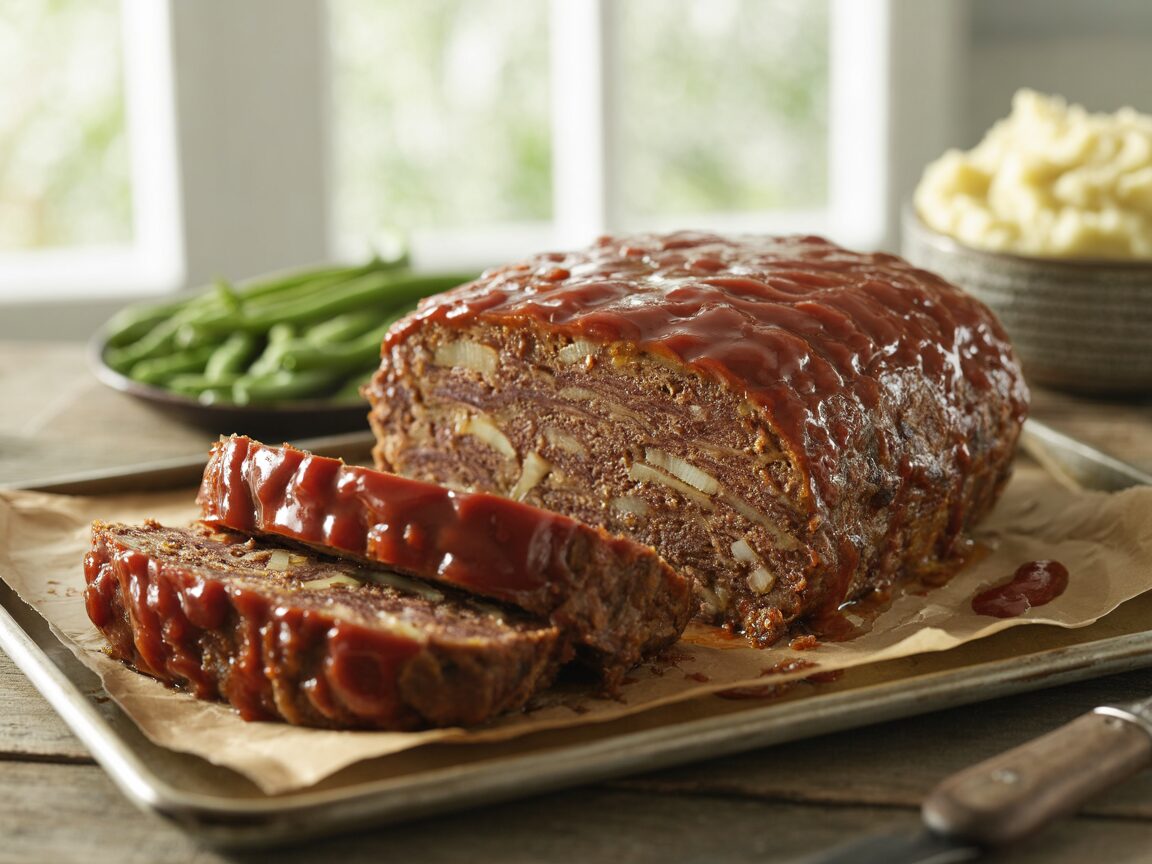
Safety comes down to two numbers, since beef or pork should reach 160°F and turkey or reheated leftovers 165°F. Color cannot confirm either one, so keep an instant-read thermometer within reach, then serve the slices with mashed potatoes and green beans.
Key takeaways
- Soak the breadcrumbs in milk first, because that panade keeps the slices moist.
- Use 85/15 ground beef and mix only until combined.
- Bake at 350°F on a baking sheet until the center reads 160°F, or 165°F for turkey.
- Rest the loaf 10 minutes before slicing, and refrigerate leftovers within 2 hours.
How this recipe was built: its ratios follow long-established meatloaf technique and sit within the range of widely published recipes. Temperatures and storage times follow USDA and FoodSafety.gov guidance, and the nutrition figures come from FoodData Central.