Quick answer
Yes. Mashed potatoes thicken noticeably as they cool, because steam carries water away and the cooked potato starch begins to set. So stop adding milk while the mash is slightly looser than you want, and serve it soon. If it stiffens while you hold it, loosen it with a splash of warm milk.
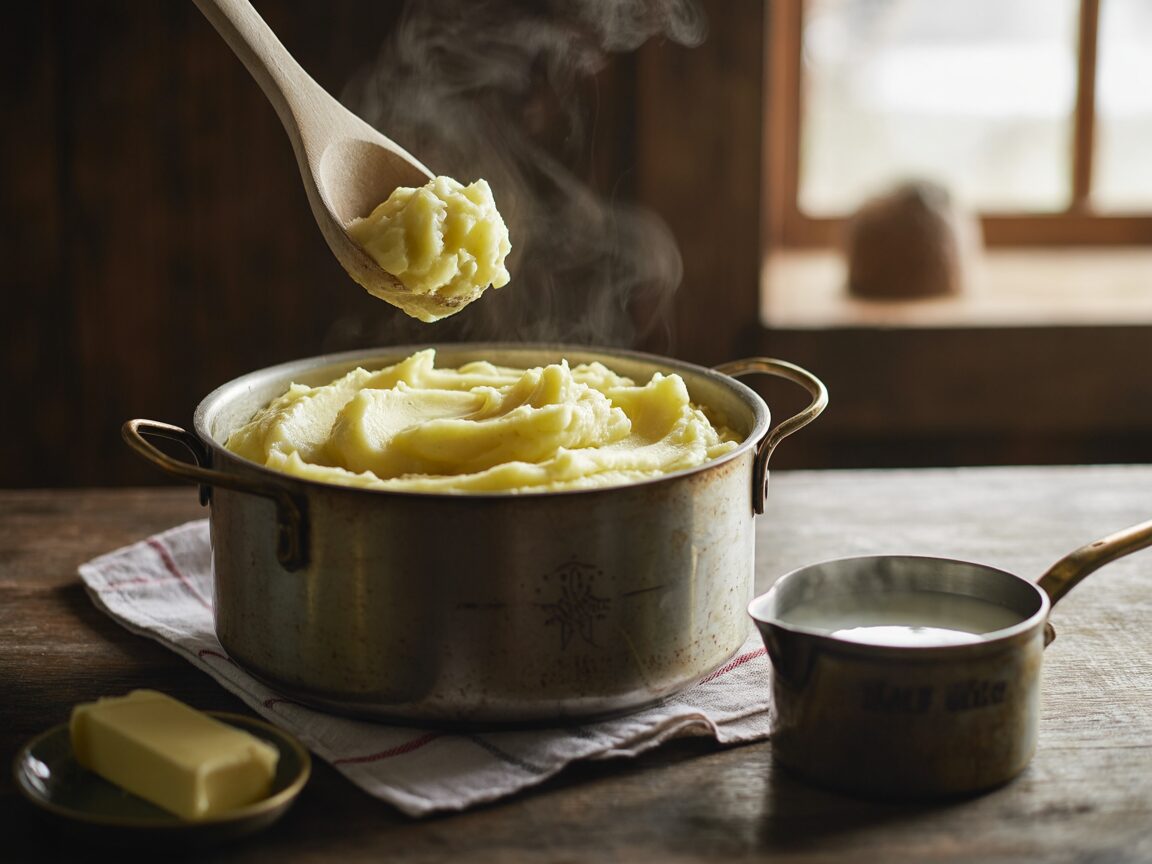
Will mashed potatoes thicken as they cool? They will, and often more than people expect. A bowl that looks almost pourable when it leaves the pot can turn thick and spoonable by the time it reaches the table. After a night in the refrigerator, the same potatoes become firm enough to slice.
That change works in your favor once you understand it. It means a slightly loose mash is usually fine, you can rescue a stiff mash, and leftovers simply need warm liquid when you reheat them.
Below, you will find why potatoes firm up, how much thicker they get and how to judge the right consistency in the pot. You will also see how to fix mashed potatoes that are truly runny. Finally, you will learn how to keep them warm for a meal without turning them into paste.
Why Mashed Potatoes Thicken as They Cool
Two separate things happen once the potatoes leave the heat. Both make the mash thicker, but they work on different timescales.
1. Water leaves as steam
Hot mashed potatoes release a surprising amount of steam, especially in a wide, shallow bowl. Every wisp is water that is no longer in the mash, so the potatoes grow denser by the minute. As a result, this effect is strongest in the first 10 to 15 minutes, while the potatoes are still steaming.
2. The starch begins to set
Cooking makes the starch in potatoes absorb water and swell, which is what turns firm chunks soft and creamy. As that cooked starch cools, it slowly reorganizes into a firmer structure, a process food scientists call retrogradation. A University of Florida IFAS Extension guide describes how cooked starch cools and reshapes, especially in the refrigerator.
Potato starch is particularly prone to this change. A nutrition science review notes that cooled potatoes contained about twice the resistant starch of freshly cooked ones. The authors link that difference to the long starch chains typical of potatoes. In practical terms, that is why cold mashed potatoes feel firm and almost sliceable.
How Much Thicker Do They Get?
The amount depends on time and temperature. This rough guide shows what to expect from the same batch of potatoes as it cools.
| Stage | Texture to expect | What to do |
|---|---|---|
| Straight from the pot | Loosest it will ever be; soft, glossy peaks | Stop adding milk while it is slightly loose |
| 10 to 15 minutes in a serving bowl | Noticeably thicker as steam escapes | Cover the bowl to slow the change |
| Held warm for an hour or more | Stiff around the edges, with a dry surface | Stir in a splash of warm milk |
| Refrigerated overnight | Firm, dense and sliceable | Reheat with warm milk or butter |
These are visual guides rather than measurements, because the result depends on the potato, the amount of liquid and the size of the batch. Still, the pattern is consistent: every stage gets thicker, and none of them gets thinner on its own.
Does the Potato Variety Change How Much It Thickens?
It does, because potatoes differ in how much starch they contain. Starchy russets fall apart into a light, fluffy mash and absorb liquid readily. They also firm up the most as they cool, since they hold the most starch to set.
Yukon Golds sit in the middle. Their buttery, denser flesh needs less milk and stays creamier as it cools, which makes it a forgiving choice when the potatoes must wait. Red potatoes, finally, stay waxy and firm, so they suit a chunky, skin-on smash better than a smooth mash.
| Potato | Texture when mashed | How much it firms as it cools |
|---|---|---|
| Russet | Light, fluffy, absorbs plenty of milk | The most |
| Yukon Gold | Dense, buttery, needs less milk | Moderate |
| Red | Chunky, waxy, best left rustic | Least, but never fully smooth |
These are general tendencies rather than measured figures, since every batch of potatoes differs a little. Even so, a mix of russets and Yukon Golds gives a good balance of fluffiness and creaminess for potatoes that will sit for a while.
Butter, Cream and Other Add-Ins
Starch is not the only ingredient that firms up. Butter and cream cheese turn solid as they chill, so a rich mash made with plenty of either sets noticeably harder in the refrigerator. Fortunately, the same fats melt again as the potatoes reheat, and they help the mash turn creamy quickly.
Temperature matters when you add them, too. Warm milk and softened butter blend in smoothly and keep the potatoes hot, while cold milk cools the mash and speeds up the thickening. For that reason, always warm the milk until it steams before you add it.
How to Judge the Right Consistency in the Pot
Because the mash keeps firming, aim for a texture just slightly softer than your ideal. A good test is to lift a spoonful and turn the spoon sideways. The potatoes should slide off slowly in a soft mound, rather than clinging stiffly or running off in a puddle.
Also, add the warm milk gradually, a few tablespoons at a time, and mash between additions. That way, you can stop the moment the texture looks right, instead of discovering too late that you added the whole cup.
The creamy mashed potatoes recipe on this site uses about 1 cup of milk for 3 pounds of potatoes. Treat that amount as a starting point, since starchy russets drink up more liquid than buttery Yukon Golds.
Why Mashed Potatoes Turn Runny
Sometimes the mash is truly too thin, not just warm. In most cases, the cause is excess water rather than too much milk alone.
- Waterlogged potatoes: small pieces and long boiling let the potatoes absorb extra water.
- Poor draining: water left in the pot ends up in the mash.
- No drying step: skipping a minute or two of steaming over low heat leaves the potatoes wet.
- Liquid added too fast: pouring all the milk in at once makes it easy to overshoot.
- Waxy potatoes: red potatoes stay firm and do not absorb liquid the way starchy russets do.
On that last point, Potatoes USA describes red potatoes as waxy, with flesh that stays firm throughout cooking. Russets, by contrast, are its pick for light and fluffy mashed potatoes.
How to Fix Runny Mashed Potatoes
Before you add anything, give the potatoes a few minutes, since they may thicken on their own. If they are still too loose, choose a fix based on how thin they are and what you have on hand.
| Fix | How | Best when |
|---|---|---|
| Cook off the water | Stir over low heat, uncovered, for a few minutes | Slightly thin; no new flavors wanted |
| Instant potato flakes | Stir in 1 to 2 tablespoons at a time | Quite thin; the fastest fix |
| More potatoes | Boil, drain and mash an extra potato or two into the batch | Very thin and there is time to spare |
| Shredded cheese | Fold in a handful of cheddar or Parmesan | Slightly thin; extra flavor welcome |
| Cream cheese or sour cream | Stir in a few spoonfuls, at room temperature | Slightly thin; richer texture wanted |
| Powdered milk | Stir in 1 tablespoon at a time | Slightly thin; keeps a milky flavor |
The Idaho Potato Commission suggests two of these: adding dehydrated potatoes a few tablespoons at a time, or cooking the mash gently so the extra moisture evaporates. It also warns against overstirring, which turns the potatoes gluey.
Use flour or cornstarch with care
Flour and cornstarch can thicken mashed potatoes, but they need heat to lose their raw taste and gritty texture. If you try them, sprinkle in no more than 1 teaspoon at a time, then stir over low heat for a couple of minutes. In most kitchens, potato flakes are the easier choice, because they taste like potatoes already.
Avoid the blender
Whatever fix you choose, fold it in gently with a spoon or spatula. A blender, food processor or long stretch with an electric mixer bursts the swollen starch cells. That releases sticky starch and turns runny potatoes gluey, which is much harder to repair.
Keeping Mashed Potatoes Warm Without Turning Stiff
For a holiday meal, mashed potatoes often wait while everything else finishes. To keep them creamy, slow both steam loss and cooling with a lid and gentle heat.
- Slow cooker: transfer the potatoes to a buttered slow cooker set to warm, and stir in a little warm milk every hour.
- Double boiler: set a covered heatproof bowl over a pot of barely simmering water.
- Oven: cover the dish with foil and keep it in a low oven, stirring occasionally.
For food safety, the temperature matters as much as the texture. FDA buffet guidance says to keep hot foods at 140°F or warmer, and to use chafing dishes, slow cookers or warming trays to do it. Check with a thermometer now and then, especially on the warm setting of an older slow cooker.
Timing Mashed Potatoes for a Big Meal
On a busy cooking day, mashed potatoes are easiest when you plan backward from serving time. Peel and cut the potatoes early, then keep them covered with cold water in the pot so they do not darken. Next, start boiling them about 40 minutes before dinner, which leaves time to drain, dry and mash them without rushing.
If the potatoes finish early, mash them with only part of the milk and keep them covered over very low heat or in a slow cooker. Then stir in the remaining warm milk just before serving. This approach accounts for the thickening that happens while they wait, so the bowl reaches the table at the texture you planned.
For a large crowd, cook the potatoes in two pots rather than one oversized batch. Smaller batches drain and dry more evenly, and you can mash and season each one separately.
Making Mashed Potatoes Ahead
Mashed potatoes reheat well, so you can make them a day or two before a big meal. Expect them to come out of the refrigerator much firmer, since cold starch sets more fully.
To store them, spread the potatoes in a shallow container and refrigerate them within 2 hours of cooking. USDA leftovers guidance recommends using refrigerated leftovers within 3 to 4 days and reheating them to 165°F.
When you reheat them, add warm milk or a pat of butter for every few cups of potatoes. Then heat them covered, stirring every few minutes on the stove or every minute in the microwave, until they are hot throughout. If they still seem stiff, add more milk a spoonful at a time, since the starch loosens again as it warms.
Using Thick Leftover Mashed Potatoes
Firm, cold mashed potatoes are not a problem to fix, because they are an ingredient in their own right. Their dense texture holds a shape that fresh mash cannot.
- Potato cakes: mix in an egg and a little flour, shape patties and pan-fry them until golden.
- Pie topping: spread them over shepherd’s pie or a casserole and bake until browned.
- Soup thickener: whisk a few spoonfuls into a thin potato soup until smooth.
Does Cooling Change the Nutrition?
Slightly, yes. A USDA Agricultural Research Service study found that chilled potatoes had more resistant starch than hot or reheated ones. Resistant starch acts more like fiber, because it is not fully digested.
The difference is modest, however, and reheating reduced it in that study. So enjoy the texture change for what it is, and treat any nutritional shift as a small side benefit rather than a reason to change how you serve them.
Frequently Asked Questions
Do mashed potatoes get thicker in the fridge?
Yes. Refrigerated mashed potatoes become much firmer, because cold starch sets more fully. Warm milk stirred in during reheating restores a creamy texture.
Why are mashed potatoes sometimes watery?
Usually the potatoes absorbed too much water while boiling, or they were not drained and dried well. Stir them over low heat to cook off the excess, or add instant potato flakes a spoonful at a time.
Why do mashed potatoes turn gluey?
Overworking them bursts the starch cells, which releases sticky starch. Mash by hand or with a ricer, and stop as soon as the potatoes are smooth.
How long can mashed potatoes sit out?
No more than 2 hours at room temperature, or 1 hour above 90°F. After that, throw them out rather than refrigerating them.
Can you freeze mashed potatoes?
Yes. USDA lists 3 to 4 months in the freezer for cooked leftovers. Mash rich in butter or cream freezes best, and stirring well during reheating smooths out any graininess.
Bringing It Together
Mashed potatoes always thicken as they cool, first as steam carries water away and then as the cooked starch sets. For that reason, stop adding milk while the mash is still a little loose, and serve it promptly or keep it covered and warm.
If the potatoes are genuinely runny, cook off the water over low heat or stir in potato flakes, and never reach for the blender. If they stiffen while you hold them, a splash of warm milk brings them back. Finally, cold leftovers will be firm, so reheat them with liquid or turn them into potato cakes.
Key takeaways
- Mashed potatoes thicken as they cool, because steam escapes and the starch sets.
- Stop adding milk while the mash is slightly loose, and add it gradually.
- Fix runny mash by cooking off water or adding potato flakes, never by blending.
- Hold warm mash at 140°F or above, and reheat leftovers to 165°F with warm milk.
About this guide: the starch science follows University of Florida IFAS Extension, a review in Advances in Nutrition and a USDA Agricultural Research Service study. The fixes follow Potatoes USA and the Idaho Potato Commission, and the holding and storage rules follow FDA and USDA guidance.