Quick answer
For tender beef stew, brown 2½ pounds of cubed beef chuck in batches, then cook onion, garlic and tomato paste in the same pot. Add red wine, beef broth, Worcestershire, thyme and bay leaves, cover, and braise in a 325°F oven for 1½ hours. Stir in potatoes, carrots and celery and cook about 1 hour more, until the beef falls apart with a fork.
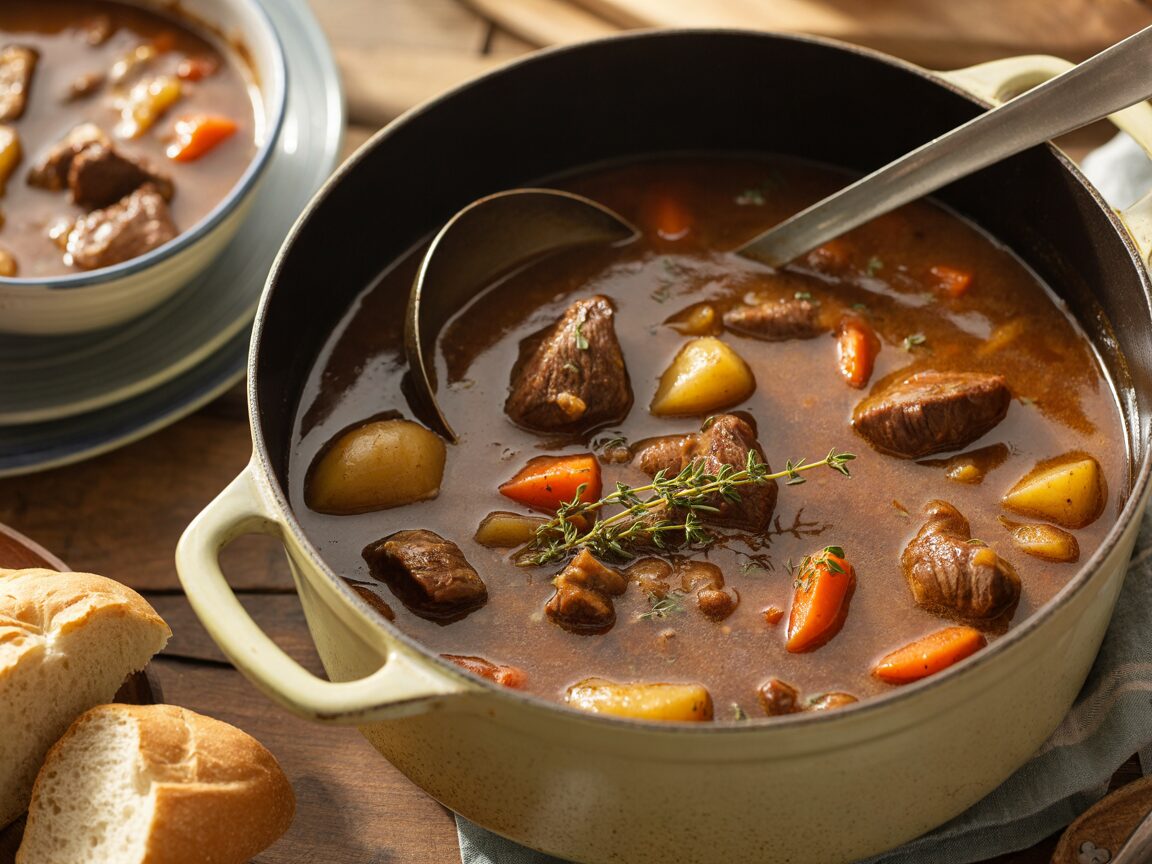
This beef stew recipe produces deeply browned, fork-tender beef in a rich, glossy gravy, with potatoes and carrots that hold their shape. It requires one heavy pot and the oven, which surrounds the stew with gentle, consistent heat, so nothing scorches on the bottom and constant stirring becomes unnecessary.
Below, you will find why chuck is the right cut and why stew meat sometimes turns out tough. After that come the full recipe, slow cooker and pressure cooker versions, how to thicken the gravy, and how to store, freeze and reheat leftovers safely.
Why Chuck Makes the Best Beef Stew
Beef chuck comes from the shoulder, a hard-working muscle laced with fat and connective tissue. That connective tissue is tough at first, yet during long, gentle, moist cooking it melts into gelatin, which makes the meat tender and gives the gravy its body. Leaner cuts such as sirloin or round lack that tissue, so they dry out and turn stringy instead of softening.
For the best results, buy a whole boneless chuck roast and cut it yourself into 1½-inch cubes, trimming away large pieces of hard fat. Packaged “stew meat” is convenient, although it often mixes trimmings from several cuts, so some pieces become tender while others stay chewy. If you buy it, choose packages with plenty of marbling and pieces of a similar size.
Why Beef Stew Turns Out Tough
Tough stew almost always indicates the beef needs additional time, not less. Chuck passes through a stage where it tightens and feels firm before the connective tissue finally dissolves. Consequently, if the beef is chewy after 2 hours, keep cooking and check again every 20 minutes.
Boiling causes the opposite problem. A hard, rolling boil squeezes moisture out of the meat, so even well-cooked chunks turn dry and stringy. Keep the liquid at a lazy simmer, with only a few bubbles breaking the surface, which the low, even heat of the oven does almost automatically.
| Problem | Likely cause | Fix |
|---|---|---|
| Chewy, rubbery beef | Not cooked long enough | Keep simmering and test every 20 minutes |
| Dry, stringy beef | Boiled instead of simmered | Lower the heat or use a 300°F to 325°F oven |
| Pale, flat-tasting stew | Beef steamed instead of browned | Pat the beef dry and brown it in small batches |
| Mushy potatoes | Added too early | Add vegetables for the last hour only |
| Thin gravy | Too much liquid or no thickener | Simmer uncovered or add a cornstarch slurry |
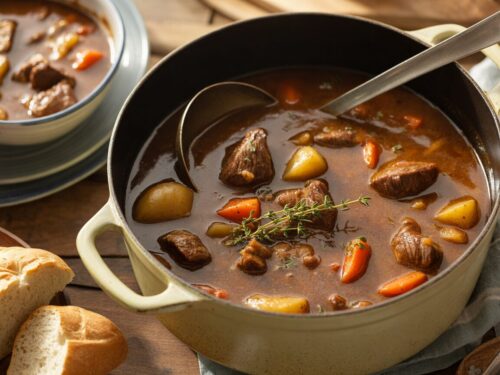
Classic Beef Stew
Equipment
- Large Dutch oven or heavy ovenproof pot with lid
- Cutting board and sharp knife
- Wooden spoon
Ingredients
- 2 1/2 lb boneless beef chuck trimmed and cut into 1½-inch cubes
- 1 tsp table salt plus more to taste
- 1/2 tsp black pepper
- 3 tbsp all-purpose flour
- 2 tbsp neutral oil such as canola, divided
- 1 large yellow onion chopped
- 3 cloves garlic minced
- 2 tbsp tomato paste
- 1 cup dry red wine or more broth
- 3 cups reduced-sodium beef broth
- 1 tbsp Worcestershire sauce
- 1 tsp dried thyme
- 2 bay leaves
- 4 medium carrots cut into 1-inch pieces
- 2 celery ribs cut into 1-inch pieces
- 1 1/2 lb Yukon Gold potatoes cut into 1½-inch chunks
Instructions
- Heat the oven to 325°F. Pat the beef completely dry, season it with the salt and pepper, and toss it with the flour.
- Heat 1 tablespoon of oil in a large Dutch oven over medium-high heat. Brown the beef in 2 or 3 batches without crowding, 4 to 5 minutes per batch, adding more oil as needed. Transfer to a plate.
- Lower the heat to medium. Cook the onion until softened, about 5 minutes, then stir in the garlic and tomato paste for 1 minute.
- Pour in the wine and scrape up the browned bits from the bottom of the pot. Simmer for 2 minutes.
- Add the broth, Worcestershire sauce, thyme, bay leaves and the beef with its juices. Bring to a simmer, cover, and transfer to the oven for 1½ hours.
- Stir in the carrots, celery and potatoes, cover, and return to the oven for about 1 hour, until the beef falls apart easily and the potatoes are tender.
- Remove the bay leaves, skim off excess fat, and season with salt and pepper to taste. Let the stew rest 10 minutes before serving.
Notes
Nutrition
Per serving, estimated
- Calories
- 460 kcal
- Total fat
- 14 g
- Saturated fat
- 4 g
- Cholesterol
- 120 mg
- Sodium
- 910 mg
- Carbohydrates
- 31 g
- Fiber
- 5 g
- Sugars
- 6 g
- Protein
- 46 g
Browning: The Step That Makes the Flavor
Browning creates the deep, savory flavor that separates great stew from bland stew. Pat the cubes completely dry, season them, and toss them lightly in flour, which helps them brown and later thickens the gravy. Then sear them in hot oil in two or three batches, leaving space between the pieces.
Overcrowding the pot traps steam, so the beef turns gray instead of developing a caramelized crust. Afterward, the browned bits stuck to the bottom of the pot hold much of the flavor. Pouring in the wine and scraping them up, a step called deglazing, dissolves that flavor straight into the gravy.
Choosing the Wine, Broth and Vegetables
A dry, medium-bodied red wine works best, such as a Merlot, Cabernet Sauvignon or Chianti-style blend that you would happily drink. Avoid sweet wines and anything labeled “cooking wine,” which usually contains added salt. During the long braise, most of the alcohol evaporates and the wine contributes acidity and fruity depth that balances the richness of the beef.
Choose reduced-sodium beef broth, because the liquid concentrates as it simmers and regular broth can make the finished stew noticeably salty. Season gradually at the end instead, once the gravy has reduced.
For potatoes, Yukon Golds are ideal, since their waxy-creamy texture holds together during cooking. Red potatoes also work well, whereas starchy russets tend to crumble and cloud the gravy. Cut the carrots slightly smaller than the potatoes, because they take a little longer to soften completely.
Scaling the Recipe
The recipe allows about 6½ ounces of raw beef per person. Scale every ingredient by the same proportion, and use a pot large enough to hold the stew with at least 2 inches of space at the top.
| Servings | Beef chuck | Broth | Pot size |
|---|---|---|---|
| 4 | 1⅔ lb | 2 cups | 5-quart |
| 6 | 2½ lb | 3 cups | 6- to 7-quart |
| 12 | 5 lb | 6 cups | Two 6-quart pots, or one 12-quart |
For a doubled batch, brown the beef in more batches rather than larger ones, and expect the braise to take 20 to 30 minutes longer.
Stovetop, Slow Cooker or Pressure Cooker
The oven gives the most even results, but every method below produces tender stew. In each case, brown the beef first for the best flavor.
| Method | How | About how long |
|---|---|---|
| Oven | Covered at 325°F; vegetables for the last hour | 2½ hours |
| Stovetop | Covered at a gentle simmer, stirring now and then | 2 to 2½ hours |
| Slow cooker | Everything in at once, on low | 8 hours |
| Pressure cooker | High pressure, then natural release | 35 minutes plus release |
For the slow cooker, always start with thawed beef. The USDA slow cooker guidance says to thaw meat before it goes in, because frozen chunks warm too slowly to be safe. Likewise, cut the potatoes and carrots into large pieces so they do not turn mushy during the long cook.
How to Thicken Beef Stew
The flour on the beef usually thickens the gravy enough. If it is still thin at the end, choose one of these fixes:
- Simmer uncovered: cook without the lid for 10 to 15 minutes so the liquid reduces.
- Cornstarch slurry: whisk 1 tablespoon of cornstarch into 2 tablespoons of cold water, stir it in, and simmer for 2 minutes.
- Mash a few potatoes: press several pieces against the side of the pot and stir them back in.
For a gluten-free stew, skip the flour on the beef and rely on the cornstarch slurry instead. Also check the Worcestershire sauce and broth labels, since some brands contain wheat.
Variations
- Without wine: replace the wine with more beef broth plus 1 tablespoon of red wine vinegar for brightness.
- With mushrooms: brown 8 ounces of quartered cremini mushrooms after the beef and add them with the vegetables.
- With peas: stir in 1 cup of frozen peas during the last 5 minutes.
- With stout: swap the wine for a dark stout and add a teaspoon of brown sugar.
Beef stew is also excellent ladled over creamy mashed potatoes with the potatoes left out of the pot, or served with a wedge of skillet cornbread.
Make Ahead, Store and Freeze
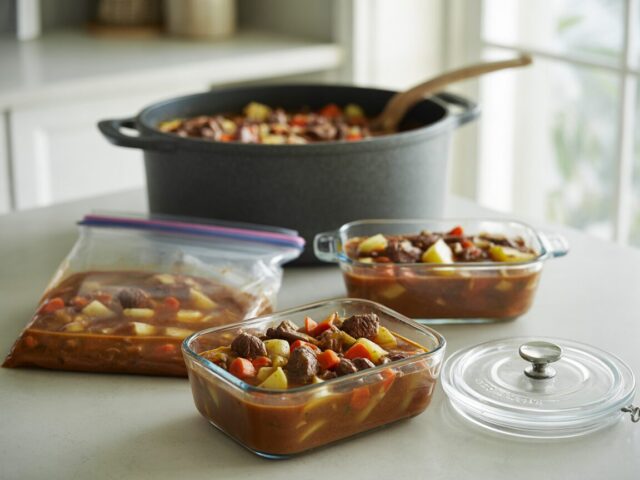
Beef stew tastes even better the next day, as the flavors settle and the gravy thickens. To cool a big pot safely, divide the stew into shallow containers and refrigerate it within 2 hours of cooking, as the USDA leftovers guidance advises. Leftovers keep 3 to 4 days in the refrigerator.
For the freezer, the cold storage chart lists 2 to 3 months for soups and stews for the best quality. Potatoes can turn grainy once frozen, so if you plan to freeze the whole batch, cook the stew without them and add freshly boiled potatoes when you reheat it.
To reheat, warm the stew on the stovetop over medium heat, stirring often, until it reaches a rolling boil, as the USDA recommends for soups and gravies. A splash of broth loosens gravy that has thickened in the refrigerator.
How to Tell When Beef Stew Is Done
Doneness in stew is about tenderness, not temperature. By the time chuck turns tender, it has simmered far beyond the 145°F minimum that the USDA safe temperatures list for beef roasts. Safety, therefore, is never the limiting factor. Instead, lift out the largest cube and press it with a fork. It should split apart with almost no resistance, and the potatoes should slide off a knife easily.
If the beef still resists, return the pot to the oven and check again in 20 minutes. Different roasts soften at different speeds, so the clock is only a guide.
Ways to Serve and Use Leftovers
Serve beef stew in wide bowls with crusty bread, buttered egg noodles or rice to soak up the gravy. A simple green salad with a sharp vinaigrette balances the richness nicely.
Leftovers also adapt easily. Spoon reheated stew into a baking dish, top it with pastry or biscuit dough, and bake until golden for a quick pot pie. Alternatively, thin it with extra broth for a hearty vegetable beef soup, or ladle it over baked potatoes for an easy lunch.
Frequently Asked Questions
Is beef stew safe if it sat out overnight?
No. Cooked food should go into the refrigerator within 2 hours, so stew left out overnight belongs in the trash, even if you reboil it.
What is the best meat for beef stew?
Boneless beef chuck. Its fat and connective tissue melt during long cooking, so it turns tender and juicy rather than dry.
Should you cook beef stew covered or uncovered?
Covered, so the beef braises gently in steam and liquid. Remove the lid for the last 10 to 15 minutes only if the gravy needs thickening.
How long does beef stew take to cook?
About 2½ hours in a 325°F oven or on the stovetop, 8 hours on low in a slow cooker, or 35 minutes at high pressure plus a natural release.
Can you put raw beef in a slow cooker for stew?
Yes, provided the beef has thawed completely. Browning it first produces considerably better flavor, although the stew remains safe without that step.
Bringing It Together
Great beef stew comes down to three things: chuck, careful browning, and time at a gentle simmer. Braise the beef for 1½ hours at 325°F, add the vegetables for the final hour, and keep cooking until the meat falls apart. Afterward, cool leftovers quickly in shallow containers, and bring them back to a boil when you reheat them.
Key takeaways
- Use boneless chuck cut into 1½-inch cubes for tender, juicy beef.
- Brown the beef in batches, then deglaze the pot with wine or broth.
- Braise covered at 325°F, adding vegetables for the last hour.
- If the beef is still chewy, cook it longer rather than hotter.
- Refrigerate within 2 hours, and eat leftovers within 3 to 4 days.
About this recipe: nutrition is estimated from USDA FoodData Central values, and the storage, cooling and reheating advice follows USDA food safety guidance.