Quick answer
Cooked pancakes last 3 to 4 days in the refrigerator and keep their best quality for about 3 to 4 months in the freezer. Refrigerate them within 2 hours, sealed in an airtight bag or container. Pancake batter is best cooked within a day, because the baking powder weakens and the batter contains raw egg.
How long do pancakes last? Long enough to make a big batch on the weekend and eat from it all week, as long as you store them well. Cooked pancakes follow the same refrigerator rule as other leftovers, and they freeze better than almost any other breakfast food.
Batter is a different story. Below, you will find a storage chart, the right way to refrigerate and freeze pancakes, and the best reheating methods. You will also see how long batter and dry mix keep, and the signs that pancakes have gone bad.
Pancake Storage Chart
| Pancakes | Counter | Refrigerator (40°F or below) | Freezer (0°F) |
|---|---|---|---|
| Plain cooked pancakes | Refrigerate within 2 hours | 3 to 4 days | 3 to 4 months for best quality |
| Pancakes with fruit or chocolate chips | Refrigerate within 2 hours | 3 to 4 days; check sooner for mold | 3 to 4 months |
| Pancakes with cream, butter or fruit toppings | 2 hours at most | Store toppings separately | Freeze pancakes without toppings |
| Leftover batter | Do not leave out | Best within 1 day | Not recommended |
| Dry pancake mix | Cool, dry cupboard; use by the best-by date | ||
The refrigerator and freezer times follow USDA leftovers guidance, which gives 3 to 4 days in the refrigerator and 3 to 4 months in the freezer for cooked leftovers. Freezer times describe quality, since food kept frozen at 0°F stays safe.
Can Pancakes Sit Out?
Plain cooked pancakes are a low-risk food, much like bread. In fact, a Kentucky public health guide on refrigerated food after a power outage lists waffles, pancakes and bagels as foods to keep. That holds even after they warm above 40°F for more than 2 hours.
Even so, pancakes keep best in the refrigerator, because their moisture invites mold at room temperature within a day or two. In addition, toppings change the rules. Butter, whipped cream, yogurt and cut fruit are perishable, so refrigerate topped pancakes within 2 hours, or 1 hour on a day above 90°F.
Keeping Pancakes Warm Before Serving
When you cook for a household or a brunch gathering, the first pancakes inevitably finish long before the last. Rather than stacking them on a plate, where trapped steam makes them limp, arrange them in a single layer on a wire rack set over a baking sheet. Then hold them in an oven preheated to about 200°F, which keeps them warm without drying them excessively. Serve within roughly 30 minutes for the best texture, and refrigerate any leftovers promptly once everyone has eaten, rather than leaving the platter on the table all morning.
How to Store Pancakes in the Fridge
- Cool them on a rack: let the pancakes cool completely in a single layer, so steam does not make them soggy.
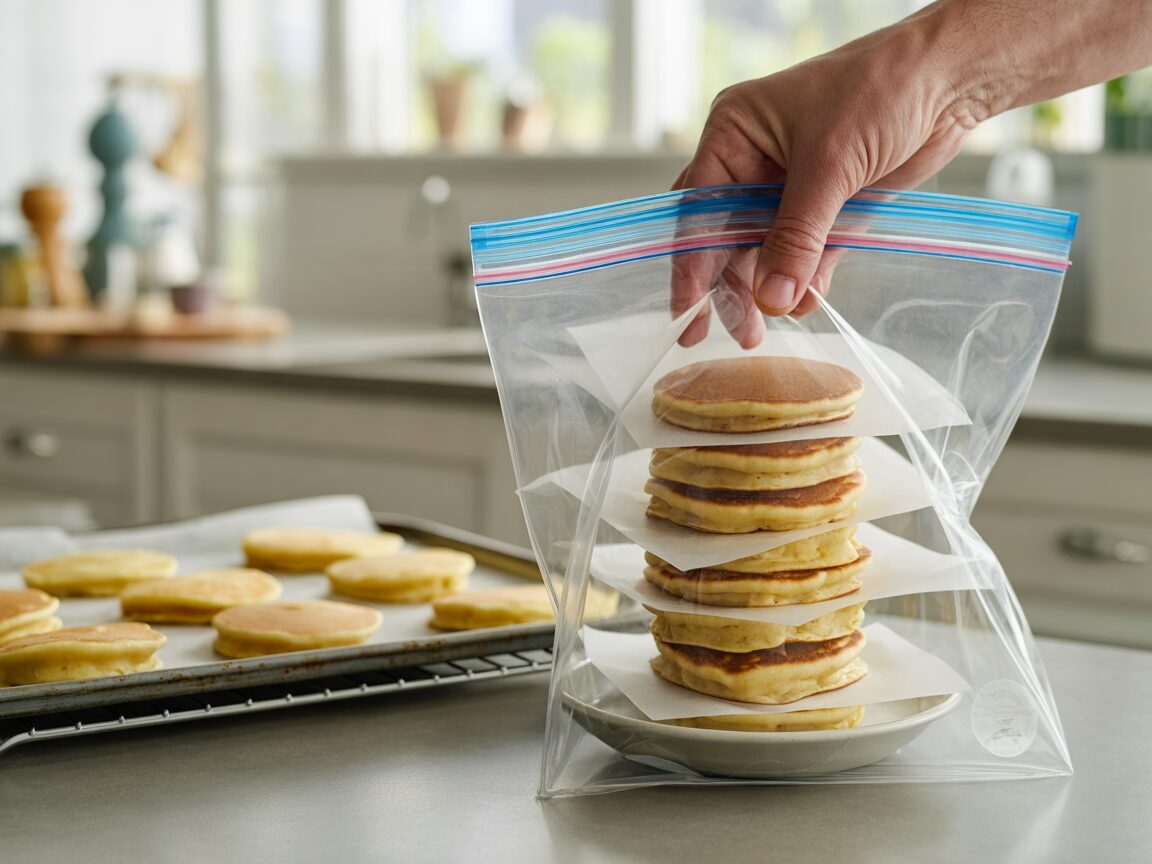
- Layer with parchment: stack them with a square of parchment or wax paper between each, so they separate easily.
- Seal them: slide the stack into a zip-top bag, press out the air, or use an airtight container.
- Label and refrigerate: write the date on the bag and eat them within 3 to 4 days.
Keep syrup, butter and fruit toppings separate until serving. Toppings make pancakes soft and soggy, and wet fruit shortens how long they stay fresh.
Why Pancakes Turn Stale in the Fridge
Refrigerated pancakes often taste drier and firmer by the second day, even though they are perfectly safe. That change comes from the starch in the flour. Cooked starch gradually reorganizes into a firmer structure as it cools, and refrigerator temperatures accelerate the process, as a University of Florida IFAS Extension guide explains. The same effect makes cold mashed potatoes thicken as they cool.
Fortunately, heat reverses much of that firmness. Consequently, reheated pancakes regain a softer, fresher texture, whereas pancakes eaten cold straight from the refrigerator taste noticeably staler. Freezing, by contrast, slows staling dramatically, which explains why frozen pancakes often reheat better than refrigerated ones.
How to Freeze Pancakes
Freezing turns a weekend batch into weeks of quick breakfasts. The trick is to freeze the pancakes flat first, so they do not stick together in a solid block.
- Cool completely: warm pancakes form ice crystals and freezer burn faster.
- Flash freeze: lay them in a single layer on a lined baking sheet and freeze until firm, about 1 to 2 hours.
- Pack them: stack the frozen pancakes in a freezer bag with parchment between them, then press out as much air as possible.
- Label: add the date, and use them within about 3 to 4 months for the best texture.
Freeze pancakes plain, without butter or syrup. Blueberry and chocolate chip pancakes freeze just as well, although blueberries may bleed a little color as they thaw.
How to Reheat Pancakes
Pancakes reheat well from the refrigerator or straight from the freezer. Choose the method based on how many you are warming and the texture you want.
| Method | From the fridge | From frozen | Result |
|---|---|---|---|
| Toaster | 1 cycle on low to medium | 1 to 2 cycles | Crisp edges; best for 1 or 2 pancakes |
| Oven at 350°F | Covered with foil, about 5 to 8 minutes | About 10 to 15 minutes | Soft and even; best for a crowd |
| Microwave | 20 to 30 seconds, covered with a damp paper towel | About 1 minute, flipping halfway | Soft; fastest |
| Skillet | About 1 minute per side over medium-low | 2 to 3 minutes per side | Lightly crisp; just-cooked taste |
Heat them until steaming hot throughout. USDA advises reheating leftovers to 165°F, which matters most for pancakes made with add-ins such as sausage or cheese. Since pancakes are thin, a minute or two of direct heat usually gets them there.
Avoid overheating in the microwave, which turns pancakes rubbery as they cool. Instead, heat them in short bursts and check them between each.
How Long Does Pancake Batter Last?
Pancake batter is best cooked the same day or the next morning. Two things limit it. First, most batters rise with baking powder, which starts working as soon as it gets wet, so the pancakes come out flatter the longer the batter sits. Second, batter contains raw egg and milk, so it belongs in the refrigerator, covered, at all times.
For safety, a reasonable outer limit is the 2-to-4-day window that the FoodSafety.gov storage chart gives for raw egg whites and yolks. For good rise, however, cook leftover batter within about 24 hours. If it looks flat or gray, stir gently and add ¼ teaspoon of baking powder per cup of batter before cooking.
A better plan for make-ahead breakfasts is to mix the dry and wet ingredients in separate containers the night before, then combine them in the morning. Alternatively, cook all the batter and freeze the pancakes, which keeps much longer than batter.
Do not taste raw batter
Raw batter is not ready to eat. The FDA flour guidance warns that raw flour can carry Salmonella and E. coli, and the batter also contains raw egg. So cook every pancake until the center springs back and no wet batter remains.
How Long Does Pancake Mix Last?
Dry pancake mix keeps a long time in a cool, dry cupboard. Store-bought mix carries a best-by date, which USDA dating guidance describes as a quality date, not a safety date.
The main thing that fades over time is the leavening. Old mix may still be safe, but it makes flat, dense pancakes. To test it, stir a spoonful into a little hot water: if it fizzes, the leavening still works. Homemade mix made with baking powder follows the same rule, so use it before the date on your baking powder.
Mixes that contain dried milk or buttermilk powder can turn stale or rancid faster in warm, humid kitchens. Therefore, seal the bag tightly after each use, and discard any mix that smells off, clumps from moisture, or shows signs of pests.
How to Tell If Pancakes Have Gone Bad
Throw out pancakes that show any of these signs, or that have passed 4 days in the refrigerator.
- Mold: fuzzy spots of white, green, blue or black, often first on fruit-filled pancakes.
- Smell: a sour, yeasty or off odor instead of a mild, buttery one.
- Texture: a slimy or sticky surface, often from trapped moisture.
- Freezer burn: dry, gray or white patches on frozen pancakes, which are safe but taste stale.
If you find mold on one pancake in a stack, discard the whole stack. NC State Extension, summarizing USDA mold guidance, advises throwing out moldy bread and baked goods, because mold can reach below the surface of porous foods.
Store-Bought Frozen Pancakes
Packaged frozen pancakes follow the instructions on the box. Keep them frozen until you need them, and reheat them as the package directs. Once you thaw a few, treat them like homemade leftovers: refrigerate them and eat them within 3 to 4 days. Refreezing thawed pancakes is safe if they stayed cold, although they may turn drier.
Packing Pancakes to Go
Pancakes travel well for school lunches, road trips and camping breakfasts. Pack cooled pancakes in an airtight container with an ice pack in an insulated bag, and carry syrup or toppings separately in a small leak-proof cup. Without cold packs, keep any pancakes with butter, cream or fruit toppings out for no more than 2 hours. Plain pancakes travel more forgivingly, although they still taste best when kept cool.
Waffles and Crepes
The same rules apply to waffles. Cooked waffles keep 3 to 4 days in the refrigerator and freeze especially well, since their crisp surface reheats perfectly in a toaster. Crepes store the same way too, layered with parchment, although they are thinner and dry out faster, so wrap them tightly.
A Simple Pancake Meal-Prep Plan
Make a double batch of pancakes on the weekend. Refrigerate enough for the next 2 or 3 days, then flash freeze the rest. Each evening, move a portion from the freezer to the refrigerator, or simply toast them straight from frozen in the morning. That way, homemade pancakes stay quick enough for a weekday.
The fluffy pancakes recipe on this site doubles easily and includes a scaling chart, so you can size the batch to your household.
Frequently Asked Questions
Can you eat pancakes left out overnight?
Plain pancakes are a low-risk food, so one night out is a quality issue more than a safety one. Throw them out, however, if they had butter, cream or fruit toppings, or show any mold or sour smell.
Can you freeze pancake batter?
It is not recommended. Freezing weakens the leavening, so the pancakes come out flat. Cook the batter first, then freeze the pancakes instead.
Do you need to thaw frozen pancakes before reheating?
No. Reheat them straight from frozen in a toaster, oven or microwave. Thawing first only makes them softer.
How long do pancakes with blueberries last?
The same 3 to 4 days in the refrigerator, but check them daily, since moist fruit can show mold sooner than plain pancakes.
Bringing It Together
Cooked pancakes last 3 to 4 days in the refrigerator and keep their best quality for 3 to 4 months in the freezer. Cool them completely, layer them with parchment, and seal them tightly, keeping toppings separate. Reheat them in a toaster, oven, microwave or skillet until steaming hot.
Batter is the short-lived part, so cook it within about a day, or mix the dry and wet ingredients separately ahead of time. Finally, discard pancakes that show mold, smell sour or feel slimy.
Key takeaways
- Cooked pancakes last 3 to 4 days in the fridge and 3 to 4 months frozen.
- Flash freeze pancakes flat, then stack them with parchment in a freezer bag.
- Reheat pancakes in a toaster or oven straight from frozen.
- Cook leftover batter within about a day for the best rise.
About this guide: the refrigerator, freezer and reheating guidance follows USDA, and the egg and power-outage figures follow FoodSafety.gov and Kentucky public health guidance. The raw batter warning follows the FDA.