Quick answer
Whisk 1½ cups flour, 2 tablespoons sugar, 1 tablespoon baking powder and ½ teaspoon salt. Then stir in 1¼ cups milk, 1 egg, 3 tablespoons melted butter and vanilla until just combined, with a few lumps left. Rest the batter 5 minutes, then cook ¼-cup scoops on a buttered griddle over medium heat until bubbles form, flip, and cook until golden.
A good pancakes recipe should not need buttermilk, a stand mixer or an early alarm. This old-fashioned version uses pantry staples and regular milk, and it turns out tall, fluffy pancakes in about 25 minutes.
The secret is less about ingredients and more about handling. A gentle stir, a short rest and a properly heated griddle make the difference between light, golden stacks and flat, rubbery ones. Below the recipe, you will also find swaps for no eggs, no milk, no baking powder and small batches.
What Makes Pancakes Fluffy
Fluffy pancakes come from gas bubbles trapped in a thick batter. Baking powder releases carbon dioxide twice: once when it gets wet and again when it heats. A thick batter holds those bubbles, so the pancakes rise instead of spreading thin across the pan.
Mixing is the step most cooks get wrong. Stirring flour with liquid develops gluten, and the more you stir, the chewier and flatter the pancakes become. For that reason, stop as soon as no dry flour remains, even if small lumps are still visible. Those lumps hydrate during the rest and disappear on the griddle.
The short rest helps as well. During those few minutes, the flour absorbs liquid, the batter thickens slightly, and the baking powder starts to work. As a result, the first pancake rises as well as the last.
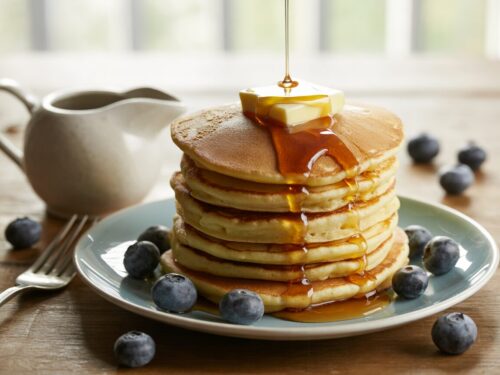
Fluffy Old-Fashioned Pancakes
Equipment
- Large mixing bowl
- Whisk
- Griddle or large skillet
- Wide spatula
- ¼-cup measure
Ingredients
- 1 1/2 cups all-purpose flour spooned and leveled
- 2 tbsp granulated sugar
- 1 tbsp baking powder
- 1/2 tsp table salt
- 1 1/4 cups whole milk
- 1 large egg
- 3 tbsp unsalted butter melted and slightly cooled, plus more for the pan
- 1 tsp vanilla extract
Instructions
- Whisk the flour, sugar, baking powder and salt in a large bowl.
- In another bowl or a large measuring cup, whisk the milk, egg, melted butter and vanilla.
- Pour the wet ingredients into the dry ingredients and stir gently with a spatula just until no dry flour remains. Leave small lumps.
- Let the batter rest for 5 minutes while you heat a griddle or skillet over medium heat, about 375°F.
- Lightly butter the griddle. Pour ¼ cup of batter per pancake, leaving space between them.
- Cook until bubbles pop across the surface and the edges look set, 2 to 3 minutes, then flip and cook until golden, 1 to 2 minutes more.
- Serve right away, or keep the pancakes warm on a rack in a 200°F oven while you cook the rest.
Notes
Nutrition
Per 3 pancakes, estimated
- Calories
- 340 kcal
- Total fat
- 13 g
- Saturated fat
- 7 g
- Cholesterol
- 75 mg
- Sodium
- 710 mg
- Carbohydrates
- 47 g
- Fiber
- 1 g
- Sugars
- 10 g
- Protein
- 9 g
Choosing Flour, Milk and Fat
Small ingredient choices noticeably change the finished texture. All-purpose flour gives dependable structure, whereas cake flour, with its lower protein content, produces softer and more delicate pancakes. Bread flour, by contrast, develops more gluten and tends to make chewy, heavier stacks, so avoid it here.
Whole milk contributes richness and helps the pancakes brown evenly. Lower-fat milk works too, although the pancakes taste slightly leaner and color less deeply. Similarly, melted butter adds flavor, while a neutral oil such as canola keeps the pancakes tender for longer and makes reheated leftovers softer. Many cooks combine them, using butter in the batter and oil on the griddle, because oil tolerates higher heat without scorching.
Scaling the Recipe
Pancake batter scales easily, as long as every ingredient changes by the same proportion. Use this chart as a quick reference.
| People | Flour | Milk | Eggs | Baking powder | Pancakes |
|---|---|---|---|---|---|
| 2 | ¾ cup | ½ cup + 2 tbsp | 2 tbsp beaten egg | 1½ tsp | About 6 |
| 4 | 1½ cups | 1¼ cups | 1 | 1 tbsp | About 12 |
| 8 | 3 cups | 2½ cups | 2 | 2 tbsp | About 24 |
For the larger batch, mix the batter in two bowls if your largest bowl feels crowded, since cramped stirring often leads to overmixing.
How Hot Should the Griddle Be?
Medium heat is the sweet spot. On an electric griddle, that usually means about 350°F to 375°F. On the stove, heat a skillet over medium for a few minutes, then test it with a few drops of water: they should sizzle and dance before evaporating.
If the pan is too cool, pancakes spread, turn pale and come out dense. If it is too hot, the outside burns before the center cooks. Because most stovetops heat unevenly, treat the first pancake as a test and adjust the heat from there.
When to flip
Watch the surface instead of the clock. Flip when bubbles rise and pop across the top, the edges look dry and set, and the underside is golden brown, usually after 2 to 3 minutes. The second side needs only 1 to 2 minutes more. Flip once, and avoid pressing down with the spatula, which squeezes out the air you worked to keep.
Common Pancake Problems
| Problem | Likely cause | Fix |
|---|---|---|
| Flat and thin | Batter too thin, or baking powder too old | Add a spoonful of flour; check the date on the baking powder |
| Tough or rubbery | Overmixed batter | Stir only until the flour disappears |
| Burnt outside, raw inside | Pan too hot | Lower the heat and make smaller pancakes |
| Pale and dense | Pan too cool | Heat it longer before the first pour |
| Sticking | Too little fat, or flipped too soon | Wipe the pan with butter and wait for set edges |
To check baking powder, stir ½ teaspoon into a little hot water. If it bubbles actively, it still works; if not, replace it.
Pancake Variations and Swaps
This base recipe adapts to whatever your kitchen holds. Use the table below for the most common requests.
| Version | What to change |
|---|---|
| Buttermilk pancakes | Use 1½ cups buttermilk instead of milk, cut the baking powder to 2 teaspoons, and add ½ teaspoon baking soda |
| No eggs | Replace the egg with 3 tablespoons of applesauce or a flax egg; see this egg substitute guide |
| No milk or dairy-free | Use oat, soy or almond milk and melted coconut oil; see this milk substitute guide |
| No baking powder | Use ¾ teaspoon baking soda plus 1 tablespoon lemon juice or vinegar stirred into the milk |
| Self-rising flour | Use 1½ cups self-rising flour and skip the baking powder and salt |
| Whole wheat | Replace half the flour with whole wheat flour and add 2 tablespoons more milk |
| Gluten-free | Use a 1-to-1 gluten-free flour blend that contains xanthan gum |
| Small batch for one or two | Halve every ingredient and use 2 tablespoons of beaten egg |
Each swap changes the texture slightly. Buttermilk pancakes taste tangier and more tender, while whole wheat and egg-free versions come out denser. Therefore, expect a little variation and adjust the batter thickness with a splash of milk or a spoonful of flour.
Sheet pan pancakes
To feed a crowd at once, pour the full batter into a buttered, parchment-lined half-sheet pan. Scatter berries or chocolate chips on top, then bake at 425°F for about 12 to 15 minutes, until golden and set in the center. Cut it into squares and serve.
Crispy edges
For lacy, crisp edges, cook the pancakes in a cast-iron skillet with a generous tablespoon of butter or oil per batch. The extra fat fries the rim of each pancake while the center stays soft.
Adding Blueberries and Chocolate Chips
Sprinkle add-ins onto each pancake right after you pour it, instead of stirring them into the bowl. That way, they spread evenly and do not sink. Also, frozen blueberries can go straight from the freezer, which keeps them from streaking the batter purple.
Other good toppings include sliced bananas, a pinch of cinnamon, or a spoonful of peanut butter warmed with a little milk. In addition, a squeeze of lemon and a dusting of powdered sugar make a light, classic finish.
Make Your Own Pancake Mix
A homemade dry mix gives you the convenience of a boxed mix without a long ingredient list. In a large jar, combine 6 cups of flour, ½ cup of sugar, ¼ cup of baking powder and 2 teaspoons of salt. Then whisk or shake the mixture thoroughly, because uneven distribution produces inconsistent rising, with some pancakes tall and others disappointingly flat.
For one batch, measure about 1⅔ cups of the mix, then add 1¼ cups of milk, 1 egg, 3 tablespoons of melted butter and a splash of vanilla. Stir gently and rest the batter exactly as in the recipe above. Store the jar sealed in a cool, dry cupboard, and use it before the date on your baking powder, since old leavening produces flat pancakes.
If you usually rely on a boxed baking mix, the same handling rules apply: stir lightly, rest the batter and cook over medium heat. Those steps matter more than the brand.
Serving Ideas
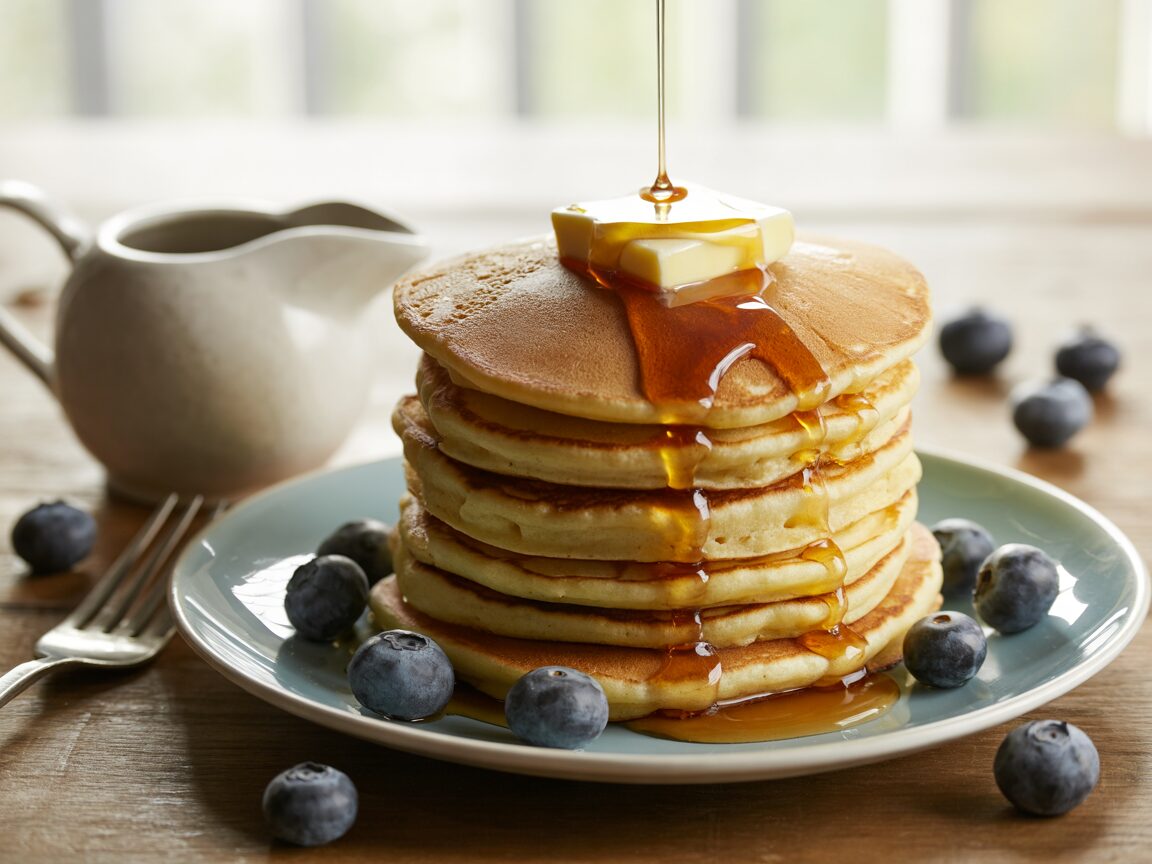
Classic butter and maple syrup are hard to beat, but pancakes also welcome savory partners. Serve them with crisp bacon or sausage, or top them with a fried egg for a heartier plate. For a lighter breakfast, pair them with Greek yogurt and fresh fruit instead of syrup. On a weekend brunch table, a bowl of whipped cream, warm berry compote and a jug of syrup lets everyone build their own stack.
Keeping Pancakes Warm
When cooking for several people, heat the oven to 200°F and set a wire rack on a baking sheet inside. Move each batch to the rack as it finishes, in a single layer. The rack lets steam escape, so the bottoms stay crisp instead of soggy. Avoid stacking or covering them tightly while they wait, since trapped steam quickly turns even the fluffiest pancakes limp and heavy.
Making Pancakes Ahead
Cooked pancakes store and reheat well, which makes them an easy weekday breakfast. Cool them completely on a rack, then refrigerate them in an airtight container. USDA leftovers guidance recommends eating refrigerated leftovers within 3 to 4 days, and frozen leftovers keep their best quality for 3 to 4 months.
To freeze pancakes, lay them flat on a baking sheet until firm, then stack them in a freezer bag with parchment between layers. Reheat them straight from frozen in a toaster, or wrap a stack in foil and warm it in a 350°F oven for about 10 minutes.
Mixed batter is best cooked the same day, because the baking powder loses strength as it sits. If you want a head start, whisk the dry ingredients the night before and combine them with the wet ingredients in the morning.
Do Not Taste the Raw Batter
It is tempting to taste the batter, but raw flour is not a ready-to-eat food. The FDA flour guidance warns that raw flour can carry Salmonella and E. coli, and it advises against eating raw dough or batter. Cook every pancake until the center springs back and no wet batter remains.
Common Questions
How many pancakes does this recipe make?
About 12 pancakes, each roughly 4 inches across, which serves 4 people at 3 pancakes each. Double the recipe for a larger group.
Can you make pancakes without buttermilk?
Yes. This recipe uses regular milk and baking powder, so it needs no buttermilk at all. For a buttermilk flavor, stir 1 tablespoon of lemon juice into the milk and let it stand 5 minutes, then add ½ teaspoon of baking soda.
Why do pancakes come out flat?
Usually the culprit is overmixing, a thin batter or old baking powder. Stir gently, rest the batter, and test the baking powder in hot water before you start.
Should pancake batter be lumpy?
Yes, a few small lumps are a good sign. They show the batter was not overmixed, and they disappear during the rest and the cooking.
Can you use water instead of milk?
Yes, in a pinch. Water-based pancakes taste plainer and brown less, so add an extra tablespoon of melted butter and a little more sugar to compensate.
Bringing It Together
Fluffy pancakes come from a thick batter, a light hand and a properly heated griddle. Stir until the flour just disappears, let the batter rest for 5 minutes, and cook over medium heat until bubbles pop across the surface. From there, adapt the base recipe for buttermilk, dairy-free or egg-free diets, and freeze any extras for quick breakfasts later.
Key takeaways
- Stir the batter only until the flour disappears; small lumps are fine.
- Rest the batter 5 minutes before cooking for taller pancakes.
- Cook over medium heat, about 375°F, and flip when bubbles pop and edges set.
- Freeze leftovers and reheat them in a toaster for fast breakfasts.
About this recipe: storage times follow USDA leftovers guidance, the raw batter warning follows the FDA, and nutrition comes from FoodData Central.