Quick answer
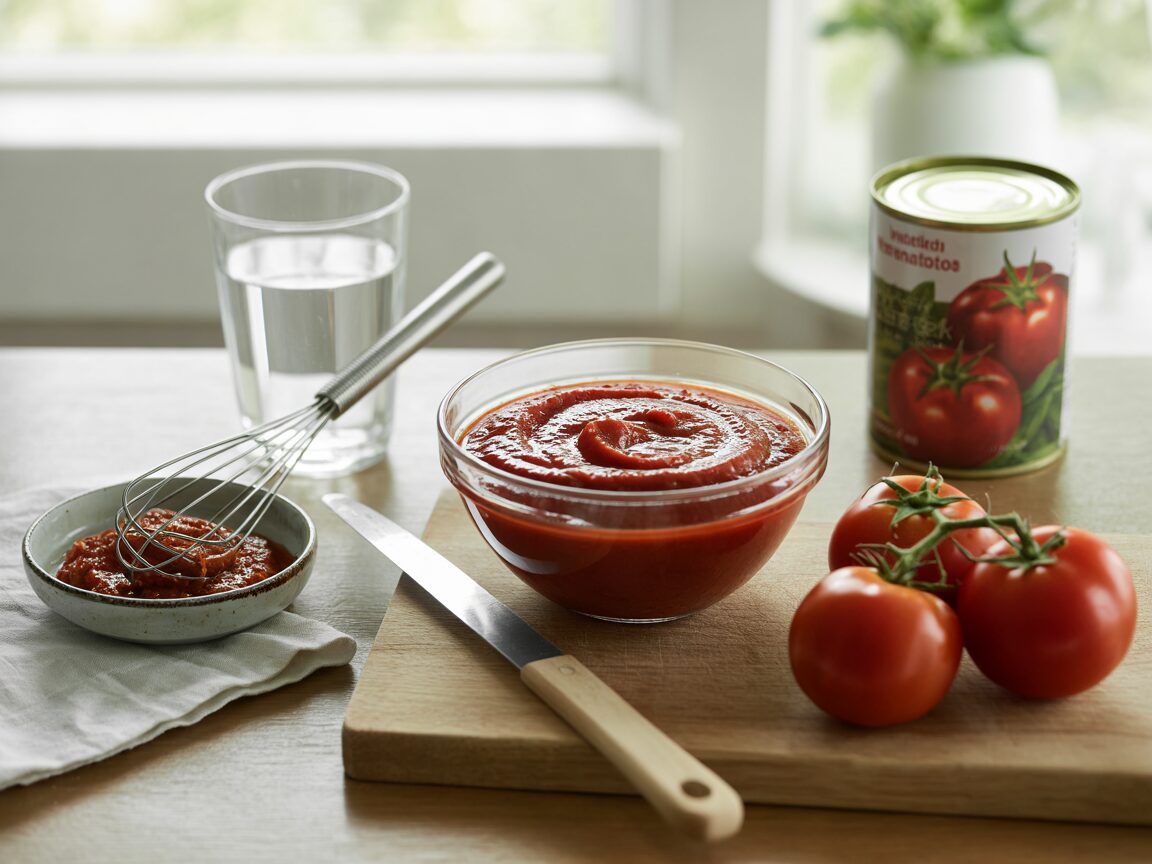
The best tomato puree substitute is tomato paste thinned with water: mix equal parts paste and water, so ½ cup paste plus ½ cup water replaces 1 cup of puree. Tomato sauce also works one for one, though it is thinner and already seasoned. Crushed or canned whole tomatoes, blended smooth and simmered down, work well too.
Running out of tomato puree is easy to fix, because most kitchens have another form of tomato on the shelf. A good tomato puree substitute only needs to match two things: the concentration of tomato and the smooth texture. Tomato paste, tomato sauce, crushed tomatoes and even fresh tomatoes can all get there with a little water or a short simmer.
The key is knowing how concentrated each product is. Below, you will find a swap chart with amounts, how to adjust thicker and thinner substitutes, and whether ketchup works. You will also see one naming difference between American and British recipes that trips up many cooks.
What Tomato Puree Actually Is
In the United States, tomato puree is a smooth, cooked tomato product that sits between sauce and paste in thickness. The federal tomato concentrates standard defines it by its tomato solids. Puree contains at least 8 percent but less than 24 percent tomato soluble solids, while paste contains at least 24 percent. Both may include salt, lemon juice, spices or flavoring.
That definition explains how every substitute works. Thicker products such as paste need extra water, while thinner ones such as sauce or crushed tomatoes either cook down or go in as they are. Meanwhile, the flavor stays essentially the same, since all of them start as cooked tomatoes.
A note for British recipes
In the United Kingdom, “tomato purée” usually means the thick, concentrated product sold in tubes, which Americans call tomato paste. So if a British recipe calls for a tablespoon of tomato purée, use tomato paste. If it calls for a large quantity, such as a can or a cup, it likely means passata, a smooth strained tomato product. American tomato puree replaces passata one for one.
Tomato Puree Substitute Chart
Use this chart to replace 1 cup of tomato puree with what you have on hand.
| Substitute | Amount for 1 cup puree | Adjustments | Best for |
|---|---|---|---|
| Tomato paste + water | ½ cup paste + ½ cup water | Whisk until smooth | Everything; the closest match |
| Tomato sauce | 1 cup | Simmer 5 to 10 minutes to thicken; cut added salt | Soups, stews, chili, pasta sauce |
| Crushed tomatoes | 1 cup | Blend smooth, then simmer briefly | Sauces, curries, stews |
| Canned whole or diced tomatoes | About 1¼ cups with juice | Blend smooth, then simmer to reduce | Sauces, soups, braises |
| Passata | 1 cup | None | Any recipe |
| Fresh ripe tomatoes | About 1¼ pounds | Core, blend, then simmer until reduced to 1 cup | Summer sauces and soups |
| Ketchup | Small amounts only | Reduce sugar and vinegar elsewhere | A spoonful in glazes or sauces |
These amounts are starting points, since brands vary in thickness. Therefore, check the texture after each swap and adjust with a splash of water or a few extra minutes of simmering.
How Much Puree Is in a Can?
Recipes often call for puree by the can rather than by the cup, which makes swapping harder. USDA FoodData Central lists 1 cup of canned tomato puree at about 250 grams, and a large 29-ounce can at about 822 grams. That works out to roughly 3¼ cups in the large can.
| Recipe calls for | About this much puree | Paste + water to make it |
|---|---|---|
| 1 cup | 1 cup | ½ cup paste + ½ cup water |
| One 15-ounce can | About 1¾ cups | ⅞ cup paste + ⅞ cup water |
| One 29-ounce can | About 3¼ cups | 1⅔ cups paste + 1⅔ cups water |
The can sizes are approximate, so match the texture by eye at the end. For the larger amounts, two or three small cans of paste usually cover it.
Why Tomato Paste and Water Works Best
Tomato paste is simply tomato puree cooked down further. According to USDA FoodData Central, canned tomato paste is about 73.5 percent water, while canned tomato puree is about 88 percent water. In other words, paste holds roughly twice the tomato solids of puree.
Mixing paste with an equal amount of water brings the solids back down to about puree level. As a result, the flavor, color and thickness land very close to the real thing. A 6-ounce can of paste, which holds roughly ⅔ cup, plus ⅔ cup of water makes about 1⅓ cups of puree.
For the smoothest result, whisk the water in gradually rather than all at once, so the paste does not form lumps. Warm water blends in slightly faster than cold.
Using Tomato Sauce Instead of Tomato Puree
Yes, you can substitute tomato sauce for tomato puree, usually one for one. Canned tomato sauce is thinner, at about 91 percent water in USDA data, and it often includes salt, herbs, onion or garlic.
Because of that seasoning, taste the dish before adding salt. In addition, some recipes depend on puree for thickness, such as pizza sauce or a thick chili. For those, simmer the sauce uncovered for 5 to 10 minutes first, or stir in 1 tablespoon of tomato paste per cup of sauce.
Using Canned or Fresh Tomatoes
Whole, diced and crushed tomatoes all become puree once you blend them smooth. Crushed tomatoes are already close in thickness, so blending is often enough. Whole and diced tomatoes contain more liquid, so simmer the blended tomatoes until they thicken to the consistency of a smooth sauce.
Fresh tomatoes need the most work. Ripe raw tomatoes are about 94.5 percent water in USDA data, so they must cook down considerably to reach puree thickness. Core them, blend or chop them, then simmer over medium heat, stirring often, until the volume drops by about half. For a smoother finish, press the cooked tomatoes through a sieve to remove the skins and seeds.
Paste or plum tomatoes, such as Roma, make the best fresh puree, because they are meatier and contain less water than slicing tomatoes. Consequently, they reduce faster and taste richer.
How to Tell the Thickness Is Right
Good tomato puree is smooth and pourable, but it holds its shape briefly on a spoon. Dip a spoon into your substitute and lift it out. If the puree coats the spoon in an even layer and drips off slowly, it is ready. If it runs off in a thin stream, simmer it longer; if it clings in a stiff mound, whisk in a tablespoon of water at a time.
Another quick check is to drag a spoon across the bottom of the pan. A path that stays open for a second or two means the puree has reduced enough for sauces and soups.
Balancing Flavor After a Swap
Each substitute shifts the taste slightly, so a quick final adjustment makes the dish taste as intended.
- Too salty: tomato sauce and some canned tomatoes contain added salt, so add a splash of unsalted broth or water and hold back any salt the recipe calls for.
- Too sharp or acidic: paste and fresh tomatoes can taste tart; a pinch of sugar or a knob of butter rounds them out.
- Too sweet: ketchup or tomato soup adds sugar, so balance it with a little vinegar or lemon juice.
- Flat: a bay leaf, a pinch of dried oregano or a short simmer with garlic brings back depth.
Taste near the end of cooking rather than at the start. Tomato flavors concentrate and mellow as a dish simmers, so early adjustments often overshoot.
Can You Use Ketchup Instead of Tomato Puree?
Only in small amounts. Ketchup starts with concentrated tomato, but manufacturers also add vinegar, sugar and spices. USDA data puts ketchup at about 21 percent sugar, compared with about 5 percent in tomato puree.
So a spoonful of ketchup can stand in for a spoonful of puree in a glaze, a barbecue sauce or a meatloaf mixture. However, replacing a full cup of puree with ketchup would make a soup or pasta sauce noticeably sweet and tangy. If ketchup is all you have, use it for no more than about a quarter of the puree, and make up the rest with water or broth. For the reverse problem, see this ketchup substitute guide.
Tomato Soup and Tomato Juice
Condensed tomato soup can replace puree in a pinch, but it contains sugar and sometimes cream, so it suits casseroles, meatloaf and sweet-and-sour dishes better than Italian sauces. Use it one for one and cut back on any sugar in the recipe.
Tomato juice is too thin to work alone. Instead, simmer it until it reduces by about half, or whisk in tomato paste until it thickens. In addition, check the label, since many tomato juices contain added salt.
Which Substitute to Use in Common Recipes
| Recipe | Best substitute | Why |
|---|---|---|
| Pasta or pizza sauce | Paste + water, or crushed tomatoes blended | Keeps the sauce thick and clean-tasting |
| Chili and stews | Tomato sauce or crushed tomatoes | The long simmer thickens them naturally |
| Soups | Tomato sauce or blended canned tomatoes | Extra liquid is welcome |
| Curries | Crushed tomatoes or paste + water | Matches the body of the sauce |
| Meatloaf or glazes | Paste + water, or a little ketchup | Small amounts, where sweetness helps |
| Barbecue sauce | Tomato paste | Adds body without extra liquid |
For barbecue sauce in particular, tomato paste thinned slightly with water gives the thick, glossy base you want. The barbecue sauce recipe on this site includes a no-ketchup version built that way.
Tomato-Free Alternatives
Some people avoid tomatoes entirely. In that case, no swap will taste like tomato, but a few options supply similar color, body and gentle acidity.
- Roasted red peppers: blend jarred, drained peppers smooth for a sweet, red base in soups and sauces.
- Pumpkin or butternut squash puree: adds body and color to soups, chili and curries.
- Cooked beets and carrots: blended with a little vinegar, they give a deep red sauce with gentle tang.
Because these lack tomato’s acidity, add a splash of lemon juice or vinegar to balance the dish. If you avoid tomatoes for a medical reason, read labels closely, since many sauces and seasonings contain tomato in some form.
Making Your Own Tomato Puree to Keep
If you cook with tomato puree often, a homemade batch saves trips to the store. Blend canned whole tomatoes or fresh paste tomatoes until smooth, then simmer them uncovered, stirring often, until reduced by about a third to a half. Cool the puree, then refrigerate it in a covered container and use it within 3 to 4 days, as USDA leftovers guidance recommends for cooked foods.
For longer storage, freeze the puree in measured portions, such as ½ cup, in freezer bags or containers. Thaw a portion overnight in the refrigerator, or stir it straight into a simmering soup or sauce. Leftover canned puree or paste freezes the same way, which keeps a half-used can from going to waste.
For shelf-stable jars, do not improvise. Instead, follow a tested home canning recipe from the National Center for Home Food Preparation, whose guidance is research-based.
Frequently Asked Questions
Is tomato puree the same as tomato sauce?
No. Tomato puree is thicker and usually unseasoned, while tomato sauce is thinner and often contains salt, herbs and other flavorings. They can stand in for each other in most cooked dishes.
Is tomato puree the same as tomato paste?
In the United States, no. Paste is much more concentrated, with at least 24 percent tomato solids. In British recipes, however, “tomato purée” usually means tomato paste.
How do you turn tomato paste into puree?
Whisk tomato paste with an equal amount of water until smooth. For example, ½ cup paste plus ½ cup water makes about 1 cup of puree.
Can you use passata instead of tomato puree?
Yes. Passata is a smooth, strained tomato product with a texture close to American puree, so use it one for one.
Can you use crushed tomatoes instead of tomato puree?
Yes. Blend them smooth and use them one for one. If the recipe needs a thicker base, simmer the blended tomatoes for a few minutes first.
Bringing It Together
The best tomato puree substitute is tomato paste mixed with an equal amount of water, because it restores the paste to roughly puree strength. Tomato sauce works one for one with a short simmer and a lighter hand on the salt, and canned or fresh tomatoes work once blended and reduced. Use ketchup and condensed soup sparingly because of their sugar, and remember that British recipes usually mean tomato paste when they say purée.
Key takeaways
- Mix equal parts tomato paste and water to replace tomato puree.
- Tomato sauce works one for one; simmer it to thicken and cut the salt.
- Blend canned or fresh tomatoes smooth, then simmer them down.
- In British recipes, “tomato purée” means tomato paste.
About this guide: the definitions of puree and paste follow the federal standard for tomato concentrates, and the water and sugar figures come from USDA FoodData Central. The storage and canning guidance follows USDA and the National Center for Home Food Preparation.