Quick answer
Cream 1 cup softened butter with ¾ cup brown sugar and ½ cup white sugar, then beat in 2 eggs and 2 teaspoons vanilla. Stir in 2¼ cups flour, 1 teaspoon baking soda and 1 teaspoon salt, then fold in 2 cups chocolate chips. Scoop 2-tablespoon balls and bake at 375°F for 9 to 11 minutes, until the edges are golden but the centers still look soft. It makes about 3 dozen.
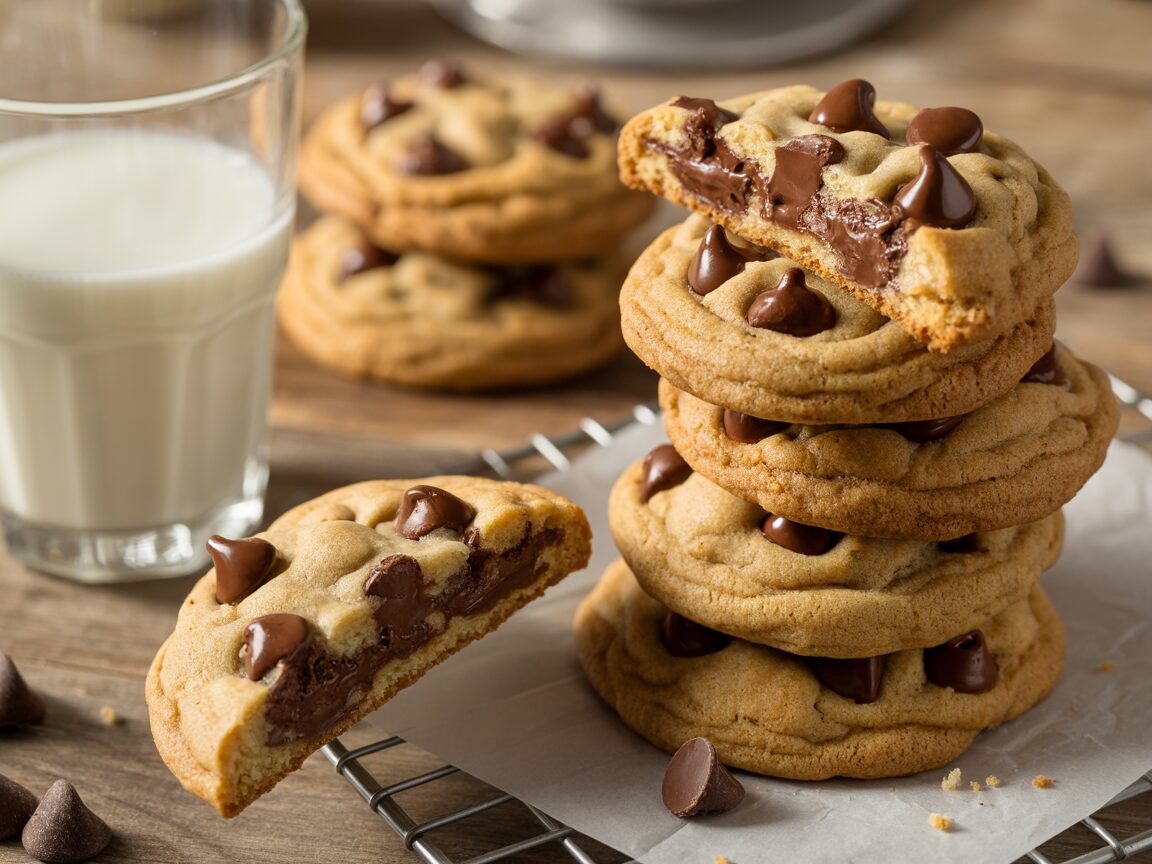
A great chocolate chip cookie recipe balances crisp, golden edges with a soft, chewy middle. This version uses the classic ingredients most kitchens already have, with a little more brown sugar than white for extra chew and a deeper, caramel-like flavor.
However, small choices make a big difference with cookies. The temperature of the butter, the ratio of sugars, a short chill and pulling the cookies from the oven at the right moment all change the result. Below the recipe, you will find how to steer your cookies chewy, crispy or cakey, and how to fix flat or puffy cookies. You will also find swaps for no eggs, no brown sugar and small batches.
What Each Ingredient Does
Every ingredient in a chocolate chip cookie has a job. Knowing them makes it easy to adjust the recipe to your taste.
| Ingredient | What it does |
|---|---|
| Butter | Adds flavor and richness; its temperature controls how much the cookies spread |
| Brown sugar | Holds moisture for a chewy, soft texture and adds a caramel flavor |
| White sugar | Helps the edges crisp and the cookies spread |
| Eggs | Bind the dough and add structure and moisture |
| Baking soda | Helps the cookies rise and spread, and encourages browning |
| Flour | Gives structure; more flour makes thicker, cakier cookies |
| Salt and vanilla | Sharpen the sweetness and round out the chocolate |
Brown sugar is the main reason homemade cookies stay soft. It contains molasses, which attracts and holds water, so cookies made with more brown sugar stay moist and bendy for days. White sugar, by contrast, dries out as it bakes, which is why crisp cookies use more of it.
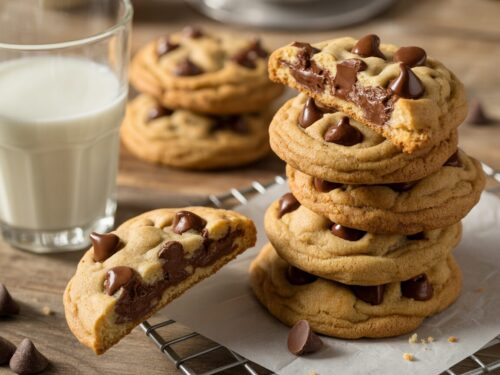
Chewy Chocolate Chip Cookies
Equipment
- Stand or hand mixer
- 2 baking sheets
- Parchment paper
- 2-tablespoon cookie scoop
- Wire rack
Ingredients
- 2 1/4 cups all-purpose flour spooned and leveled
- 1 tsp baking soda
- 1 tsp table salt
- 1 cup unsalted butter 2 sticks, softened but still cool
- 3/4 cup packed brown sugar
- 1/2 cup granulated sugar
- 2 large eggs at room temperature
- 2 tsp vanilla extract
- 2 cups semisweet chocolate chips one 12-ounce bag
Instructions
- Whisk the flour, baking soda and salt in a bowl and set aside.
- Beat the butter, brown sugar and white sugar on medium speed until light and creamy, about 2 minutes.
- Beat in the eggs one at a time, then the vanilla, scraping down the bowl.
- Mix in the flour mixture on low speed just until no dry streaks remain. Fold in the chocolate chips.
- For the best texture, cover and chill the dough for at least 30 minutes.
- Heat the oven to 375°F and line baking sheets with parchment. Scoop 2-tablespoon balls of dough about 2 inches apart.
- Bake for 9 to 11 minutes, until the edges are golden but the centers still look soft.
- Cool on the pan for 5 minutes, then move the cookies to a wire rack to cool completely.
Notes
Nutrition
Per cookie, estimated
- Calories
- 150 kcal
- Total fat
- 8 g
- Saturated fat
- 5 g
- Cholesterol
- 25 mg
- Sodium
- 110 mg
- Carbohydrates
- 19 g
- Fiber
- 1 g
- Sugars
- 12 g
- Protein
- 2 g
Why Creaming the Butter Matters
Beating softened butter with sugar, a step called creaming, does more than combine the ingredients. The sharp sugar crystals cut tiny air pockets into the butter, and those pockets expand in the oven, giving the cookies lift and a tender texture. Consequently, the butter’s temperature determines how well creaming works.
Ideal butter feels cool and yields slightly when pressed, around the temperature of a cool kitchen. Butter that is too cold will not trap air properly. Conversely, butter that is too warm or partially melted cannot hold air at all, so the cookies spread into thin, greasy disks. If your butter has softened too much, refrigerate it for 10 minutes before you begin.
Avoid overbeating once the eggs and flour go in, however. Prolonged mixing after adding flour develops gluten, which produces tougher, breadier cookies. Mix only until the flour disappears, then fold in the chocolate by hand.
Chewy, Crispy or Cakey? Adjust the Recipe
The base recipe makes chewy cookies with crisp edges. To change the texture, adjust one or two of these dials.
| For cookies that are… | Try this |
|---|---|
| Chewier | Use 1 cup brown sugar and ¼ cup white sugar; add 1 extra egg yolk; or use bread flour |
| Crispier | Use ½ cup brown sugar and ¾ cup white sugar; bake 1 to 2 minutes longer |
| Thicker and cakier | Add 2 to 3 tablespoons more flour, or 1 to 2 teaspoons cornstarch, and chill the dough |
| Thinner and lacier | Use melted butter and skip the chill |
| Richer and nuttier | Brown the butter, then cool it before mixing |
Therefore, change one variable at a time, so you can identify which adjustment made the difference. In addition, record your results, since ovens and baking sheets vary considerably.
Brown Butter Chocolate Chip Cookies
Browning the butter transforms ordinary cookies into something richer and more complex. As butter cooks, its water evaporates and its milk solids toast, developing nutty, caramel-like aromas that complement the chocolate remarkably well. To try it, melt the butter in a light-colored saucepan over medium heat, swirling occasionally, until the foam subsides and the solids turn deep amber, about 5 to 7 minutes.
Because browning drives off moisture, the cookies can turn slightly drier. Consequently, add 1 tablespoon of milk to the cooled brown butter before mixing, and chill the dough for at least an hour, since melted butter otherwise produces flatter cookies.
Why Chill the Dough?
Chilling is optional, but it noticeably improves the cookies. Cold butter melts more slowly in the oven, so the cookies spread less and bake up thicker. A rest also gives the flour time to absorb moisture, which deepens the flavor and helps the cookies brown evenly.
Even so, 30 minutes in the refrigerator helps considerably. For the deepest, most toffee-like flavor, cover the dough and chill it for up to 24 hours. Afterward, let it sit at room temperature for about 10 minutes before scooping, so it does not crumble.
Choosing the Chocolate
Semisweet chips are the traditional choice, because they hold their shape and deliver balanced sweetness. Still, other options create distinctly different cookies.
| Chocolate | Result |
|---|---|
| Semisweet chips | Classic flavor; chips keep their shape |
| Bittersweet or dark chocolate | Deeper, less sweet flavor that balances the sugary dough |
| Milk chocolate | Sweeter and creamier; popular with children |
| Chopped bar chocolate | Melty pools and streaks throughout the cookie |
| Mini chips | Chocolate in every bite; slightly flatter cookies |
Many bakers combine chips with chopped bar chocolate, which produces both distinct chips and glossy puddles. For an attractive finish, press a few extra chips onto the tops of the dough balls before baking, and sprinkle the warm cookies with a few flakes of sea salt.
How to Tell When Cookies Are Done
The most common mistake is overbaking. Take the cookies out when the edges are set and lightly golden, but the centers still look slightly soft and underdone. They continue to cook on the hot baking sheet for several minutes after they leave the oven.
Let the cookies rest on the pan for about 5 minutes, then move them to a wire rack to cool completely. If you wait until the centers look fully baked in the oven, the cookies will turn hard and dry once they cool.
Troubleshooting Common Cookie Problems
| Problem | Likely cause | Fix |
|---|---|---|
| Flat, greasy cookies | Butter too soft or melted; too little flour | Use cool, softened butter and chill the dough |
| Puffy, cakey cookies | Too much flour, often from scooping it from the bag | Spoon flour into the cup and level it |
| Hard, dry cookies | Overbaked | Pull them while the centers look soft |
| Dark or burnt bottoms | Dark pan or oven running hot | Use a light pan lined with parchment, and check your oven |
| Uneven sizes | Dough scooped by eye | Use a 2-tablespoon cookie scoop |
Measuring flour correctly matters more than most bakers expect. Scooping the cup straight into the bag packs in extra flour, which makes cookies thick and dry. Instead, spoon the flour into the cup and level it with a knife, or weigh it at about 125 grams per cup.
Variations and Swaps
| Version | What to change |
|---|---|
| No eggs | Replace each egg with 3 tablespoons of applesauce or a flax egg; see this egg substitute guide |
| No brown sugar | Use 1¼ cups white sugar plus 1 tablespoon molasses, or all white sugar for crisper cookies |
| No baking soda | Use 1 tablespoon baking powder; the cookies will be puffier and paler |
| Self-rising flour | Use it in place of the flour, and skip the baking soda and salt |
| Bread flour | Swap it for all of the flour for extra-chewy cookies |
| Margarine | Use stick margarine, not a soft spread, and expect more spread |
| M&M’s or mix-ins | Replace up to half the chips with candy pieces, nuts or toffee bits |
| No mixer | Use melted and slightly cooled butter, and stir by hand with a sturdy spoon |
Each swap changes the texture a little. In particular, egg-free cookies spread more and turn slightly more tender, so chill the dough well and check them a minute early.
Bakery-Style Giant Cookies
For thick, bakery-style cookies, scoop about ¼ cup of chilled dough per cookie and shape it into a tall ball rather than a flat disk. Then bake 6 cookies per sheet at 375°F for 13 to 16 minutes, until the edges are golden and the centers still look slightly underbaked. The taller shape keeps the middle soft and gooey while the outside crisps.
Small-Batch Chocolate Chip Cookies
For a dozen cookies, divide the recipe by three. Use ⅓ cup softened butter, ¼ cup brown sugar, 3 tablespoons white sugar, 1 egg yolk, ½ teaspoon vanilla, ¾ cup flour, ¼ teaspoon baking soda, ¼ teaspoon salt and about ⅔ cup chocolate chips. An egg yolk stands in for two-thirds of an egg, and it keeps the small batch chewy.
For about 6 cookies, halve those amounts and use 1 tablespoon of beaten egg instead of the yolk.
Baking Sheets and Oven Placement
Your equipment influences the outcome as much as the ingredients. Light-colored aluminum baking sheets bake cookies evenly, whereas dark pans absorb more heat and can scorch the bottoms. Lining the sheets with parchment paper prevents sticking and further protects against over-browning.
Bake one sheet at a time on the center rack for the most even results. If you bake two sheets together, rotate them halfway through, swapping top and bottom. Additionally, always start each batch on a cool sheet, since dough placed on a warm pan begins melting before it reaches the oven.
Cookie Mix in a Jar
A layered jar of cookie mix makes a thoughtful gift. In a 1-quart jar, layer the flour mixed with the baking soda and salt, the brown sugar, the white sugar and the chocolate chips, packing each layer firmly. Then attach a tag listing the remaining steps. The recipient creams 1 cup softened butter, then beats in 2 eggs and 2 teaspoons vanilla. Finally, they stir in the jar contents and bake the cookies at 375°F for 9 to 11 minutes.
Storing and Freezing
Store baked cookies in an airtight container at room temperature, where they stay soft for several days. A slice of bread in the container helps keep them moist. For longer storage, freeze baked cookies in a freezer bag, and thaw them at room temperature.
Cookie dough freezes even better. Scoop it into balls, freeze them on a lined tray until firm, then transfer them to a freezer bag. Bake straight from frozen, adding 1 to 2 minutes to the baking time. That way, you can bake just a few fresh cookies whenever you want them.
Is It Safe to Eat Raw Cookie Dough?
No, even though it is tempting. The FDA flour guidance warns that raw flour can carry Salmonella and E. coli, and it advises against eating raw dough or batter. Raw eggs add a separate risk. So bake the dough fully, and keep children from tasting it from the bowl.
Common Questions
Why do cookies spread too much?
Usually the butter was too warm or the dough was not chilled. Soft, melty butter and a hot baking sheet both make cookies spread. Chill the dough and let the pans cool between batches.
Should you use baking soda or baking powder?
Baking soda gives the classic chewy, golden cookie. Baking powder makes a puffier, paler, more cake-like cookie.
How many cookies does this recipe make?
About 36 cookies made with a 2-tablespoon scoop. Larger 3-tablespoon cookies make about 2 dozen and need 1 to 2 extra minutes.
Can you make the dough ahead of time?
Yes. Refrigerate the covered dough for up to 2 days, or freeze scooped dough balls for longer. Chilled dough actually bakes into thicker, more flavorful cookies.
Bringing It Together
The best chocolate chip cookies come from softened butter, a little more brown sugar than white, and a short chill. Equally important, pull them from the oven while the centers still look soft. From there, adjust the sugars and flour to make them chewier, crispier or cakier, and freeze a few dough balls for fresh cookies any time.
Key takeaways
- More brown sugar makes cookies chewier; more white sugar makes them crisper.
- Chill the dough at least 30 minutes for thicker cookies and deeper flavor.
- Bake at 375°F and pull the cookies while the centers still look soft.
- Do not eat raw dough, since raw flour and eggs can carry bacteria.
About this recipe: the raw dough warning follows the FDA, and nutrition comes from FoodData Central.