Quick answer
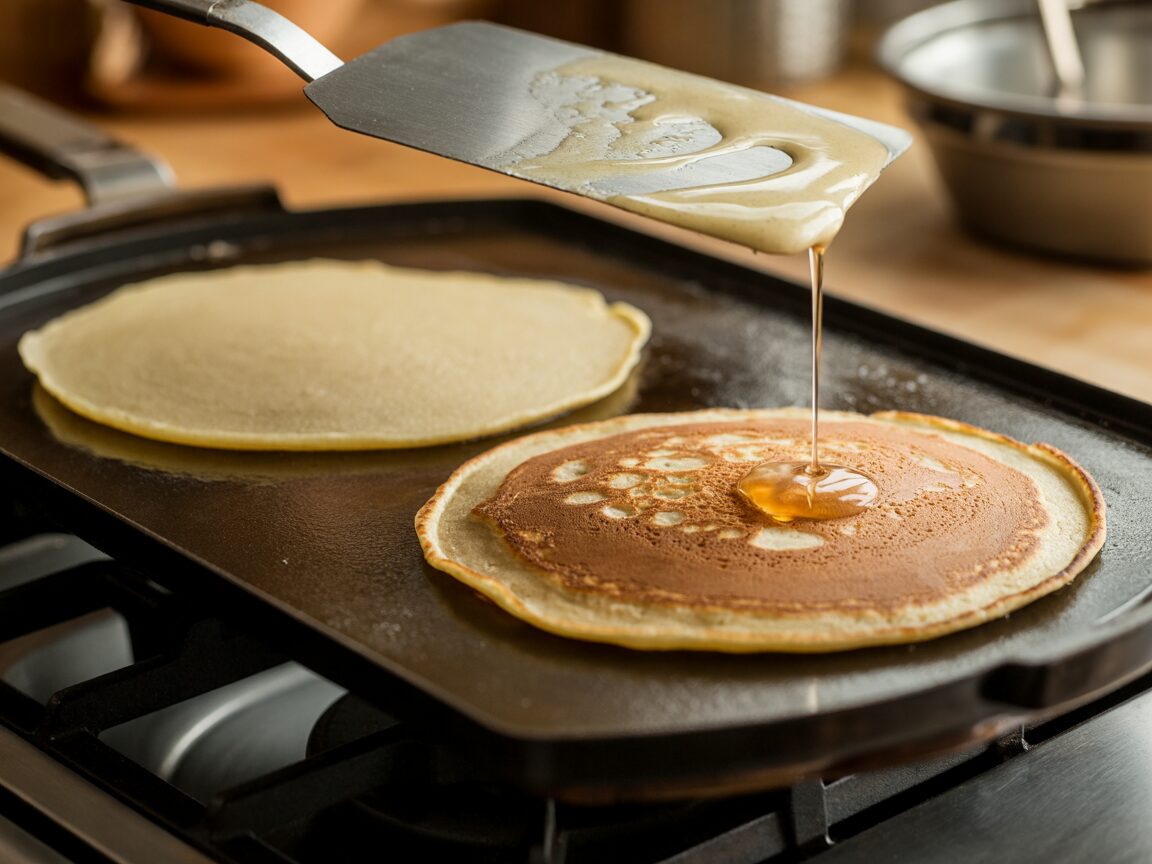
Flip a pancake when bubbles pop across the top and the holes stay open, the edges look dry and set, and the underside is golden. That usually takes 2 to 3 minutes. It is done 1 to 2 minutes after flipping, when the second side is golden and the center springs back when pressed lightly.
Knowing how to know when pancakes are done comes down to reading the pancake rather than the clock. Griddles, batters and burners all vary, so timing alone often leaves you with pancakes that are pale, burnt or gummy in the middle. Fortunately, a pancake shows clear signs at every stage.
Below, you will find the signs that it is time to flip and how to confirm a cooked center. In addition, you will learn the right heat and how to fix pancakes that burn outside while staying raw inside.
What Happens Inside a Pancake as It Cooks
Understanding the process makes the visual signs easier to trust. As the batter heats, baking powder releases carbon dioxide, and moisture turns to steam. Those gases expand and rise through the batter, creating the bubbles you see on the surface.
Meanwhile, the egg proteins and flour starches gradually set from the bottom upward, forming a structure that traps the remaining gas. Once the batter around the surface bubbles has firmed enough that the holes stay open, the structure can hold its shape when flipped. Consequently, popped bubbles that remain open are the most dependable signal, whereas bubbles that refill indicate liquid batter underneath. Browning, finally, comes from sugars and proteins reacting with heat, which is why sweeter batters color noticeably faster.
Signs It Is Time to Flip
The first side does most of the cooking, so observe it attentively, particularly during the initial batch. Look for all three of these signs together:
- Bubbles that pop and stay open: bubbles rise across the surface, burst, and leave small holes that do not fill back in with wet batter.
- Dry, set edges: the rim turns matte and looks slightly firm, rather than glossy and wet.
- A golden underside: lift one edge with a spatula; the bottom should be evenly golden brown.
On a properly heated griddle, these signs usually appear after 2 to 3 minutes. If bubbles appear but quickly fill back in, wait a little longer. Flipping too early tears the pancake and leaves a raw, gummy layer inside.
Signs the Pancake Is Done
After flipping, the second side needs only 1 to 2 minutes, because the pancake is already mostly cooked. Check for these signs before you take it off the heat:
| Sign | What it means | If it is not there |
|---|---|---|
| Second side is golden | The surface has browned evenly | Give it 30 more seconds |
| Center springs back | The inside has set | Lower the heat and cook a little longer |
| No wet batter at the edges | The sides are cooked through | Cook another 30 to 60 seconds |
| Puffed and slightly domed | The leavening has done its work | Check the batter thickness next time |
For a final check, press the center gently with a finger or spatula. A cooked pancake springs back, while an undercooked one leaves a dent or oozes. You can also tear or cut the first pancake open, which is the surest way to confirm the inside on a new griddle or with a new recipe.
The Right Heat Makes Every Sign Reliable
Visual cues only work when the heat is right. Medium heat is the target, about 350°F to 375°F on an electric griddle. On a stovetop, heat the pan for a few minutes and test it with a few drops of water: they should sizzle and skitter before evaporating.
If the pan is too hot, the outside browns before bubbles form, so the pancake looks ready long before the center has cooked. Conversely, if it is too cool, bubbles appear but the bottom stays pale and the pancake turns dense. Treat the first pancake as a test, then adjust the burner. The fluffy pancakes recipe on this site covers griddle temperature in more detail.
Why Pancakes Burn Outside but Stay Raw Inside
This common problem nearly always comes down to heat or thickness. Use this guide to find the cause.
| Problem | Likely cause | Fix |
|---|---|---|
| Dark outside, raw middle | Pan too hot | Lower the heat to medium-low |
| Raw middle on thick pancakes | Batter too thick or pancakes too large | Thin the batter with a splash of milk, or pour less |
| Pale and dense | Pan too cool | Heat the pan longer before pouring |
| Gummy streak inside | Flipped too early | Wait for bubbles that stay open |
| Burnt spots | Too much butter, or butter burning | Wipe the pan, or use a little oil |
Pans and Griddles Behave Differently
Your cooking surface also changes the timing. Cast iron holds heat steadily, so it browns evenly once preheated, although it can run hot after several batches. Nonstick skillets heat quickly and release easily, but they rarely produce deep browning. Electric griddles offer precise temperature control, which makes the visual cues especially consistent. Therefore, whatever you use, adjust the burner between batches rather than assuming the first setting stays correct.
Batters That Need Extra Attention
Some batters behave differently, so adjust your expectations.
- Buttermilk and sweet batters: the extra sugar browns faster, so cook them a little cooler.
- Blueberry or chocolate chip pancakes: add-ins create wet pockets, so give them an extra 30 seconds per side and press around the fruit.
- Thick, fluffy pancakes: lower the heat slightly and cover the pan for the first minute to help the center cook.
- Whole wheat or gluten-free batters: these look done sooner, so rely on the spring-back test.
Why the Center Has to Be Cooked
An undercooked middle is not only gummy. Pancake batter contains raw flour and raw egg, and the FDA flour guidance warns that raw flour can carry Salmonella and E. coli. So cook each pancake until no wet batter remains in the center.
Thin pancakes rarely need a thermometer, since the visual signs are reliable. However, for very thick or stuffed pancakes, you can check the center: the Minnesota Department of Health lists 160°F as the safe temperature for egg dishes.
Frequently Asked Questions
How long should pancakes cook on each side?
About 2 to 3 minutes on the first side and 1 to 2 minutes on the second, over medium heat. The visual signs matter more than the exact time.
Should you flip pancakes more than once?
No. Flip once, when the first side is ready. Flipping repeatedly and pressing down squeezes out air and makes pancakes dense.
Can you eat a slightly undercooked pancake?
It is best not to, since the batter contains raw flour and egg. Return it to the pan over low heat for another minute until the center is set.
Bringing It Together
A pancake is ready to flip when bubbles pop and stay open, the edges look dry and the underside is golden. It is done a minute or two later, once the second side browns and the center springs back. Keep the heat at medium, test with the first pancake, and adjust for thick batters and add-ins. For leftovers, see how long pancakes last.
Key takeaways
- Flip when bubbles pop and stay open and the edges look dry and set.
- Cook the second side 1 to 2 minutes, until golden and springy in the center.
- Use medium heat, about 350°F to 375°F, so the signs are reliable.
- Lower the heat or thin the batter if pancakes burn outside but stay raw inside.
About this guide: the raw batter warning follows the FDA, and the egg dish temperature follows the Minnesota Department of Health.