Quick answer
The best pancetta substitute is thick-cut bacon, used ounce for ounce. Bacon is usually smoked while pancetta is not, so simmer the bacon in water for 2 to 3 minutes first. Then cook it exactly as the recipe says. Guanciale is the closest match for carbonara, while prosciutto, speck and salt pork also work with small adjustments.
A good pancetta substitute replaces two things: rich pork fat that renders into the pan, and a cured, savory saltiness. Pancetta is Italian pork belly cured with salt and spices, and in the US it is usually sold unsmoked, either rolled into rounds or diced into small cubes. Bacon comes from the same cut, which is why it is the easiest swap.
Below, you will find a chart of every common substitute, plus a comparison of fat and salt per ounce from USDA data. After that come the best choices for carbonara, soups and sauces, meat-free options, and how to store and cook each one safely.
Know Which Pancetta Your Recipe Means
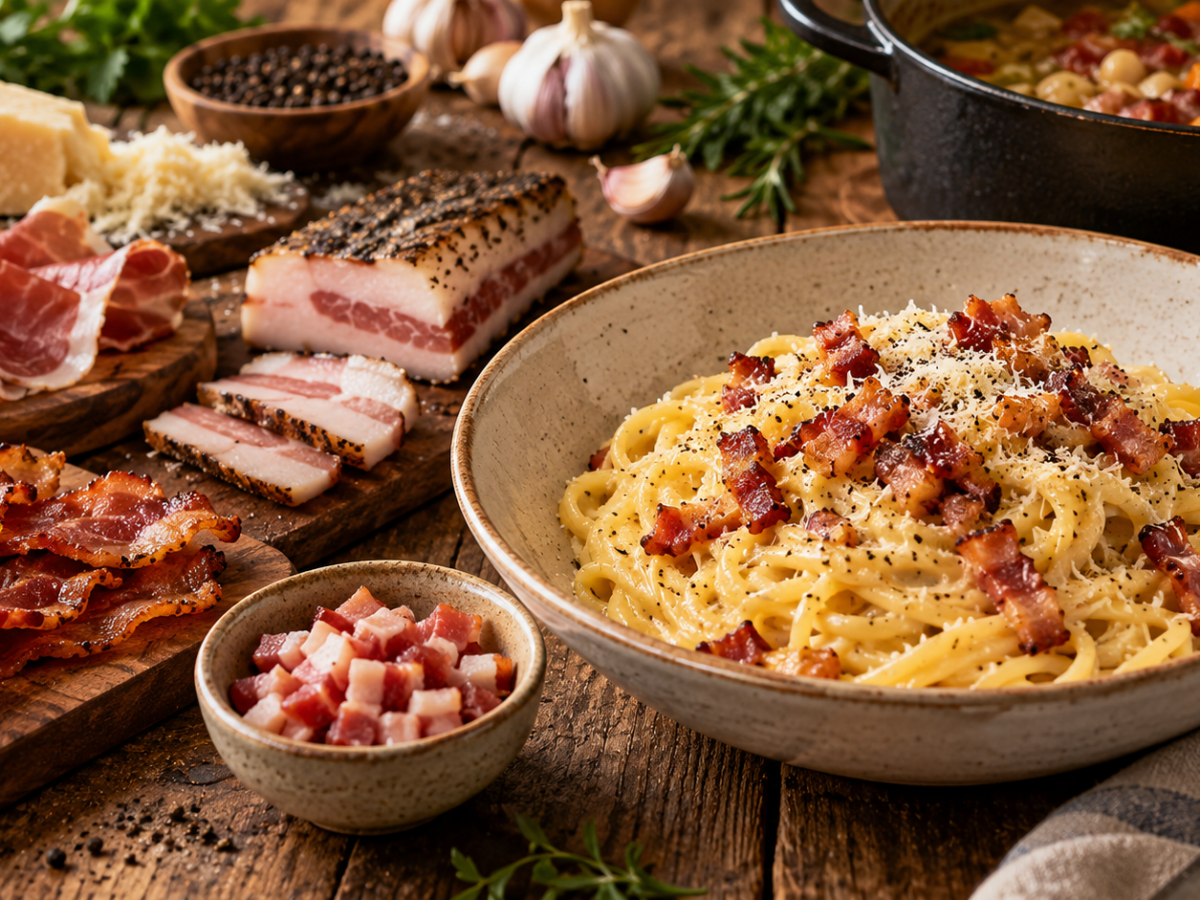
Pancetta comes in a few forms, and the form affects which substitute fits best. Rolled pancetta, called arrotolata in Italy, is spiced belly rolled into a log and sliced thin, much like deli meat. Flat pancetta, or tesa, is cured in a slab and usually sold in thick slices or cubes. Most grocery stores sell it pre-diced in small packages, which suits sauces and soups.
When a recipe calls for diced pancetta, choose thick-cut or slab bacon and cut it into ¼-inch cubes. When it calls for thin slices to wrap around chicken, pork or vegetables, thin bacon or prosciutto makes a better match.
Pancetta Substitute Chart
Each swap below replaces the same weight of pancetta. A typical recipe calls for 4 ounces, which is about ¾ cup diced.
| Substitute | Best for | How to adjust |
|---|---|---|
| Thick-cut bacon | Almost everything | Simmer 2 to 3 minutes to soften the smoke; dice and render like pancetta |
| Guanciale | Carbonara, amatriciana | Use as is; it is fattier, so pour off some fat if needed |
| Prosciutto | Pasta, peas, salads, toppings | Add near the end or crisp it separately; reduce added salt |
| Speck | Pasta, risotto, potatoes | Use like bacon; it is lightly smoked and leaner |
| Salt pork | Beans, soups, braises | Rinse or blanch first, use a little less, and cut added salt |
| Cured ham | Soups, quiche, pasta | Dice and sauté in olive oil, since it has little fat to render |
| Turkey bacon | Lighter dishes | Add a spoonful of olive oil; it browns but barely renders |
Whichever you choose, taste the dish before adding salt. Most cured pork is salty, and the amount varies widely from brand to brand.
How the Substitutes Compare on Fat and Salt
Fat decides how much flavor renders into the pan, while sodium decides how much salt the recipe still needs. Using USDA FoodData Central, each ounce of raw product compares like this:
| 1 ounce, raw | Calories | Fat | Sodium |
|---|---|---|---|
| Pancetta | About 100 | 9 g | About 460 mg |
| Bacon | About 110 | 10.5 g | About 210 mg |
| Salt pork | About 210 | 23 g | About 760 mg |
| Speck | About 100 | 7 g | About 420 mg |
| Prosciutto | About 65 | 3.5 g | About 530 mg |
| Cured ham | About 70 | 5 g | About 360 mg |
| Turkey bacon | About 65 | 5 g | About 300 mg |
The pancetta, speck and prosciutto figures are medians of the many store brands listed in the USDA database, so individual labels will differ. Even so, the pattern is useful. Bacon matches pancetta closely on fat but carries roughly half the sodium, so a dish made with bacon may need a pinch more salt. Salt pork, by contrast, is much fattier and saltier, so use about three quarters of the amount and season carefully.
Bacon Instead of Pancetta
Bacon is the swap most cooks already have, and it works in nearly every recipe. The main difference is smoke. Producers usually smoke American bacon, whereas they typically cure pancetta without smoke, so bacon can push a delicate pasta or soup toward a barbecue flavor.
To soften it, cut the bacon into small strips or cubes, drop them into simmering water for 2 to 3 minutes, then drain and pat dry. Afterward, cook it in a skillet over medium heat until the fat renders and the edges turn golden. Thick-cut or slab bacon gives the closest texture, because thin slices shrink into brittle shards. Unsmoked bacon, sometimes sold as “green” bacon, needs no blanching at all.
The Best Substitute for Carbonara
Guanciale, cured pork jowl, is the traditional choice for carbonara and the best stand-in for pancetta. It is fattier, with a richer and more pronounced pork flavor, and its fat melts into a silky sauce with the eggs and cheese. If you cannot find it, blanched thick-cut bacon is the next best option.
Prosciutto works too, although it behaves differently. Since it is lean and already ready to eat, crisp thin strips in a dry skillet for 1 to 2 minutes, then set them aside. Next, build the sauce with a tablespoon of olive oil or butter in place of the missing pork fat, and scatter the crisp prosciutto over the finished pasta.
The Best Substitute for Soups and Sauces
In minestrone, bean soups and tomato sauces, pancetta mostly provides a savory fat base for the vegetables. Here, bacon, salt pork and cured ham all work well. Salt pork is especially good in long-simmered beans, provided you rinse it and cut back on added salt.
For creamy dishes, start with diced bacon, then add the cream once the fat has rendered. If you are out of cream as well, the guide to heavy cream substitutes shows what holds up in a sauce. Crisp bacon also makes a fine topping for creamy potato soup and a savory addition to green bean casserole.
How to Cook the Substitute So It Behaves Like Pancetta
Pancetta usually goes into a cold or barely warm pan, so its fat renders slowly before the meat browns. Treat bacon, guanciale and salt pork the same way for the best texture:
- Start cold: spread the diced meat in a cold skillet in a single layer, without extra oil.
- Render gently: cook over medium-low heat, stirring occasionally, for 6 to 10 minutes, until the fat turns clear and pools in the pan.
- Crisp the edges: raise the heat to medium for the last minute or two, until the pieces turn golden.
- Keep the fat: leave about 2 tablespoons in the pan for cooking onions, garlic or vegetables, and pour off the rest.
Leaner swaps such as ham, prosciutto and turkey bacon release little fat, so add a tablespoon of olive oil before cooking them.
Vegetarian Pancetta Substitutes
No plant-based option tastes exactly like cured pork, but several deliver the same savory depth:
- Mushrooms and smoked paprika: brown diced cremini or shiitake mushrooms in olive oil until crisp at the edges, then season with salt and a pinch of smoked paprika.
- Sun-dried tomatoes: chop oil-packed sun-dried tomatoes for a salty, concentrated flavor in pasta and soups.
- Capers and olives: a spoonful of chopped capers or olives adds the briny saltiness pancetta brings to sauces.
- Smoked tempeh: crumble and pan-fry it with soy sauce and a little maple for a crisp, bacon-like topping.
For extra richness, finish the dish with good olive oil or a knob of butter, since these swaps lack pork fat.
Other Cured Meats That Work in a Pinch
A few other cured meats can stand in when the usual options are missing, although each one changes the flavor noticeably. French lardons, thick batons of cured pork belly, behave almost exactly like diced pancetta. Spanish chorizo and Italian salami add rich fat and spice, so they suit bean soups, stews and tomato sauces better than delicate cream sauces. Use about half the amount, since their paprika, garlic and fennel can overpower a dish, and add them once the onions have softened.
Is Pancetta Raw?
Usually, yes. Most pancetta in US stores has gone through curing but not cooking, so treat it like bacon and cook it before eating. The USDA bacon guidance states that pork bacon without other descriptors is raw and needs cooking before you eat it. Prosciutto is the exception among these substitutes, since makers dry-cure it so you can eat it as is. When in doubt, follow the package label.
Storing Pancetta and Its Substitutes
According to the same USDA guidance, raw pancetta and raw bacon each keep 7 days in the refrigerator and 4 months in the freezer. Once cooked, leftover bacon keeps 4 to 5 days in the refrigerator and 1 month in the freezer. Diced pancetta and bacon also freeze well in small portions, so you can cook straight from the freezer and use only what a recipe needs.
Frequently Asked Questions
Can you use bacon instead of pancetta?
Yes, ounce for ounce. Simmer it for 2 to 3 minutes first to soften the smoke, and taste before adding salt, since bacon is usually less salty.
Is pancetta the same as bacon?
No. Both come from pork belly, but makers usually cure pancetta with salt and spices and leave it unsmoked, while they typically smoke American bacon.
Can you use prosciutto instead of pancetta?
Yes, but add it at the end or crisp it separately, since long cooking makes it tough. Use olive oil or butter to replace the missing fat.
Bringing It Together
For most recipes, thick-cut bacon is the best pancetta substitute, swapped by weight and blanched briefly to soften the smoke. Choose guanciale for carbonara, salt pork for long-simmered beans, and prosciutto when you want a crisp, salty finish. Afterward, taste before salting, because each substitute carries a different amount of salt, and cook raw cured pork thoroughly.
Key takeaways
- Swap thick-cut bacon for pancetta ounce for ounce.
- Simmer bacon for 2 to 3 minutes to tame its smoky flavor.
- Use guanciale for carbonara and salt pork for slow-cooked beans.
- Taste before salting, since sodium varies widely among cured meats.
- Cook pancetta and bacon before eating; prosciutto is ready to eat.
About this guide: fat and sodium figures come from USDA FoodData Central, and the safety and storage advice follows USDA food safety guidance.