Quick answer
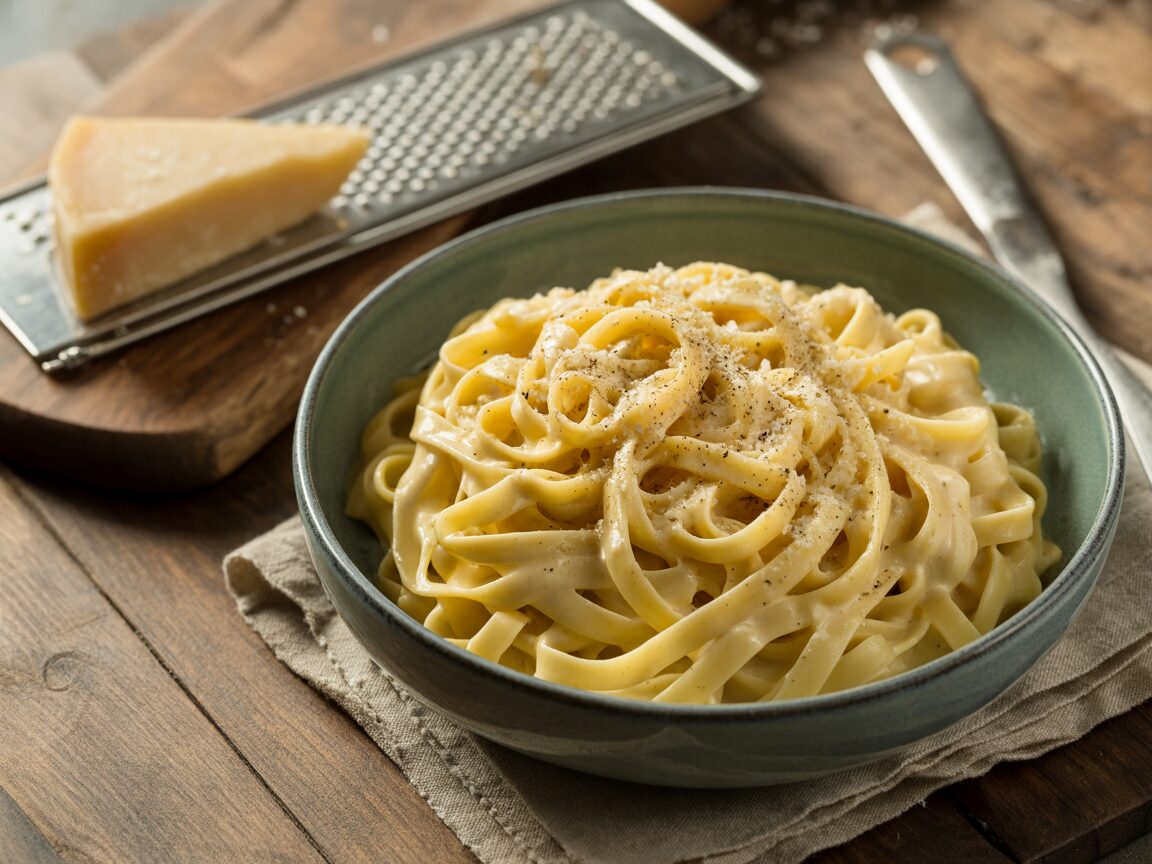
For smooth Alfredo sauce, melt 4 tablespoons of butter with 2 cloves of minced garlic, add 1½ cups of heavy cream, and simmer gently for 3 to 4 minutes. Take the pan off the heat, then whisk in 3 ounces of finely grated Parmesan a handful at a time until smooth. Season with salt and pepper and toss with hot fettuccine.
This Alfredo sauce recipe takes about 10 minutes and uses five everyday ingredients. The secret to a silky sauce is not a special ingredient but two simple habits: grating the cheese yourself and adding it off the heat.
Below, you will find why Alfredo turns grainy and how to prevent it, a lighter version with milk, and how to store and reheat leftovers.
Homemade Alfredo Sauce
Equipment
- Medium saucepan or large skillet
- Whisk
- Fine grater
Ingredients
- 4 tbsp unsalted butter
- 2 cloves garlic minced
- 1 1/2 cups heavy cream
- 3 oz Parmesan finely grated from a block, about 1 cup
- 1/4 tsp table salt or to taste
- 1/4 tsp black pepper
Instructions
- Melt the butter in a saucepan over medium heat. Add the garlic and cook for 30 to 60 seconds, until fragrant but not browned.
- Pour in the cream and bring it to a gentle simmer. Simmer for 3 to 4 minutes, stirring occasionally, until slightly thickened.
- Take the pan off the heat. Whisk in the Parmesan a handful at a time, letting each addition melt before adding the next.
- Season with salt and pepper, then toss with hot pasta right away, adding a splash of pasta water if the sauce is too thick.
Notes
Nutrition
Per serving, estimated
- Calories
- 490 kcal
- Total fat
- 49 g
- Saturated fat
- 31 g
- Cholesterol
- 145 mg
- Sodium
- 420 mg
- Carbohydrates
- 4 g
- Fiber
- 0 g
- Sugars
- 3 g
- Protein
- 10 g
Why Alfredo Sauce Turns Grainy
A gritty or clumpy sauce almost always comes from the cheese, and there are two common causes.
First, heat. When Parmesan hits boiling cream, its proteins tighten and squeeze out fat, leaving stringy clumps in an oily sauce. Taking the pan off the heat and adding the cheese gradually lets it melt gently instead.
Second, pre-grated cheese. Federal rules for grated cheeses allow anticaking agents, which keep the shreds from sticking together in the package. Unfortunately, those same coatings can also keep the cheese from melting smoothly. Grating a block of Parmesan just before cooking avoids the problem entirely.
Choosing the Parmesan
The cheese supplies most of the flavor, so it is worth choosing carefully. In the US, cheese labeled Parmesan must follow a federal standard: it is cured for at least 10 months and contains no more than 32% moisture. That long aging gives Parmesan its nutty, savory depth.
Imported Parmigiano Reggiano is the traditional choice and tastes richer still, while domestic Parmesan works well and costs less. Either way, buy a wedge, and grate it finely on a rasp or the small holes of a box grater.
Lighter Alfredo With Milk
For a lighter sauce, melt 2 tablespoons of butter, stir in 2 tablespoons of flour, and cook for 1 minute. Then whisk in 1½ cups of whole milk and simmer until thickened. Off the heat, stir in 2 ounces of softened cream cheese and the Parmesan. The flour and cream cheese replace the body that heavy cream normally provides. If you are out of cream altogether, the guide to heavy cream substitutes shows other options that hold up in sauces.
How to Thicken or Thin Alfredo
The sauce thickens as it cools and again when it meets the pasta, so aim for a consistency slightly thinner than you want. If it is too thin, simmer the cream a minute or two longer before adding the cheese, or stir in a little more Parmesan. If it is too thick, loosen it with a splash of starchy pasta water, which also helps the sauce cling to the noodles.
Ways to Serve It
- Chicken Alfredo: toss in sliced, cooked chicken breast with the pasta.
- Shrimp Alfredo: sauté shrimp in butter and garlic, then add the cream.
- With vegetables: stir in steamed broccoli, peas or sautéed mushrooms.
- With pancetta: crisp diced pancetta or bacon and scatter it over the top. See the pancetta guide for swaps.
Plan on about ⅓ cup of sauce per 4 ounces of dry pasta, so this recipe covers 12 ounces to 1 pound of fettuccine.
Storing and Reheating Leftovers
Refrigerate leftover Alfredo within 2 hours. The USDA leftovers guidance gives 3 to 4 days in the refrigerator and says to reheat leftovers to 165°F. Freezing is possible, though cream sauces tend to separate once thawed.
To reheat, warm the sauce in a pan over low heat with a splash of milk or cream, whisking constantly. High heat or a microwave on full power can split the sauce, so go slowly and stir often.
Frequently Asked Questions
Can you make Alfredo sauce without heavy cream?
Yes. Use the lighter milk version above, thickened with a little flour and cream cheese.
Can you use pre-shredded Parmesan?
You can, but expect a slightly grainier sauce, since the anticaking coating resists melting. If you must, use the finest shreds available and whisk them in very slowly off the heat.
Can you make Alfredo sauce ahead of time?
It is best made fresh, because it thickens considerably as it cools. However, you can refrigerate it for up to 3 to 4 days and rewarm it gently with a splash of milk, whisking until smooth again.
Is authentic Alfredo made with cream?
No. The original Roman dish is pasta tossed with butter, Parmesan and starchy pasta water. Cream is the American addition that makes the sauce richer and more forgiving.
Bringing It Together
Smooth Alfredo comes down to freshly grated Parmesan, gentle heat and patience. Simmer the cream briefly, take the pan off the burner, and whisk in the cheese a little at a time. Finally, toss it with hot pasta and loosen it with pasta water as needed.
Key takeaways
- Grate a block of Parmesan yourself for a smooth sauce.
- Add the cheese off the heat, a handful at a time.
- Loosen thick sauce with starchy pasta water.
- Refrigerate leftovers within 2 hours and use them within 3 to 4 days.
About this recipe: nutrition is estimated from USDA FoodData Central values, cheese standards follow the federal code, and storage advice follows USDA guidance.