Quick answer
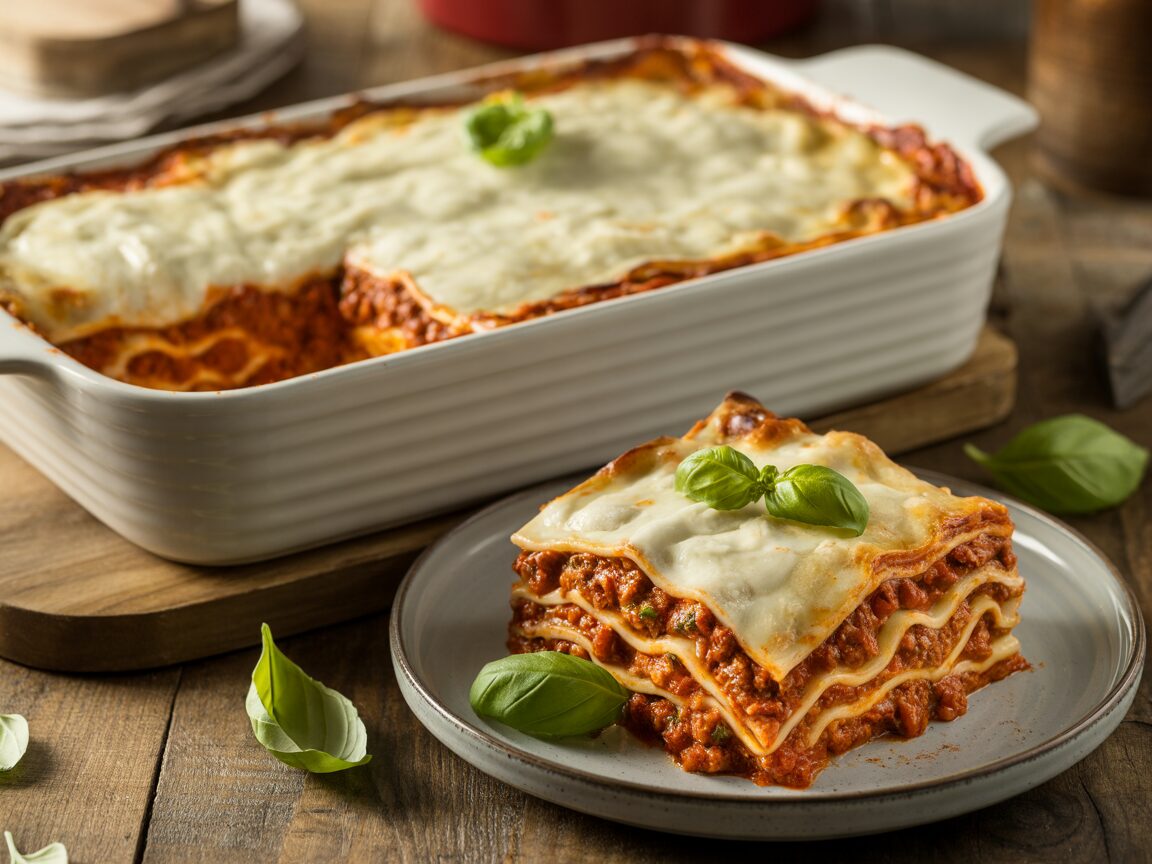
For a classic lasagna recipe, brown 1 pound each of ground beef and Italian sausage to 160°F, then simmer them with crushed tomatoes, tomato sauce, garlic and herbs. Layer boiled noodles, the meat sauce, a ricotta and Parmesan filling, and shredded mozzarella in a 9-by-13-inch pan. Bake covered at 375°F, uncover until bubbly, and rest 15 minutes before cutting.
This lasagna recipe makes a tall, cheesy 9-by-13-inch pan that serves 12, with a rich meat sauce and creamy ricotta layers that hold together when you slice it. It takes about 2 hours from start to finish, though much of that is simmering and baking time.
Below, you will find how to layer it so it doesn’t slide apart and how to prevent a watery pan. After that come the best cheeses and meats, how to make and freeze it ahead, and how long leftovers keep.
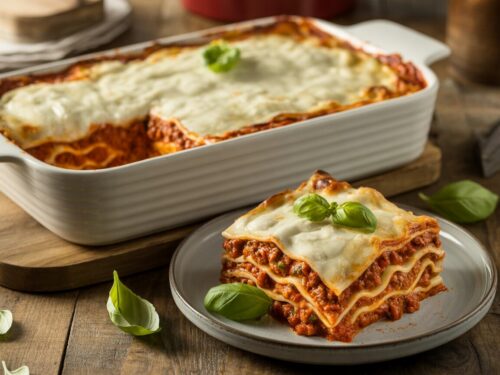
Classic Meat Lasagna
Equipment
- 9-by-13-inch baking dish
- Large skillet or Dutch oven
- Large pot
- Mixing bowl
- Aluminum foil
- Food thermometer
Ingredients
Meat sauce
- 1 tbsp olive oil
- 1 lb ground beef 85% lean
- 1 lb mild Italian sausage casings removed
- 1 medium onion finely chopped
- 4 garlic cloves minced
- 2 tbsp tomato paste
- 28 oz crushed tomatoes 1 can
- 15 oz tomato sauce 1 can
- 1 tsp dried basil
- 1 tsp dried oregano
- 1/2 tsp table salt or to taste
Ricotta filling
- 15 oz whole-milk ricotta
- 1 large egg
- 1/2 cup grated Parmesan
- 1/4 cup fresh parsley chopped
Assembly
- 12 lasagna noodles about 12 oz
- 1 lb low-moisture mozzarella shredded
- 1/4 cup grated Parmesan for the top
Instructions
- Heat the oil in a large skillet over medium-high heat. Add the beef and sausage and cook, breaking them up, until browned with no pink remaining and 160°F inside, about 8 to 10 minutes. Drain off excess fat.
- Add the onion and cook until soft, then stir in the garlic and tomato paste for 1 minute. Add the crushed tomatoes, tomato sauce, basil, oregano and salt. Simmer, stirring now and then, until thick, about 30 minutes.
- Meanwhile, heat the oven to 375°F. Boil the noodles in salted water until just flexible, then drain and lay them flat on an oiled sheet. Stir together the ricotta, egg, ½ cup Parmesan and parsley.
- Spread 1 cup of sauce in the baking dish. Layer noodles, one-third of the ricotta, a handful of mozzarella and about 1½ cups of sauce. Repeat twice, then finish with noodles, the remaining sauce, mozzarella and ¼ cup Parmesan.
- Cover tightly with foil and bake for 25 minutes. Uncover and bake 20 to 25 minutes more, until bubbling and golden. Let rest for 15 minutes before cutting.
Notes
Nutrition
Per piece, estimated
- Calories
- 540 kcal
- Total fat
- 30 g
- Saturated fat
- 13 g
- Cholesterol
- 115 mg
- Sodium
- 1,050 mg
- Carbohydrates
- 37 g
- Fiber
- 3 g
- Sugars
- 7 g
- Protein
- 32 g
How to Layer Lasagna
A good lasagna has distinct layers that stay put when you cut it. Follow this order in a 9-by-13-inch pan:
- Sauce first: spread about 1 cup of meat sauce over the bottom of the pan, so the first noodles don’t stick or dry out.
- Noodles: lay 3 or 4 noodles lengthwise, overlapping them slightly.
- Ricotta: dollop one-third of the ricotta filling over the noodles and spread it gently.
- Mozzarella: scatter a generous handful of shredded mozzarella over the ricotta.
- Sauce: spoon about 1½ cups of meat sauce over the cheese.
- Repeat: build two more layers of noodles, ricotta, mozzarella and sauce.
- Top: finish with a final layer of noodles, the remaining sauce, mozzarella and Parmesan.
Ending with noodles covered in sauce and cheese keeps the top from drying out and gives you that golden, bubbly crust. In addition, make sure the sauce reaches the edges of the pan, since bare noodle edges turn hard and crisp in the oven.
Why Lasagna Turns Watery, and How to Fix It
A soupy lasagna that slides apart on the plate is one of the most common problems. Usually, it comes from one of these causes:
- Thin sauce: simmer the meat sauce until it is thick enough to mound on a spoon. A watery sauce only gets thinner in the oven.
- Wet ricotta: if the ricotta looks loose or has liquid on top, drain it in a fine-mesh strainer for 15 minutes before mixing.
- Fresh mozzarella: fresh mozzarella releases a lot of water, so low-moisture shredded mozzarella works better for lasagna.
- Wet vegetables: squeeze spinach dry and cook mushrooms or zucchini first to drive off their moisture.
- No rest: cutting the lasagna straight from the oven lets the hot sauce run. Resting for 15 minutes lets the layers set.
The egg in the ricotta filling also helps, because it firms up as the lasagna bakes and binds the cheese layers together. Likewise, a final sprinkle of Parmesan over the top layer absorbs a little surface moisture and helps the cheese brown into a golden, slightly crisp crust.
Boiled or No-Boil Noodles?
Both work, but they behave a little differently. Regular noodles, boiled just until flexible, give lasagna a classic, tender texture with distinct layers. On the other hand, no-boil noodles save a step and soak up extra liquid as they bake, which can actually help with a juicy sauce.
If you swap in no-boil noodles, keep a few things in mind. First, make the sauce slightly looser, because the noodles need that liquid to soften. Second, make sure every noodle is completely covered with sauce or cheese, since any exposed edges stay hard. Finally, keep the pan covered tightly with foil for most of the baking time to trap the steam.
Choosing the Meat and Cheese
The combination of ground beef and Italian sausage gives the sauce a deeper, more seasoned flavor than beef alone, because the sausage brings its own fennel, garlic and spices. For a lighter dish, however, the meat makes the biggest difference. Based on USDA FoodData Central values, a serving compares like this:
| Lasagna made with | Calories per serving | Fat per serving |
|---|---|---|
| Beef and Italian sausage (this recipe) | About 540 | 30 g |
| All 85% lean ground beef | About 520 | 26 g |
| All 93% lean ground beef | About 470 | 20 g |
| This recipe with part-skim ricotta | About 540 | 29 g |
| This recipe with 2% cottage cheese | About 520 | 27 g |
Interestingly, switching the ricotta saves very little, while using 93% lean ground beef for all the meat cuts about 70 calories and 10 grams of fat per serving. Draining the browned meat well removes more fat still, so these figures are a ceiling rather than an exact count.
Ricotta or cottage cheese?
Ricotta gives a smooth, creamy, mild layer and is the traditional choice. Cottage cheese has a tangier taste and lumpier texture, and it adds slightly more sodium, though many families grew up with it and love it. For a smoother cottage cheese layer, blend it briefly before mixing in the egg and Parmesan.
A creamy white sauce layer
Many Italian versions skip ricotta altogether and use béchamel, a white sauce made from butter, flour and milk. To try it, melt 4 tablespoons of butter, whisk in ¼ cup of flour, then gradually add 3 cups of milk and cook until thickened. Season it with salt and a pinch of nutmeg, and use it in place of the ricotta filling.
Cooking the Meat Safely
Ground meat needs to be cooked all the way through before it goes into the lasagna. According to the USDA temperature chart, ground meats should reach 160°F. In practice, that means browning the beef and sausage until no pink remains, then checking the thickest pieces with a food thermometer.
Similarly, plan to cook raw ground meat soon after buying it. The FoodSafety.gov storage chart lists raw ground meat and raw sausage at 1 to 2 days in the refrigerator.
Making Lasagna Ahead
Lasagna is an excellent make-ahead dish, because the flavors meld as it sits. To make it ahead, assemble the lasagna completely, cover it tightly, and refrigerate it unbaked. When you are ready to bake, add extra time while it is covered, because a cold pan takes longer to heat through.
Whether the lasagna is baked fresh or from the refrigerator, it is done when the center is hot. The USDA chart lists casseroles at 165°F, so check the middle of the pan with a thermometer if you are unsure.
How to Freeze Lasagna
Lasagna freezes beautifully, either whole or in individual portions. For a whole pan, assemble it in a freezer-safe dish, wrap it tightly in plastic wrap and foil, and label it with the date. For portions, cool baked lasagna, cut it into squares and wrap each one separately.
For the best quality, use frozen lasagna within 2 to 3 months, the time USDA guidance gives for cooked meat casseroles. Thaw it overnight in the refrigerator before baking, or bake it from frozen covered with foil, allowing considerably more time.
Storing and Reheating Leftovers
Refrigerate leftover lasagna promptly in a covered container. The FoodSafety.gov chart lists cooked meat leftovers and similar dishes at 3 to 4 days in the refrigerator at 40°F or below.
To reheat, warm individual slices in the microwave or the whole dish in the oven, covered with foil so the top doesn’t dry out. Either way, reheat leftovers to 165°F, as the USDA chart recommends. A splash of water or sauce over the slices before reheating keeps the noodles moist.
Easy Variations
Once you have the basic method down, lasagna adapts easily to what you have on hand:
- Spinach lasagna: stir 10 ounces of thawed, well-squeezed frozen spinach into the ricotta filling for extra color and nutrients.
- Vegetable lasagna: replace the meat with sautéed mushrooms, zucchini and bell peppers, cooked until their moisture evaporates.
- All-beef lasagna: use 2 pounds of ground beef and add ½ teaspoon of fennel seed to mimic the flavor of sausage.
- Turkey lasagna: swap in ground turkey and season the sauce a little more boldly, since turkey is milder.
- White lasagna: layer the noodles with béchamel, chicken and spinach instead of a red meat sauce.
Making a smaller pan
For a smaller household, halve the recipe and bake it in an 8-by-8-inch pan, using about 6 noodles cut to fit. Start checking it a little earlier, because the smaller pan heats through faster. Alternatively, make the full recipe in two 8-by-8 pans, then bake one and freeze the other for a busy night.
What to Serve With Lasagna
Lasagna is rich and filling, so lighter sides balance it well. A crisp green salad with a tangy vinaigrette, roasted vegetables, or garlic bread are all classic choices. For a holiday spread, it also sits nicely beside green bean casserole. If you have leftover meat sauce, try it with homemade meatballs, or see the Alfredo sauce recipe for a creamy white lasagna variation.
Frequently Asked Questions
Should lasagna be covered when baking?
Yes, for most of the time. Covering it with foil keeps the noodles moist, then uncovering it at the end browns the cheese.
How many layers should lasagna have?
Three to four layers of noodles is typical for a 9-by-13-inch pan, with sauce and cheese between each one.
Do you put an egg in the ricotta for lasagna?
Usually, yes. The egg helps the ricotta set as it bakes, so the slices hold their shape.
Why rest lasagna before cutting?
Resting for 15 minutes lets the sauce and cheese firm up, so the slices come out neat instead of sliding apart.
Can you assemble lasagna the night before?
Yes. Cover and refrigerate it unbaked, then bake it the next day, adding extra time while covered.
Bringing It Together
Great lasagna starts with a thick, well-simmered meat sauce and meat browned to 160°F. Layer it carefully, cover it while it bakes, and let it rest before cutting so every slice holds together. Finally, refrigerate leftovers promptly and enjoy them within 3 to 4 days, or freeze the extras for an easy dinner later.
Key takeaways
- Cook ground beef and sausage to 160°F before layering.
- Simmer the sauce until thick, and use low-moisture mozzarella to avoid a watery pan.
- Bake covered, then uncovered, and rest 15 minutes before slicing.
- Using all 93% lean ground beef cuts about 70 calories per serving.
- Leftovers keep 3 to 4 days in the refrigerator; reheat them to 165°F.
About this recipe: nutrition is estimated from USDA FoodData Central values, cooking and reheating temperatures follow the USDA safe minimum temperature chart, and storage times follow FoodSafety.gov and USDA guidance.