Quick answer
What seasonings for beef stew work best? The classics are salt, black pepper, garlic, onion, thyme and bay leaves, with tomato paste and Worcestershire sauce for savory depth. In addition, rosemary, paprika and a splash of red wine are popular choices. Season the beef before searing, add sturdy herbs early, and finish with fresh parsley and a final taste for salt.
Great beef stew seasoning is less about a long spice list and more about timing. A few well-chosen seasonings, added at the right stage, give a stew deep, rounded flavor that a heap of spices thrown in at the start never quite matches.
The Essential Beef Stew Seasonings
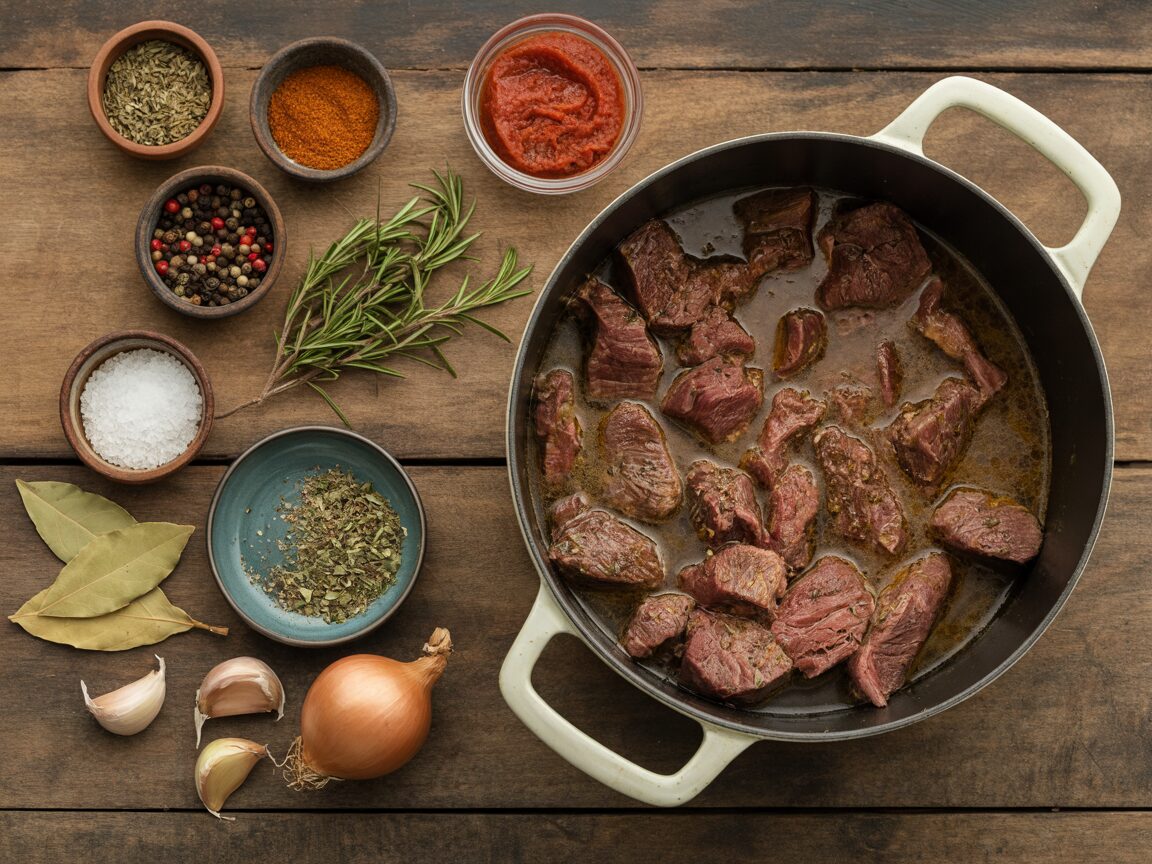
Most traditional beef stews rely on the same core group, and each one has a job:
| Seasoning | What it adds | For about 2½ lb of beef |
|---|---|---|
| Salt | Brings out the beef’s flavor | 1 tsp to start, more to taste |
| Black pepper | Gentle heat | ½ tsp |
| Garlic | Savory, mellow sweetness | 3 cloves |
| Onion | Body and sweetness | 1 large |
| Dried thyme | Earthy, slightly minty warmth | 1 tsp |
| Bay leaves | Subtle, herbal depth | 2 leaves |
| Tomato paste | Body, color and savory sweetness | 2 tbsp |
| Worcestershire sauce | Tangy, meaty complexity | 1 tbsp |
Notably, these amounts match the classic beef stew recipe, which serves six people. They also fall in line with University of Delaware Extension guidance, which suggests 1 to 2 teaspoons of a medium-strength herb for six servings.
Optional Seasonings Worth Trying
Once the basics are in place, a single addition can give your stew its own character:
- Rosemary: piney and bold, so use just one sprig or ½ teaspoon dried, since it can overpower the pot quickly.
- Paprika: sweet paprika adds warm color, while smoked paprika gives a gentle, campfire depth.
- Oregano: a good match for beef stew, especially with tomatoes in the pot.
- Red wine: deepens the gravy and balances its richness with a little acidity.
- Soy sauce: adds savory depth and a darker color, so use 1 to 2 teaspoons and cut back on the salt to match.
- Allspice or a pinch of cloves: a warm, wintry note in very small amounts.
- Dijon mustard: a teaspoon stirred into the liquid adds gentle tang.
- Balsamic vinegar: a small splash at the end brightens a heavy stew.
When to Add Each Seasoning
In fact, timing matters as much as the seasonings themselves, so here is how to layer them through the cooking process:
- Before searing: season the beef with salt and pepper, so the seasoning becomes part of the browned crust.
- With the vegetables: cook the onion and garlic until softened, then stir in the tomato paste and let it darken for a minute or two.
- With the liquid: add bay leaves, dried thyme, rosemary and Worcestershire sauce. Sturdy herbs such as thyme and oregano can go in early, according to UF/IFAS Extension.
- Near the end: because delicate fresh herbs lose flavor in a long simmer, University of Delaware Extension advises adding them during the last 45 minutes.
- Just before serving: remove the bay leaves, taste and adjust the salt, and then scatter fresh parsley over the top.
Above all, tasting at the end is the most important step of the whole process. During a long simmer, the liquid reduces and flavors concentrate, so a stew seasoned perfectly at the start can taste salty by the end. Therefore, it pays to season lightly early and finish with a final adjustment.
Fresh or Dried Herbs?
Dried herbs work very well in stew, because the long, gentle cooking time draws out their flavor. Fresh herbs, on the other hand, are brighter and best added toward the end of cooking. To swap one for the other, follow UF/IFAS Extension. It notes that a tablespoon of finely cut fresh herb equals about 1 teaspoon of dried herb, or ¼ to ½ teaspoon of ground dried herb.
In addition, old herbs and spices quietly weaken over time. According to UF/IFAS Extension, large-flake dried herbs stay fresh for 1 to 3 years and ground spices for 2 to 3 years. However, that assumes tight containers kept in a cool, dry place away from heat. If a jar has little aroma when you rub a pinch between your fingers, replace it.
Tie a simple herb bundle
For an easy cleanup, tie a few sprigs of fresh thyme, a sprig of rosemary, parsley stems and the bay leaves together with kitchen string. Drop the bundle into the pot with the liquid, then lift it out before serving. As a result, this classic trick keeps woody stems and stray leaves out of every bowl.
Where the Salt in Beef Stew Comes From
Salt shapes flavor more than any other seasoning, but it is easy to overdo when several ingredients bring their own. Based on USDA FoodData Central values, the sodium in the classic six-serving recipe breaks down like this:
| Source | Sodium in the pot, about | Share |
|---|---|---|
| 1 tsp table salt | 2,330 mg | 43% |
| 3 cups reduced-sodium beef broth | 1,620 mg | 30% |
| 2½ lb beef chuck | 900 mg | 16% |
| Worcestershire sauce and vegetables | 600 mg | 11% |
Altogether, that works out to about 910 mg of sodium in each of the six servings. Notably, switching to regular broth or adding soy sauce raises it quickly, since a single tablespoon of soy sauce carries about 880 mg. If you add soy sauce, reduce the salt to match. For broth swaps and their sodium, see the guide to beef broth substitutes.
For a lower-salt stew, lean on herbs and other bold flavors. University of Delaware Extension recommends savory or biting spices, herbs and vegetable seasonings for salt reduction. For example, extra garlic, black pepper, a splash of vinegar and plenty of thyme all help a stew taste full without more salt.
Homemade Beef Stew Seasoning Mix
For a pantry blend, mix the spices below and store them in an airtight jar. Use about 2 tablespoons for a stew made with 2½ pounds of beef, then add salt to taste.
Combine 1 tablespoon of sweet paprika with 2 teaspoons each of onion powder and garlic powder. Then add 1 teaspoon each of dried thyme, crushed dried rosemary, dried oregano and black pepper, plus ½ teaspoon of celery seed, and stir until evenly mixed.
Leaving the salt out of the mix lets you control it separately, which matters when the broth or other ingredients are already salty.
Frequently Asked Questions
What herbs go best in beef stew?
Thyme and bay leaves are the classic pair. Rosemary, oregano and parsley also work well.
How do you fix bland beef stew?
Add salt a pinch at a time, then try a splash of Worcestershire, red wine vinegar or soy sauce. A little acid often wakes up a flat stew.
How do you fix a stew that is too salty?
Add unsalted broth or water, more potatoes or vegetables, or a splash of acid to balance it.
Should you remove bay leaves from stew?
Yes. The leaves stay stiff and sharp after cooking, so take them out before serving.
Bringing It Together
Season beef stew with salt, pepper, garlic, onion, thyme and bay leaves, and build depth with tomato paste and Worcestershire sauce. Add sturdy herbs early and delicate ones late. Finally, taste at the end, since a long simmer concentrates the salt. For storing the finished pot, see how long beef stew lasts.
Key takeaways
- Salt, pepper, garlic, onion, thyme and bay leaves form the classic base.
- Tomato paste and Worcestershire sauce add savory depth.
- One tablespoon of fresh herbs equals about 1 teaspoon dried.
- Table salt supplies the largest share of sodium in a typical stew.
- Taste and adjust the salt at the end, after the liquid reduces.
About this guide: herb conversions and storage follow UF/IFAS Extension and University of Delaware Extension, and sodium figures come from USDA FoodData Central.