Quick answer
The easiest beef broth substitute is 1 beef bouillon cube or 1 teaspoon of granules dissolved in 1 cup of hot water. With no bouillon, use 1 cup of chicken or vegetable broth plus 1 teaspoon of soy sauce and ½ teaspoon of Worcestershire sauce for beefy depth and color. Mushroom broth, consommé, red wine or dark beer also work in stews and gravies.
A good beef broth substitute replaces three things: deep savory flavor, a brown color, and a measured amount of salt. Beef broth itself is mostly water, so almost any well-seasoned liquid can stand in. The trick is to rebuild that savory, slightly meaty taste while keeping an eye on the sodium.
Below, you will find a chart of per-cup swaps and how much salt each one adds, using USDA data. After that come the best choices for stews, gravy and soup, plus a quick pantry broth you can stir together in a minute. Finally, you will find vegetarian options and the difference between broth, stock, bouillon and consommé.
What Beef Broth Does in a Recipe
Before choosing a swap, it helps to know which job the broth is doing in your dish. Beef broth usually contributes four things at once:
- Savory depth: simmered beef and bones give broth a rich, rounded flavor that makes stews, gravies and soups taste meaty.
- Color: roasted bones and browned vegetables turn the liquid a warm brown, which carries through to gravy and French onion soup.
- Salt: most store-bought broth is well salted, and recipes often rely on it for much of their seasoning.
- Liquid: above all, broth provides the volume that braises meat, cooks grains and thins sauces.
A substitute rarely matches all four perfectly. However, a neutral liquid plus a small amount of a savory, dark seasoning, such as soy sauce, Worcestershire, tomato paste or miso, covers most of the gap.
Beef Broth Substitute Chart
Each swap below replaces 1 cup of beef broth. Start with the smaller amount of any seasoning, then taste and adjust at the end of cooking.
| Substitute | For 1 cup of beef broth | Best for | Watch for |
|---|---|---|---|
| Beef bouillon cube or granules | 1 cube or 1 tsp in 1 cup hot water | Everything | Salty; skip added salt until the end |
| Beef base paste | 1 tsp stirred into 1 cup hot water | Soups, stews, gravy | Concentrated; measure carefully |
| Beef stock | 1 cup | Everything | Richer body; often less salty |
| Canned beef consommé | ½ cup condensed plus ½ cup water | French onion soup, gravy | Very intense if used undiluted |
| Chicken broth plus seasoning | 1 cup plus 1 tsp soy sauce and ½ tsp Worcestershire | Stews, rice, pan sauces | Lighter color without the seasoning |
| Vegetable broth plus seasoning | 1 cup plus 1 tsp soy sauce and ½ tsp tomato paste | Soups, grains, vegetarian dishes | Sweeter if heavy on carrots |
| Mushroom broth | 1 cup | Stews, gravy, vegetarian cooking | Earthy; excellent depth |
| Red wine | ½ cup wine plus ½ cup water or broth | Braises, pot roast, stew | Simmer at least 20 minutes |
| Dark beer | 1 cup, or half beer and half water | Stews, chili, braised beef | Can turn bitter if reduced hard |
| Water plus pantry seasoning | See the pantry broth below | Emergencies, small amounts | Lighter body |
| Miso and water | 1 tbsp miso whisked into 1 cup hot water | Soups, vegetarian dishes | Add off the boil to keep its flavor |
| Pan drippings | Drippings topped up with water to 1 cup | Gravy, au jus | Skim excess fat first |
If a recipe calls for several cups of broth, mix and match. For example, half chicken broth and half water with soy sauce and tomato paste makes an excellent base for a long-simmered stew.
How Much Salt Each Swap Adds
Sodium is where substitutes differ most, and it explains why some swaps turn a dish salty. According to USDA FoodData Central values, each option compares like this:
| Liquid or seasoning | Amount | Sodium, about |
|---|---|---|
| Beef broth, regular | 1 cup | 890 mg |
| Beef broth, reduced sodium | 1 cup | 490 mg |
| Beef bouillon, prepared | 1 cup | 920 mg |
| Beef consommé, diluted 1:1 | 1 cup | 640 mg |
| Chicken broth, regular | 1 cup | 920 mg |
| Chicken broth, reduced sodium | 1 cup | 550 mg |
| Chicken broth, low sodium | 1 cup | 70 mg |
| Vegetable broth | 1 cup | 650 mg |
| Soy sauce | 1 tbsp | 880 mg |
| Miso | 1 tbsp | 630 mg |
| Worcestershire sauce | 1 tbsp | 220 mg |
These are averages, and individual brands vary widely, so check the label on the product you buy. In practice, the table holds two useful lessons. First, a cup of bouillon carries about as much sodium as regular broth, so it is a true one-for-one swap. Second, seasonings such as soy sauce and miso are potent, so a single tablespoon can add as much salt as a full cup of broth.
When shopping for a lower-salt option, the label wording has a precise meaning. According to the federal sodium guide, which summarizes FDA definitions, “low sodium” means 140 milligrams or less per serving. By contrast, “reduced sodium” only means at least 25% less than the regular product, and “no salt added” does not mean the product is sodium free.
The Best Substitute for Each Kind of Dish
The right swap depends on whether the broth is a background liquid or the star of the dish.
Beef stew and pot roast
In long braises, the beef itself releases plenty of flavor, so the liquid matters less than you might expect. Bouillon, red wine, dark beer or chicken broth with soy sauce all work well. Browning the meat deeply and stirring in a spoonful of tomato paste adds the remaining color and depth. The classic beef stew recipe uses this approach with red wine and broth.
Gravy and pan sauces
Gravy needs strong flavor and a rich brown color, so choose bouillon, consommé or pan drippings first. If you use chicken broth, add 1 teaspoon of soy sauce and ½ teaspoon of Worcestershire per cup, which darken the gravy and deepen its taste.
French onion soup
Here, broth is the main ingredient, so the substitute shows. Diluted consommé or a good beef base gives the closest result. Alternatively, combine mushroom broth with a splash of dry sherry and a teaspoon of soy sauce for a satisfying vegetarian version.
Rice, grains and casseroles
For rice, barley or a casserole sauce, any savory broth works. Chicken, vegetable or mushroom broth all cook grains well, and the difference in flavor is subtle. Many casseroles, such as green bean casserole, accept beef, chicken or vegetable broth interchangeably.
Slow cooker recipes
Slow cookers trap moisture, so the liquid barely reduces and flavors stay mild. Therefore, choose a well-seasoned swap such as bouillon, and add soy sauce or Worcestershire for depth. Taste at the end and adjust, because slow-cooked dishes often need a final pinch of salt or splash of acid.
Choosing by How Much Broth the Recipe Needs
The amount of broth matters as much as the dish itself. A small splash and a whole pot call for different approaches.
A few tablespoons
When a recipe uses only a little broth, for instance to deglaze a pan or loosen a sauce, almost any liquid works. Water with a few drops of soy sauce, a splash of wine, or even the starchy water from cooking pasta will do the job. In these small amounts, the difference in flavor is barely noticeable.
One or two cups
For a cup or two, as in a pan sauce, gravy or a pot of rice, choose a substitute with real flavor. Bouillon, base paste, or chicken broth with soy sauce and Worcestershire all work well here. Taste as you go, because the broth now makes up a larger share of the dish.
A quart or more
Soups and large braises use broth as their foundation, so it pays to blend sources. For example, combine bouillon with some mushroom or chicken broth, and add tomato paste and browned onions for depth. Long simmering also helps, since time draws flavor from the meat and vegetables into the liquid.
Pressure Cookers and Leftover Cartons
Pressure cookers need enough thin liquid to build steam, so follow the minimum amount your appliance specifies. Thick additions such as tomato paste or condensed consommé can scorch on the bottom, so stir them in after cooking or layer them on top of the other ingredients.
If you open a carton of broth and use only part of it, refrigerate the rest promptly. Check the package for its use-by guidance. Then freeze any extra in 1-cup portions or ice cube trays, so it is ready for the next recipe.
Quick Pantry Broth
When you have no broth or bouillon at all, this pantry mixture makes a surprisingly good stand-in for 1 cup of beef broth:
- Heat: bring 1 cup of water to a simmer in a small saucepan.
- Season: whisk in 1 teaspoon of soy sauce, ½ teaspoon of Worcestershire sauce and ½ teaspoon of tomato paste.
- Enrich: stir in 1 teaspoon of butter and a pinch each of onion powder and black pepper.
- Taste: simmer for 2 minutes, then taste and add a pinch of salt only if needed.
The soy sauce supplies savory depth and color, the tomato paste adds body and a hint of sweetness, and the butter rounds out the flavor. Scale it up as needed, and use it anywhere beef broth is a supporting ingredient.
How to Build Beefy Flavor in Any Liquid
Most good substitutes rely on the same handful of pantry seasonings. Knowing what each one contributes makes it easier to improvise with whatever you have on hand.
| Seasoning | Per cup of liquid | What it adds |
|---|---|---|
| Soy sauce or tamari | 1 tsp | Savory depth, brown color, salt |
| Worcestershire sauce | ½ tsp | Tangy, meaty complexity |
| Tomato paste | ½ tsp | Body, sweetness, red-brown color |
| Miso | 1 tsp | Rounded, fermented savoriness |
| Liquid aminos or coconut aminos | 1 tsp | Soy-like depth; coconut aminos are milder and sweeter |
| Fish sauce | ¼ tsp | Strong savory punch; use sparingly |
| Yeast extract spread | ¼ tsp | Deep, almost meaty flavor and dark color |
| Dried mushroom powder | ½ tsp | Earthy depth with very little salt |
| Butter | 1 tsp | Richness and a fuller mouthfeel |
Combine two or three of these rather than leaning heavily on one. For example, soy sauce alone can taste flat and salty, but soy sauce with tomato paste and a little butter tastes surprisingly close to broth. Similarly, a pinch of dried mushroom powder adds depth without adding sodium, which helps when the rest of the dish is already well seasoned.
Adding color without beef
Pale substitutes can make gravy or stew look washed out. To deepen the color, brown your meat and onions well before adding any liquid, since those browned bits on the bottom of the pan carry both flavor and color. In addition, a teaspoon of soy sauce, a little tomato paste cooked until it darkens, or a few caramelized onions all turn the liquid a richer brown.
How to Keep the Salt in Check
Because many swaps are salty, a few simple habits keep the finished dish balanced:
- Start low: use reduced-sodium or low-sodium broth whenever you can, since salt is easy to add but hard to remove.
- Hold back the salt: leave out any salt the recipe calls for until the end, then taste and season.
- Count the seasonings: soy sauce, miso and fish sauce all add salt, so reduce the bouillon or broth slightly when you use them.
- Watch reductions: as liquid simmers away, the salt concentrates, so a sauce reduced by half tastes roughly twice as salty.
- Fix it gently: if a dish ends up too salty, add unsalted liquid, a splash of acid such as lemon juice, or more of the unseasoned main ingredients.
For bouillon, you can also simply use more water. Dissolving 1 cube in 1½ cups of water instead of 1 cup gives a milder broth that suits long-simmered dishes, where the liquid reduces over time anyway.
Common Mistakes to Avoid
Even good substitutes can go wrong in a few predictable ways:
- Using condensed consommé undiluted: straight from the can, it is very concentrated, so dilute it with an equal amount of water.
- Replacing all the broth with wine: too much wine can taste sharp and sour, so use it for no more than half the liquid.
- Adding beer at the end: beer needs time to mellow, so add it early and let it simmer with the dish.
- Boiling miso: high heat dulls its flavor, so whisk it in near the end of cooking.
- Forgetting to taste: every swap behaves differently, so always taste before serving and adjust the salt and acid.
Vegetarian and Vegan Beef Broth Substitutes
Several plant-based options deliver the deep, savory flavor that beef broth provides:
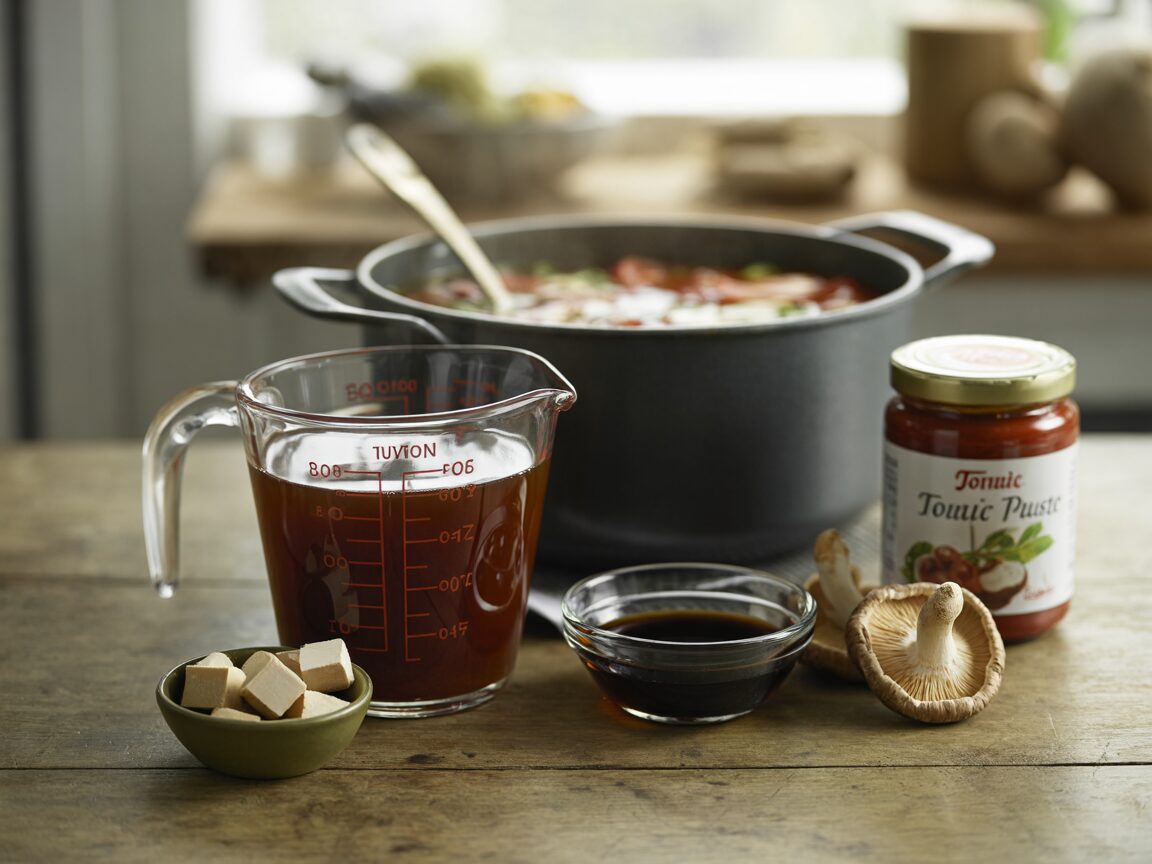
- Mushroom broth: the closest vegetarian match, rich and earthy. Simmer dried shiitake or porcini mushrooms in water for 20 minutes for a quick homemade version.
- Vegetable broth with umami boosters: add soy sauce, tomato paste and a little miso for depth and color.
- Miso broth: whisk 1 tablespoon of miso into 1 cup of hot water, which works well in soups and grain dishes.
- Kombu and shiitake: steep a strip of kombu seaweed and a few dried shiitake in hot water for a light, savory broth.
Note that traditional Worcestershire sauce usually contains anchovies, so choose a vegetarian version for meat-free cooking.
Gluten-Free Swaps
Regular soy sauce is brewed with wheat, and some bouillon cubes and broths contain wheat-based flavorings. For a gluten-free dish, use tamari or a soy sauce labeled gluten-free, and check bouillon and broth labels carefully. Mushroom broth and homemade stock are naturally gluten-free.
Broth, Stock, Bouillon and Consommé
These terms overlap, and they substitute for one another easily:
- Broth: made mainly from meat and vegetables, lighter in body and usually seasoned.
- Stock: made mainly from bones, which release gelatin and give it more body. It is often less salty.
- Bouillon: concentrated broth sold as cubes, granules or paste, mixed with water before use.
- Consommé: broth that has been clarified and concentrated, very clear and intense.
For most recipes, any of them can replace beef broth one-for-one. Simply adjust the salt, since bouillon and consommé tend to be saltier while unsalted stock may need extra seasoning.
Making and Storing Homemade Beef Broth
If you have time, homemade broth gives the richest flavor. Roast 3 pounds of beef bones with an onion, carrot and celery at 425°F until deeply browned, about 45 minutes. Then cover them with cold water, add a bay leaf and peppercorns, and simmer gently for 4 to 6 hours. Strain, cool and skim the fat.
Cool homemade broth quickly in shallow containers and refrigerate it within 2 hours. The cold storage chart lists soups and stews at 3 to 4 days in the refrigerator and 2 to 3 months in the freezer for the best quality. Freezing broth in ice cube trays or 1-cup portions makes it easy to use only what a recipe needs.
Frequently Asked Questions
Can you use chicken broth instead of beef broth?
Yes, one-for-one. For a beefier flavor and darker color, add 1 teaspoon of soy sauce and ½ teaspoon of Worcestershire sauce per cup.
How much bouillon equals 1 cup of beef broth?
Usually 1 cube or 1 teaspoon of granules dissolved in 1 cup of hot water. Check the package, since strengths vary by brand.
Can you use water instead of beef broth?
Yes, but season it. Water alone makes a bland dish, so add soy sauce, Worcestershire, tomato paste and a little butter, or use the pantry broth above.
Is beef stock the same as beef broth?
Not quite, but they swap one-for-one. Stock is made mainly from bones and has more body, while broth is lighter and usually saltier.
What is the best vegetarian substitute for beef broth?
Mushroom broth, especially one made with dried shiitake or porcini. A splash of soy sauce adds the color and savory depth of beef.
Can you use beef consommé instead of beef broth?
Yes. Dilute condensed consommé with an equal amount of water, then use it one-for-one. It is richer and clearer than broth.
Can you use red wine instead of beef broth?
Partly. Replace up to half the broth with dry red wine and the rest with water or another broth, then simmer for at least 20 minutes.
Can you use bone broth instead of beef broth?
Yes, one-for-one. Beef bone broth has more body and often a stronger flavor, so it works especially well in gravy and soup.
How do you make vegetable broth taste like beef broth?
Add 1 teaspoon of soy sauce, ½ teaspoon of tomato paste and a pinch of mushroom powder per cup. A little butter adds richness.
Bringing It Together
For most recipes, bouillon dissolved in hot water is the simplest beef broth substitute, while chicken or vegetable broth with soy sauce and Worcestershire comes a close second. Choose consommé or drippings when the broth is the star, as in gravy or French onion soup, and mushroom broth for vegetarian cooking. Finally, watch the salt, since bouillon, soy sauce and miso all carry more sodium than you might expect, and season at the end. For a pot of soup that uses broth as its base, try the creamy potato soup.
Key takeaways
- Use 1 bouillon cube or 1 teaspoon of granules per cup of hot water.
- Add soy sauce and Worcestershire to chicken or vegetable broth for beefy depth.
- Choose consommé, base or drippings when broth is the star of the dish.
- “Low sodium” means 140 mg or less per serving; “reduced sodium” only means 25% less.
- Season at the end, since many swaps are salty.
About this guide: sodium figures come from USDA FoodData Central, label definitions follow the FDA as summarized by the Administration for Community Living, and storage advice follows FoodSafety.gov.