Quick answer
Cooked meatloaf lasts 3 to 4 days in the refrigerator and keeps its best quality for 3 to 4 months in the freezer. Refrigerate it within 2 hours of baking, and reheat leftovers until the center reaches 165°F. Bake a raw, shaped loaf within 1 to 2 days of mixing it.
How long does meatloaf last? The answer depends on three things: whether the loaf is cooked or raw, how quickly it reached the refrigerator, and where you keep it. The figures come from USDA leftovers guidance, and they apply to beef, pork, turkey and mixed-meat loaves alike.
The refrigerator limit is the one that matters most, because it is about safety rather than taste. The limit holds even when the slices still look and smell fine, so the calendar is a better guide than your nose.
Below you will find a storage chart for raw and cooked meatloaf and the right way to cool and wrap it. After that come freezing, thawing, and four ways to reheat leftovers without drying them out, including the stove top.
Meatloaf Storage Times at a Glance
Raw and cooked meatloaf follow different clocks, so check which one you have before you count.
| Meatloaf | Refrigerator (40°F or below) | Freezer (0°F) |
|---|---|---|
| Raw mixture or shaped, unbaked loaf | 1 to 2 days | 3 to 4 months |
| Cooked loaf or slices | 3 to 4 days | 3 to 4 months for best quality |
| Cooked, left at room temperature | 2 hours at most, or 1 hour above 90°F | |
The raw figures match the cold storage chart for ground meat mixtures and the ground beef guidance. For frozen cooked meat, that chart allows a wider range of 2 to 6 months. It also notes that food kept frozen at 0°F stays safe indefinitely, because freezer times measure quality rather than safety.
Start counting on the day you baked the meatloaf, not the day it went into the refrigerator. If you baked it on Sunday, finish or freeze the leftovers by Wednesday or Thursday. For a loaf you shaped ahead of time, the 1 to 2 days begin when you mixed the raw meat.
How to Store Cooked Meatloaf
Cooling quickly matters as much as the container, because a thick loaf holds heat in its center for a long time. These steps move it out of the temperature danger zone as quickly as possible.
- Refrigerate within 2 hours: let the loaf rest and serve, then put the leftovers away before the 2-hour mark, or within 1 hour on a hot day.
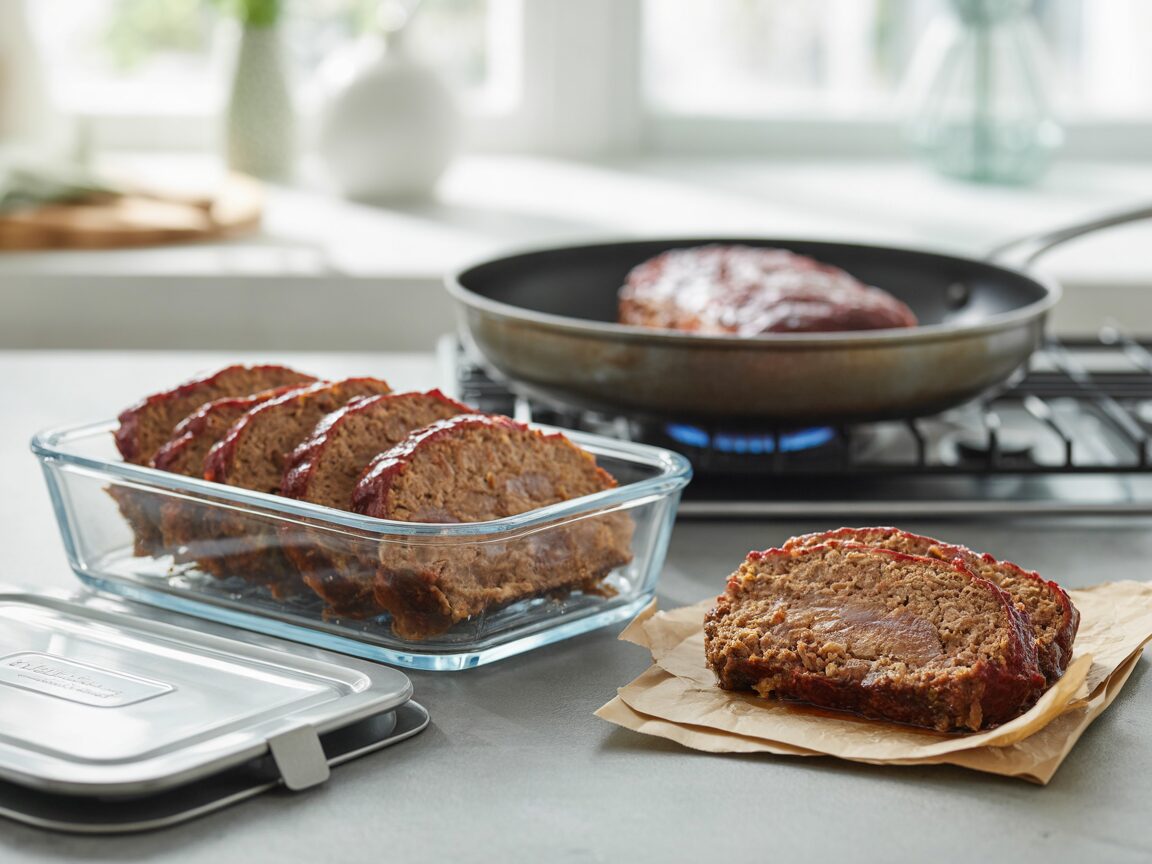
- Cut it down: slice the loaf or cut it into halves so the center cools faster, as the leftovers guidance recommends for large items.
- Use shallow, airtight containers: a shallow container cools evenly, and a tight lid stops the slices from drying out and picking up odors.
- Label the date: write the baking day on the lid so the 3 to 4 days are easy to track.
Leave the glaze on, since it acts like a thin protective layer over the top, but store any extra sauce in a separate container so the slices stay firm.
How to Tell If Meatloaf Has Gone Bad
Throw meatloaf away once it passes 4 days in the refrigerator, whatever it looks like. The 3 to 4 day limit applies even to slices that look and smell normal, so a passing sniff test is not proof that leftovers are safe.
Certain signs indicate spoilage even inside the 4 days. Discard meatloaf immediately if you notice a sour or unusual smell, a slimy or sticky surface, or gray-green patches and fuzzy mold. The same applies to leftovers that sat out longer than 2 hours, regardless of how they appear.
How to Freeze Meatloaf
Meatloaf freezes well whether cooked or raw, although individual slices are the most practical choice, since they freeze and thaw quickly and you can take out only what you need.
| What you freeze | How to wrap it | Best use |
|---|---|---|
| Cooked slices | Cool completely, separate with parchment, then seal in a freezer bag with the air pressed out | Quick lunches and sandwiches |
| Cooked whole loaf | Cool, wrap tightly in plastic wrap, then in foil | A future dinner for the family |
| Raw, shaped loaf | Wrap tightly in plastic wrap and foil, without the glaze | Bake later as if fresh |
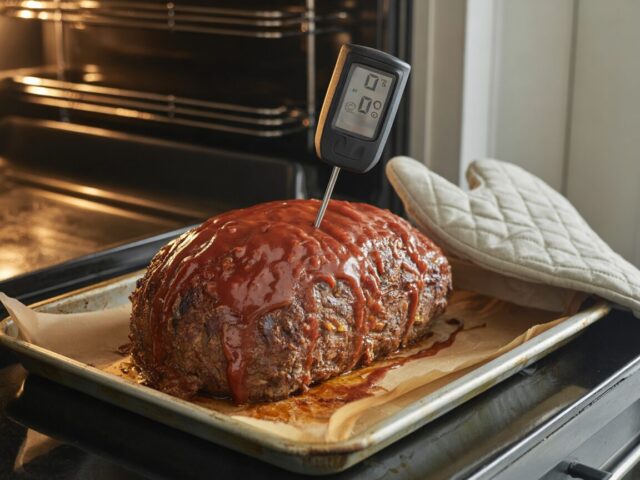
To bake a frozen raw loaf, thaw it in the refrigerator first whenever you can, then glaze and bake it exactly as the recipe directs. Baking it straight from frozen is possible, but it takes considerably longer, and the outside can dry before the center is done. Rely on an instant-read thermometer reaching 160°F rather than the clock.
Label each package with the contents and date, then use it within 3 to 4 months for the best texture. After that it remains safe at 0°F, but it gradually loses moisture and flavor and can develop freezer burn.
How to Thaw Frozen Meatloaf
The safest thawing method is the refrigerator, where a whole loaf needs about 24 hours, while slices usually thaw overnight. Plan to eat thawed meatloaf within a day or two rather than restarting the count.
For faster results, seal the meatloaf in a leak-proof bag and submerge it in cold water, changing the water as it warms. Alternatively, use the defrost setting on a microwave. In either case, reheat the meatloaf right away rather than returning it to the refrigerator.
Never thaw meatloaf on the counter, because the outside reaches room temperature long before the center thaws. Frozen slices can also go straight into a covered skillet or the oven, and they simply take about half again as long to heat through.
How to Reheat Meatloaf
Whichever method you choose, heat leftovers until the center reads 165°F on an instant-read thermometer. A splash of liquid and a cover keep the slices from drying out.
| Method | How | Typical time |
|---|---|---|
| Stove top | Covered skillet over medium-low with 1 to 2 tablespoons of water or broth | 3 to 4 minutes per side for 1-inch slices |
| Oven | 350°F, in a covered dish with a splash of broth | 15 to 20 minutes for slices, 30 to 45 for a whole loaf |
| Microwave | Covered, on medium power, rotating halfway, then rest 1 minute | 1½ to 3 minutes per slice |
| Air fryer | 350°F in a single layer | 5 to 8 minutes |
Reheating meatloaf on the stove top
The stove top gives the best texture for slices, because it crisps the edges while the steam warms the center. Heat a skillet over medium-low, add the slices with 1 to 2 tablespoons of water or broth, and cover the pan. Turn them once, then add a spoonful of glaze or sauce in the last minute so it warms without burning.
Reheating a whole loaf in the oven
For a whole or half loaf, the oven heats more evenly than a skillet. Set the loaf in a baking dish, add about ¼ cup of broth or water around it, and cover the dish tightly with foil so the steam stays in. Bake at 350°F until the center reaches 165°F, then uncover it for the final 5 minutes and brush on fresh glaze if you like a glossy top.
Can You Refreeze Meatloaf?
Yes, with one condition. The same FSIS guidance confirms that you can safely refreeze any leftovers that remain after reheating previously frozen meatloaf to 165°F. Each round dries the meat a little more, however, so freeze in single portions to avoid thawing more than you will eat.
Ways to Use Up Leftover Meatloaf
Leftover meatloaf is versatile, which makes the 3 to 4 day window easy to meet. Each of these ideas starts with cold slices straight from the refrigerator, and each one ends with the meat heated through again.
| Idea | How to make it |
|---|---|
| Meatloaf sandwich | Sear a slice in a skillet, then layer it on toasted bread with ketchup or mustard |
| Pasta sauce | Crumble slices into simmering marinara for a quick meat sauce |
| Breakfast hash | Brown diced meatloaf with cooked potatoes and onion, then top with a fried egg |
| Chili or soup | Stir crumbled meatloaf into chili or vegetable soup in the last 10 minutes |
Frequently Asked Questions
Can you eat meatloaf after 5 days in the fridge?
No. The safe limit for cooked meatloaf is 3 to 4 days, so throw out anything older even if it looks and smells normal. If you will not finish it in time, freeze the slices by day 3.
Is it safe to eat cold meatloaf?
Yes, as long as it went into the refrigerator within 2 hours and is still inside the 3 to 4 days. Cold meatloaf sandwiches are a classic, practical way to use up leftovers.
Does turkey meatloaf last the same amount of time?
Yes. Cooked turkey or chicken meatloaf follows the same 3 to 4 days in the refrigerator and 3 to 4 months in the freezer. Leftovers still need to reach 165°F when you reheat them.
Can meatloaf sit out overnight?
No. Discard cooked meatloaf that sat out for more than 2 hours, or 1 hour above 90°F. Reheating it afterward does not make it safe again, because some bacteria produce toxins that heat cannot destroy.
Bringing It Together
Leftover meatloaf is one of the easiest dishes to store well, as long as you respect two clocks. Cooked meatloaf gets 3 to 4 days in the refrigerator, counted from the day you baked it. A raw loaf, by contrast, needs to go into the oven within 1 to 2 days of mixing.
Cooling and wrapping determine the quality of every later meal. Refrigerate leftovers within 2 hours, slice them so they cool quickly, and keep them in shallow, airtight containers with the date on the lid. When you need more time, freeze individual slices and use them within 3 to 4 months.
Reheating is where most meatloaf dries out, so add a splash of liquid, cover the pan, and stop as soon as the center reaches 165°F. For slices, a covered skillet on the stove top gives crisp edges and a moist center in under 10 minutes. And for a fresh batch, the meatloaf recipe here slices cleanly and reheats well.
Key takeaways
- Cooked meatloaf keeps 3 to 4 days in the refrigerator; raw meatloaf keeps 1 to 2 days.
- Refrigerate leftovers within 2 hours, or 1 hour above 90°F.
- Freeze slices and use them within 3 to 4 months for the best texture.
- Reheat leftovers until the center reaches 165°F.
How this guide was built: its storage times, cooling rules and reheating temperatures follow USDA Food Safety and Inspection Service guidance and the FoodSafety.gov cold storage chart. Reheating times are typical ranges, so a thermometer has the final say.