Quick answer
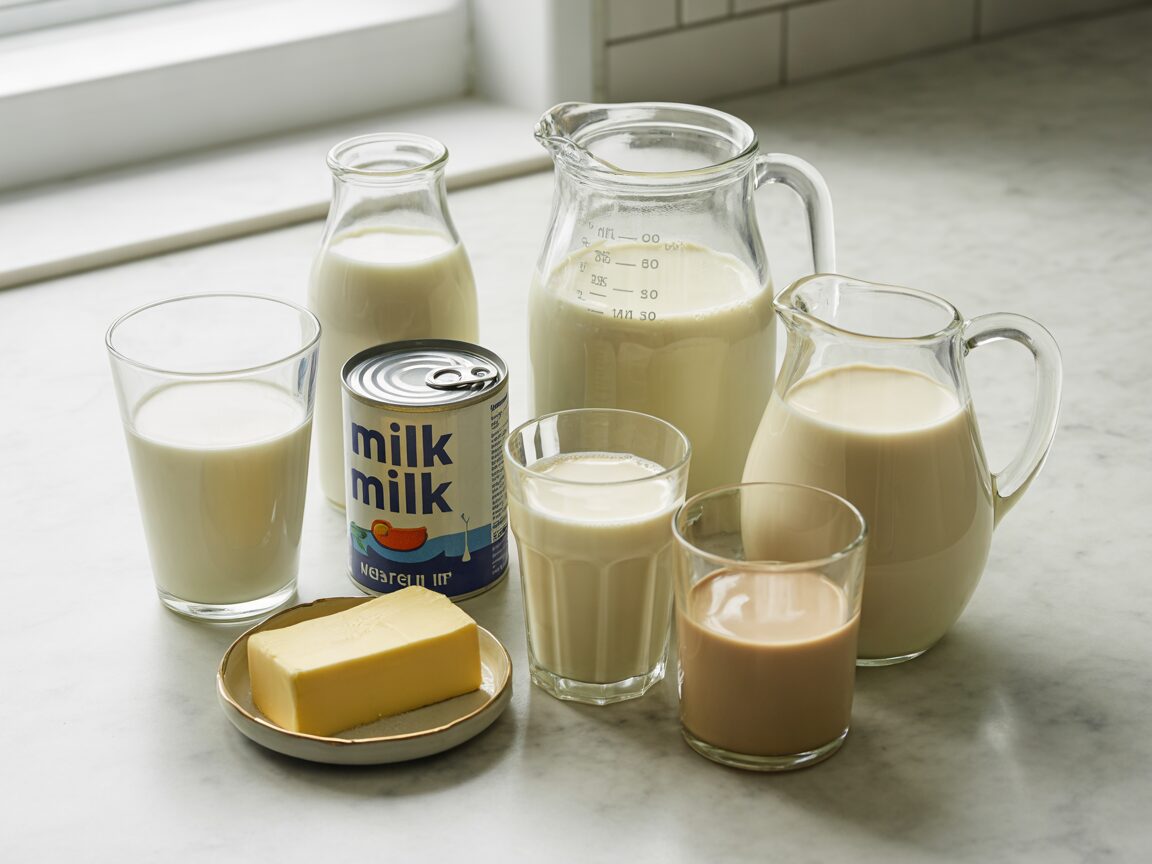
The closest milk substitute is ½ cup of evaporated milk mixed with ½ cup of water, which replaces 1 cup of milk in almost any recipe. Half-and-half, diluted heavy cream, reconstituted powdered milk and unsweetened soy milk also work one-for-one. For dairy-free cooking, soy or oat milk comes closest in baking.
Choosing a milk substitute is easier once you know what milk actually brings to a recipe. A cup of whole milk is mostly water, with a little fat, protein and natural milk sugar. According to USDA FoodData Central, that cup carries about 8 grams each of fat and protein, and those two small amounts do most of the work.
The water keeps a batter or sauce at the right consistency. The fat makes cakes tender and sauces silky, while the protein and sugar help baked goods brown. A good substitute replaces the liquid first, then gets as close as it can on fat and protein.
This guide gives you a chart of per-cup swaps and a simple way to match the richness of whole milk with cream, butter or half-and-half. After that come the best choices for baking and cooking, answers about butter, whipping cream, coffee creamer and sour cream, and the products that look dairy-free but still contain milk.
What Milk Does in a Recipe
Milk does three jobs at once, which is why some swaps work better than others. Comparing one cup of each option shows where the differences lie.
| 1 cup of | Fat | Protein | What it changes |
|---|---|---|---|
| Whole milk | 8 g | 8 g | The baseline most recipes assume |
| Half-and-half | 28 g | 8 g | Richer and more tender |
| Unsweetened soy milk | 4 g | 8 g | Browns almost like milk |
| Unsweetened almond milk | 2.5 g | 1 g | Thinner, paler, less tender |
| Water | 0 g | 0 g | Liquid only; drier, paler results |
Protein matters most in baking, because it browns the crust and helps the crumb set. Fat matters most in sauces, soups and mashed potatoes, where it creates a smooth, rich texture.
Milk Substitute Chart
Each amount below replaces 1 cup of milk. Unless a note says otherwise, use the swap in the same way you would use milk.
| Substitute | For 1 cup of milk | Best for | Watch for |
|---|---|---|---|
| Evaporated milk | ½ cup plus ½ cup water | Everything, especially sauces and baking | Slightly cooked, caramel note |
| Powdered milk | ⅓ cup nonfat dry milk plus 1 cup water | Baking, pancakes, bread | Lean unless you add fat |
| Half-and-half | ¼ cup plus ¾ cup water, or 1 cup for richer results | Sauces, soups, mashed potatoes | Undiluted, it makes cakes heavier |
| Heavy cream | 1½ tbsp plus water to make 1 cup | Any recipe, when diluted | Undiluted, it is far too rich |
| Plain yogurt or sour cream | ¾ cup thinned with ¼ cup water | Muffins, quick breads, pancakes | Tangy; add ½ tsp baking soda per cup |
| Soy milk, unsweetened | 1 cup | Baking and cooking | Mild bean flavor |
| Oat milk, unsweetened | 1 cup | Baking, pancakes, creamy soups | Can thicken when boiled |
| Almond milk, unsweetened | 1 cup | Pancakes, smoothies, mild sauces | Thin; cakes brown less |
| Water plus butter | 1 cup water plus 2 tsp melted butter | Savory cooking, emergencies | No protein, so less browning |
Whatever you choose, use unsweetened, unflavored versions in savory dishes. Vanilla almond milk works in a cake, but it tastes wrong in gravy or mashed potatoes.
Matching the Fat of Whole Milk
The amount of milkfat sets each dairy product apart. Under the federal milk and cream standards, each one must meet a set range, which makes them easy to dilute to the richness of milk.
| Product | Milkfat required | To make 1 cup like whole milk |
|---|---|---|
| Whole milk | At least 3¼% | Use as is |
| Evaporated milk | At least 6.5% | ½ cup plus ½ cup water |
| Half-and-half | 10.5% to under 18% | ¼ cup plus ¾ cup water |
| Light cream | 18% to under 30% | 2½ tbsp plus water to make 1 cup |
| Heavy cream | At least 36% | 1½ tbsp plus water to make 1 cup |
These dilutions match the fat of whole milk, calculated from USDA composition data, but they carry a little less protein. That gap rarely matters in cooking, although baked goods may brown slightly less. For a richer result in sauces or mashed potatoes, simply use more of the dairy and less water.
Swapping Between Whole, 2% and Skim
Sometimes the problem is not an empty carton but the wrong kind of milk. Lower-fat milk works in most recipes without any change, yet baked goods and sauces made with it come out a little leaner and less tender.
| Recipe calls for | You have | Adjustment per cup |
|---|---|---|
| Whole milk | 2% milk | Add 1 tsp melted butter |
| Whole milk | Skim milk | Add 2 tsp melted butter |
| Skim or 2% milk | Whole milk | Use as is; the result is slightly richer |
| Whole milk | Half-and-half | Use ¼ cup plus ¾ cup water |
These additions bring the fat close to whole milk, again based on USDA composition values. For pancakes, smoothies and most soups, though, you can skip the butter entirely, since the difference is hard to notice.
Plant Milks Compared
Plant milks vary far more than dairy options, because each starts from a different seed, nut or grain. Protein content is the most useful guide, since it predicts how well a plant milk browns and sets in baking.
| Plant milk | Protein per cup | Best uses | Flavor and texture |
|---|---|---|---|
| Soy | About 8 g | Cakes, breads, custards, sauces | Neutral, slightly beany, creamy |
| Oat | About 3 g | Soups, sauces, pancakes, coffee | Naturally sweet, thick and smooth |
| Almond | About 1 g | Pancakes, smoothies, cereal | Light and thin, mildly nutty |
| Coconut beverage (carton) | Under 1 g | Curries, desserts, tropical bakes | Distinct coconut flavor |
| Rice | Under 1 g | Light batters, puddings | Very thin and sweet |
Protein figures vary by brand, so check the nutrition label when it matters. Shake each carton well before measuring, because the solids settle on standing. For most baking, choose soy first and oat second, and keep almond and rice milk for recipes where milk plays a minor role. Carton coconut beverage is very different from canned coconut milk, which is thick and rich enough to replace cream rather than milk.
Milk Substitutes for Baking
Baking is where the choice matters most, because protein, sugar and fat all affect the texture and color. Use this table as a guide for the most common bakes.
| Bake | Best swap | Result |
|---|---|---|
| Cakes and cupcakes | Evaporated milk plus water, or soy milk | Closest to the original |
| Muffins and quick breads | Thinned yogurt or sour cream | Moist, tender, slightly tangy |
| Pancakes and waffles | Any plant milk, or powdered milk | Light, a little paler |
| Yeast bread and rolls | Powdered milk plus water | Soft crumb and good browning |
| Biscuits | Buttermilk, or yogurt thinned with water | Tender and tall |
When you use a tangy swap such as yogurt, sour cream or buttermilk in a recipe that only calls for baking powder, add ½ teaspoon of baking soda per cup. The soda reacts with the acid, which keeps the bake light and stops it from tasting sour.
Milk Substitutes for Cooking
In cooking, milk mostly adds liquid and creaminess, so the main risks are curdling and off flavors. Higher-fat dairy, such as half-and-half or evaporated milk, holds up better in hot sauces than low-fat options.
Sauces, soups and gravy
Evaporated milk or diluted half-and-half gives the smoothest result, because the extra fat protects the proteins from curdling. If you use a plant milk, choose an unsweetened soy or oat version and warm it before adding it. Then keep the sauce at a gentle simmer rather than a hard boil.
Mashed potatoes
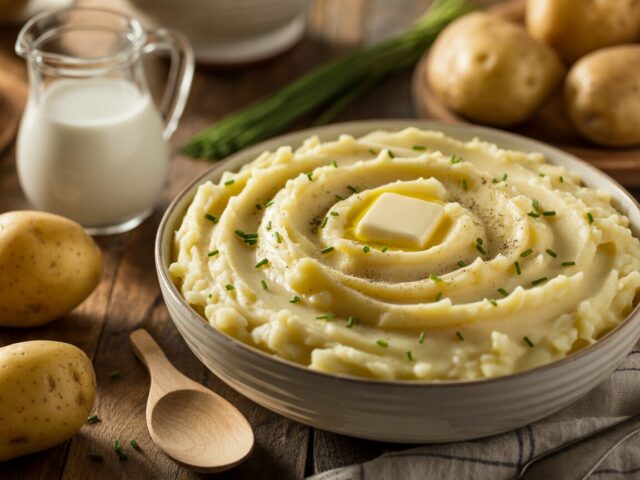
Warm broth makes savory, lighter mashed potatoes, while half-and-half or sour cream makes them richer. For a dairy-free version, use unsweetened oat or soy milk with olive oil in place of butter.
Scrambled eggs
Milk is optional in scrambled eggs, so you can simply leave it out. For soft, tender curds, whisk in 1 tablespoon of water, cream or half-and-half per egg instead, and cook the eggs over low heat.
Meatloaf and meatballs
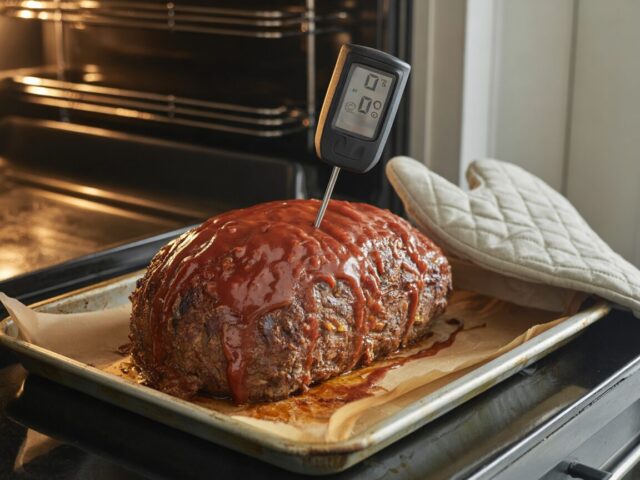
Here the milk soaks the breadcrumbs into a panade that keeps the meat moist. Broth is the best swap, since it adds savory flavor, but water, unsweetened plant milk or diluted evaporated milk work the same way. Use the same amount the recipe calls for, as in this classic meatloaf recipe.
Milk Substitutes by Recipe
Some dishes depend on milk more than others, so a few need a specific choice. This table covers the recipes where people most often run out.
| Recipe | Best swap | Why |
|---|---|---|
| Mac and cheese | Evaporated milk, undiluted | Keeps the cheese sauce smooth and stable |
| Pudding and custard | Half-and-half diluted 1 to 1, or soy milk | Enough protein and fat to set properly |
| Hot chocolate | Oat milk or diluted evaporated milk | Creamy without curdling |
| Cornbread | Buttermilk or thinned yogurt | Tender crumb with a classic tang |
| White gravy | Evaporated milk plus water | Rich and resistant to splitting |
| Boxed cake mix | Water, or the same amount of any milk | Mixes are designed to work with water |
For pudding and custard, avoid almond and rice milk, because their low protein leaves the filling loose. In a cheese sauce, warm the substitute first and add the cheese off the heat, which helps it melt evenly without turning grainy.
Keeping a Pantry Backup
Running out of milk is far less stressful with a shelf-stable option in the cupboard. Evaporated milk and nonfat dry milk both keep for months unopened, and each one replaces fresh milk in nearly any recipe.
To reconstitute powdered milk, whisk ⅓ cup of nonfat dry milk into 1 cup of water, the proportion USDA uses for one cup of reconstituted milk. Mix it a few minutes ahead so the powder dissolves fully, and add 2 teaspoons of melted butter per cup if the recipe needs the richness of whole milk. Shelf-stable cartons of plant milk are another option, as long as you choose unsweetened, unflavored ones for cooking.
When the Recipe Calls for Evaporated or Powdered Milk
The swap can also run the other way. Suppose a recipe calls for evaporated milk and you only have fresh milk. Gently simmer about 2¼ to 2½ cups of whole milk, stirring often, until it reduces to 1 cup, which usually takes about 25 to 35 minutes. Cool it before using, and expect it to taste slightly less caramelized than the canned version.
Sometimes a bread or cake recipe lists powdered milk among the dry ingredients. In that case, leave the powder out and replace the recipe’s water with the same amount of fresh milk. That keeps the dry and wet ingredients in balance while still adding milk’s protein and sugar for browning.
Can You Use These Instead of Milk?
Butter
Butter alone cannot replace milk, because it has almost no water. However, 2 teaspoons of melted butter stirred into 1 cup of water matches the fat in whole milk. That mix works well in savory cooking, though baked goods will brown less without milk’s protein and sugar.
Heavy whipping cream
Yes, once you dilute it. Undiluted cream has about eleven times the fat of whole milk, so it makes cakes heavy and greasy. Use 1½ tablespoons of cream topped up with water to make 1 cup, or use half cream and half water in rich sauces.
Coffee creamer
Only plain, unsweetened creamer is a reasonable stand-in, and mostly in savory dishes or pancakes. Flavored and sweetened creamers add sugar and flavorings that change the result, so they suit coffee better than cooking.
Sour cream
Yes, in baking and creamy dishes. Thin ¾ cup of sour cream with ¼ cup of water per cup of milk, and add ½ teaspoon of baking soda to a baked recipe to balance the tang.
Dairy-Free and Allergy Notes
Milk is one of nine major food allergens listed by the FDA food allergy page, so packaged foods must declare it on the label. For an allergy, choose a plant milk such as soy, oat or almond, and check that the label does not list milk.
Be careful with products labeled “nondairy.” The federal labeling rule allows a nondairy food to contain a caseinate, provided the ingredient list identifies it as a milk derivative. Many coffee creamers fall into this group, so they are not safe for a milk allergy.
Lactose-free milk is a different case. It is real cow’s milk with the lactose broken down, so it suits lactose intolerance, but it is not dairy-free and does not suit a milk allergy.
Frequently Asked Questions
Can you use water instead of milk?
Yes, in most recipes, although the result will be less rich and brown less. Add 2 teaspoons of melted butter per cup of water to restore the fat.
What is the best milk substitute for baking?
Evaporated milk mixed with an equal amount of water gives the closest result. For a dairy-free option, unsweetened soy milk is the best match because its protein content is close to milk’s.
Can you substitute buttermilk for milk?
Yes, one for one in pancakes, biscuits and quick breads. Add ½ teaspoon of baking soda per cup if the recipe only uses baking powder, so the acid does not leave the bake dense.
How do you make milk from powdered milk?
Whisk ⅓ cup of nonfat dry milk into 1 cup of cold water until it dissolves. It replaces 1 cup of skim milk, and 2 teaspoons of melted butter bring it close to whole milk.
Can you use heavy cream instead of milk in mac and cheese?
Yes, but dilute it with an equal amount of water, or the sauce will be very rich and may turn greasy. Evaporated milk is an even better choice because it keeps cheese sauce smooth.
Can you use almond milk instead of milk?
Yes, one for one, but choose unsweetened almond milk for savory dishes. Because it has very little protein, cakes and breads made with it brown less and taste a little lighter.
Bringing It Together
The right milk substitute replaces the liquid first and then the richness. Evaporated milk with an equal amount of water is the closest all-purpose swap, while powdered milk with water covers baking and bread just as well.
Cream, half-and-half and butter can all stand in once you dilute them to the fat of whole milk. Use about 1½ tablespoons of heavy cream, ¼ cup of half-and-half or 2 teaspoons of melted butter, topped up with water to make 1 cup.
For dairy-free cooking, unsweetened soy milk comes closest in baking, while oat milk excels in creamy soups and sauces. For a milk allergy, read every label, because nondairy creamers can contain caseinate and lactose-free milk is still real milk.
Key takeaways
- Use ½ cup evaporated milk plus ½ cup water to replace 1 cup of milk.
- Dilute cream, half-and-half or butter with water to match the fat of whole milk.
- Unsweetened soy milk is the closest dairy-free swap for baking.
- Nondairy creamers and lactose-free milk are not safe for a milk allergy.
How this guide was built: substitute amounts follow widely published practice, while the fat-matched dilutions come from USDA FoodData Central composition values. Dairy definitions and labeling rules come from federal regulations and the FDA.